


We've all had those moments where we encounter a viewpoint that completely challenges our own. Recently, I found myself entrenched in a heated debate over Pete Buttigieg's podcast appearance on a controversial show. As I reflected on the importance of breaking out of 'echo chambers', I realized how current events intersect with personal beliefs and the collective narrative. Let’s dive into some of the most pressing topics shaping our world today.
The Strategic Risk of Engaging with Opposing Viewpoints
Recently, Pete Buttigieg made headlines with his appearance on a controversial podcast. Was this a bold move or a risky gamble? Many are asking this question. Buttigieg's decision to engage with a MAGA-friendly host has sparked mixed reactions. Some see it as a necessary step to break down the echo chambers that dominate modern political discourse.
Understanding Echo Chambers
Echo chambers are environments where people only hear opinions that reinforce their own beliefs. This phenomenon is prevalent in today's political climate. When individuals only engage with like-minded voices, they miss out on diverse perspectives. This can lead to polarization and a lack of understanding. So, how can we combat this?
- Engagement is key: Buttigieg's podcast appearance highlights the importance of meeting people where they are.
- Fostering understanding: Conversations across the aisle can help bridge divides.
- Risks involved: Critics argue that such associations might backfire, alienating core supporters.
Buttigieg's message was clear: "Meeting people where they are is key." This sentiment resonates deeply in a time when political discourse often feels stagnant. Engaging with opposing viewpoints can foster understanding and potentially sway undecided voters. However, it’s not without its challenges.
The Need for Conversations Across the Aisle
Engaging with different perspectives is crucial. It opens the door to dialogue and collaboration. But why is this important? When politicians avoid platforms that challenge their views, they risk losing touch with a significant portion of the electorate. This could lead to a disconnect that may have long-term consequences.
Critiques of Buttigieg's decisions often focus on the potential backlash. Some argue that engaging with controversial figures could tarnish his image. Yet, isn’t it more damaging to remain in a bubble? By avoiding tough conversations, politicians may inadvertently alienate voters who are open to dialogue.
Conclusion
In a world where political divisions seem to deepen daily, Buttigieg's approach serves as a reminder of the need for open dialogue. While there are risks, the potential for fostering understanding and bridging divides is invaluable. As we navigate these complex conversations, let’s remember that engagement is not just a strategy; it’s a necessity.
The Torn Dynamics of US Foreign Policy
Trump's Unusual Remarks on Ukraine
Recently, former President Donald Trump made some surprising comments regarding Ukraine. Traditionally, he has been a strong supporter of Vladimir Putin. However, his latest remarks suggest a shift towards advocating for peace negotiations. This raises a lot of questions. Is he genuinely interested in peace, or is he simply trying to appeal to a broader audience?
Trump's proposal for peace seems heavily tilted in favor of Putin. This has led to criticism from Ukrainian President Volodymyr Zelensky, who labeled the deal unconstitutional. It’s curious, isn’t it? How can peace be negotiated when one side feels cornered? Trump has even shifted some blame onto Zelensky, claiming he interfered with peace efforts. But is that fair? Many would argue it’s not, especially considering past U.S. administrations have rejected Russia's claims over Crimea.
Impact of US Leadership on International Negotiations
The role of the United States in international negotiations cannot be overstated. When the U.S. takes a back seat, the entire negotiation process can stall. As one expert put it,
“Without active US involvement, negotiations lose momentum.”This statement rings true in many scenarios. Without U.S. leadership, other nations may hesitate to engage fully. They often look to the U.S. for guidance and support. When that support is lacking, the risk of prolonged conflict increases.
Consider the ongoing situation in Ukraine. As U.S. involvement decreases, the likelihood of a swift resolution diminishes. The absence of American influence can lead to a vacuum where other powers might step in, often complicating matters further.
Is Peace Negotiable Without American Involvement?
This brings us to a critical question: Is peace truly negotiable without American involvement? The answer is complex. On one hand, some argue that peace can be achieved through local negotiations, independent of U.S. influence. On the other hand, history suggests that U.S. participation often brings a level of legitimacy and structure to negotiations.
Think about it. When the U.S. is involved, there’s a certain weight that comes with it. Other nations are more likely to take negotiations seriously. Without that, smaller nations might feel overwhelmed or ignored. This can lead to a breakdown in dialogue, which is the last thing anyone wants in a conflict situation.
As we analyze Trump's shifting perspective on foreign relations, it’s essential to consider the broader implications. The current stances taken by U.S. leadership could have long-term consequences. Will we see a more isolationist approach, or will the U.S. re-engage with the world? Only time will tell.
The Fire Festival: A Case Study in Brand Rehabilitation
Billy McFarland's Attempt to Reclaim the Fire Festival Brand
Billy McFarland is back in the spotlight. After the infamous failure of the Fire Festival, he’s attempting to reclaim the brand. You might wonder, how can someone rebuild a reputation after such a public disaster? It’s a risky endeavor, almost like buying a haunted house . The history of the Fire Festival is marred by chaos, disappointment, and a lot of angry attendees. Yet, McFarland believes there’s potential for revival.
Public Perception of Failure Versus Success
The public's perception of the Fire Festival is complicated. On one hand, it’s a symbol of failure. On the other, it has become a cultural phenomenon. People love to talk about it. It’s like a train wreck—you can’t look away. The festival’s disastrous reputation has turned it into a case study in disaster marketing. You might ask, can failure actually lead to success? In this case, it seems that notoriety has its own value.
- Infamous events can become marketing tools.
- People are drawn to stories of failure.
- Lessons learned can be applied to future ventures.
Lessons Learned from Disaster Marketing
So, what can we learn from the Fire Festival? First, it highlights the importance of transparency. When things go wrong, honesty is crucial. Second, it shows that even the worst failures can be leveraged into marketing opportunities. After all, people are curious. They want to know what went wrong. This curiosity can be turned into engagement.
Moreover, it’s essential to understand your audience. McFarland’s initial marketing strategy failed because it didn’t resonate with the target demographic. Instead of creating a luxurious experience, it ended in chaos. This teaches us that understanding your audience is key to success.
Cultural References to Haunted Houses in Business
In business, the analogy of a haunted house is fitting. Just like a haunted house, a brand with a troubled past can be both scary and intriguing. It can attract attention, but it also carries risks. You have to be cautious. Will customers be willing to step inside? Or will they be too afraid of what they might find?
“It’s like buying a haunted house.”
In conclusion, the Fire Festival serves as a fascinating case study. It explores the paradox of notoriety in business ventures. While the past can overshadow potential, it can also provide valuable lessons. The journey of brand rehabilitation is not easy, but it can lead to unexpected opportunities.
AI and Communication: A Leap into the Future
Have you ever thought about how technology shapes the way we communicate? Recent advancements in AI are not just changing the game; they are redefining it. From voice restoration for stroke survivors to ethical considerations in AI development, the implications are profound.
Recent Advancements in AI Technology
AI technology is evolving rapidly. It’s no longer just about chatbots or virtual assistants. Today, we see AI systems that can understand and process human emotions. Imagine a world where machines can interpret your feelings and respond accordingly. This is not science fiction; it’s happening now.
- AI-driven tools are enhancing communication for those with speech impairments.
- Natural language processing allows for more fluid conversations between humans and machines.
- Real-time translation services break down language barriers, making global communication seamless.
These advancements are not just technical feats; they have real-world applications that can change lives. For instance, AI can help someone with a speech disorder express themselves more clearly. This leads us to our next point.
Life-Changing Impacts of Voice Restoration
Consider the impact of voice restoration technology. For stroke survivors, regaining the ability to speak can be a monumental challenge. But with AI, this process is becoming more achievable. The technology can convert brainwaves into speech, allowing individuals to communicate once again.
"Restoring voice to someone who lost it is life-changing."
This statement encapsulates the essence of what AI can do. It’s not just about technology; it’s about human experience. Imagine the joy of a parent being able to say “I love you” to their child after losing their voice. This is the power of AI in communication.
Ethical Considerations in AI Development
As we embrace these advancements, we must also consider the ethical implications. Who controls the technology? How do we ensure it’s used responsibly? These questions are crucial. AI has the potential to enhance our lives, but it also poses risks. For instance, the misuse of voice restoration technology could lead to privacy violations or identity theft.
- Transparency in AI development is essential.
- We must prioritize user consent and data protection.
- Ethical guidelines should be established to govern AI applications.
As we stand at the intersection of technology and human experience, the future of AI in communication looks promising. But it’s up to us to navigate these waters carefully. The potential applications are vast, and the implications are profound. Are we ready to embrace this leap into the future?
Navigating Polarization in Education
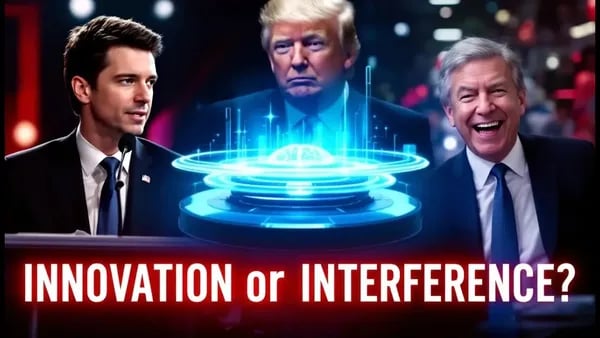
In today's world, education is not just about learning. It's also about navigating the turbulent waters of politics. Recently, former President Trump's executive orders have stirred up significant debate regarding their impact on higher education. These orders aim to reshape college accreditation processes and promote AI training for students. But what does this mean for academic freedom?
Trump's Executive Orders and Their Impact
Trump's approach to education has raised eyebrows. Many believe these executive orders are a way to exert political influence over educational institutions. For instance, the push for AI education sounds progressive. However, it comes with strings attached. Critics argue that controlling curricula can lead to a loss of academic independence. This is where the fine line between political influence and academic freedom becomes blurred.
- Over 150 university presidents have condemned these actions.
- They argue that such interference jeopardizes the integrity of educational institutions.
- There are concerns about the long-term effects on students and faculty alike.
The Fine Line Between Influence and Freedom
When politics dictate education, it risks undermining academic freedom. This quote resonates deeply in the current climate. Imagine a classroom where discussions are stifled because of fear of political backlash. It’s a troubling thought, isn’t it? Education should be a space for open dialogue, not a battleground for political agendas.
University leaders have voiced their concerns. They worry that political interference could deepen societal division. If students are taught to align with specific political views, what happens to critical thinking? Are we preparing them to be informed citizens, or are we molding them into political puppets?
Why Political Interference Could Deepen Societal Division
Political interference in education can create a ripple effect. It can lead to a polarized environment where dissenting opinions are silenced. This is not just a problem for universities; it affects society as a whole. When students are encouraged to think in one way, it fosters an echo chamber. This can alienate those who hold different beliefs.
Consider this: if students are not exposed to diverse perspectives, how can they engage in meaningful discussions in the real world? The risk is that we create a generation that lacks the ability to empathize with others. This is a dangerous path to tread.
In conclusion, navigating polarization in education requires careful consideration. The impact of political decisions on academic freedom cannot be understated. As we move forward, it’s crucial to foster an environment where education thrives free from political interference. Only then can we ensure that future generations are equipped to tackle the complexities of our society. After all, education should empower, not divide.
