
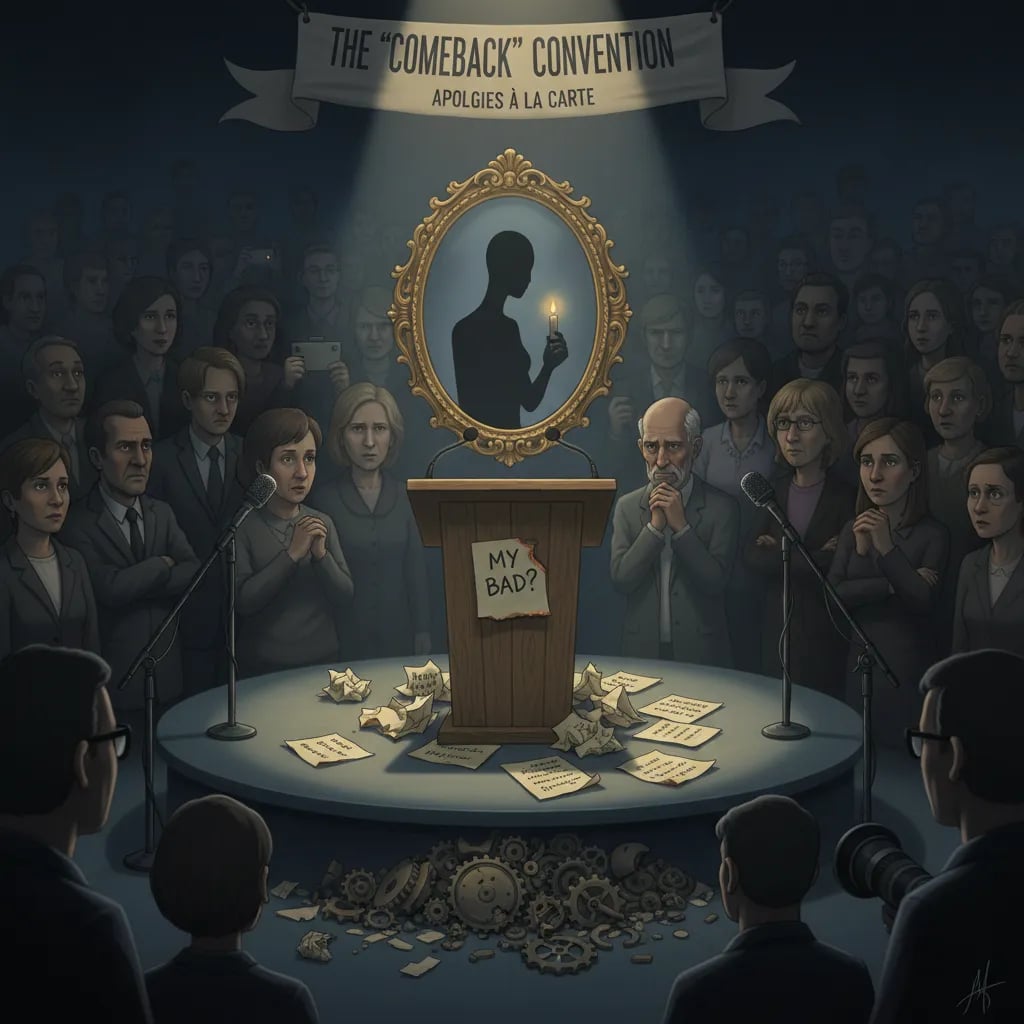



Let me confess something: I once tried to give a heartfelt apology via group text. The result? Let’s just say I relate to the awkwardness of Ned Fulmer’s now-infamous attempt at internet redemption. When public figures fall, a strange ritual plays out— YouTubers scramble to apologize, viewers tune in, and sometimes, nobody ends up satisfied. Stick with me as we wade through the tangled mess of the ‘Try Guy’ gone rogue, his uncomfortable podcast, and why his public atonement landed with a thud instead of applause.
Act One: The Setup – From Wife Guy to ‘That Guy’
If you spent any time on YouTube in the late 2010s, you probably knew Ned Fulmer as the ultimate “wife guy.” He was the wholesome, bespectacled member of The Try Guys, a group famous for their goofy challenges and genuine friendship. Ned’s whole brand was loving his wife, Ariel. He mentioned her in almost every video, wore his devotion like a badge, and built a loyal following around being the internet’s model husband. But as we all learned in 2022, sometimes the internet’s golden boys have secrets that can’t stay hidden forever.
The Ned Fulmer cheating scandal broke with a single, jaw-dropping confession:
“I cheated on my wife with an employee of my business.”
It was short, blunt, and instantly viral. The news hit like a tidal wave. Fans who had once seen Ned as the epitome of loyalty and family values were suddenly left reeling. The Try Guys controversy wasn’t just about workplace drama or a messy breakup—it was about betrayal on a public stage, and the internet was not about to let it slide.
Within hours, memes, think pieces, and reaction videos flooded every corner of social media. The “wife guy” jokes turned sour. Discussions about power dynamics, workplace ethics, and parasocial relationships exploded overnight. For many, the real sting was the clash between Ned’s carefully crafted persona and the reality of his actions. The Ned Fulmer public scandal became a case study in how quickly a reputation can unravel when the truth comes out.
The Try Guys themselves didn’t waste time. In a move that was both swift and decisive, they removed Ned from their videos and company. Their statement was clear: they were cutting ties, both professionally and personally. The group’s response only fueled more conversation, as fans and critics alike debated whether it was enough—or too much. But one thing was certain: the internet was mourning (and roasting) the fall of the “wife guy” brand.
For those who followed the Try Guys from the start, the betrayal felt personal. Ned Fulmer’s wife, Ariel, had been a beloved part of the channel’s extended family. Seeing her name dragged through the headlines added another layer of heartbreak. The Ned Fulmer audience betrayal was real, and it left a lasting mark on the community.
In the end, Ned went from being the guy everyone trusted to “that guy” everyone talked about. The Try Guys controversy dominated online discourse, and Ned’s reputation tanked almost overnight. As the dust settled, one question lingered: how do you come back from a scandal that shattered the very image you built your career on?

The Patchwork Apology – Speaking, But Not Quite Listening
When Ned Fulmer launched his Rock Bottom podcast, the internet collectively braced itself. The first episode? A self-led couples therapy session with his wife, Ariel. If you watched it, you know: the awkwardness was off the charts. This wasn’t just another celebrity apology—it was a public airing of marital wounds, with Ned steering the conversation and Ariel forced to relive the pain. The vibe was less “healing” and more “cringe content for clicks.”
Viewers tuned in by the millions—1.2 million, to be exact, for that first episode. But what did they get? Not the accountability or sincerity people expect after a scandal. Instead, the Ned Fulmer apology video and podcast episode felt like a patchwork of therapy buzzwords, rationalizations, and self-congratulation. Ned spoke at length about his therapy journey and personal growth, dropping lines like:
"It's something that I'm really proud of that's really changed my life."
But here’s the thing: the audience wasn’t looking for a TED Talk on self-improvement. They wanted to see if Ned actually understood the hurt he caused—not just to Ariel, but to fans and colleagues. Instead, the focus stayed on Ned’s feelings, Ned’s process, and Ned’s pride in how far he’s come. The apology felt less like a genuine reckoning and more like a PR move designed to rehabilitate his image and, let’s be honest, monetize the backlash.
When Ned addressed the public backlash in a follow-up video, the pattern continued. He talked about therapy, group sessions, and the “mental clouds” that led him astray. He acknowledged cheating, but the language was clinical and detached—almost as if he was narrating someone else’s story. At one point, he even suggested that people judging him were just seeing “15-second TikTok clips,” ignoring the fact that over a million people sat through the full, excruciating podcast.
This is where the Ned Fulmer podcast Rock Bottom really misses the mark. Instead of listening to what viewers wanted—real accountability and a sense that he truly ‘gets it’—Ned doubled down on therapy-speak and self-focus. The result? A massive drop-off in interest. The first episode with Ariel pulled 1.2 million views; a recent episode managed just 2,700. The internet’s verdict was clear: people weren’t buying what Ned was selling.
Why do so many internet apologies feel this way? Because, more often than not, they’re crafted to protect reputations, not relationships. The Ned Fulmer couples therapy episode became a case study in how apologies can sound like you’re speaking, but not quite listening. When therapy journeys and self-growth become shields instead of bridges, the apology turns into just another awkward performance—and the public can spot the difference a mile away.

Data Doesn't Lie (But Sometimes It Groans) – The Collapse of Content Performance
When it comes to Ned Fulmer content performance, the numbers paint a pretty clear—and honestly, pretty rough—picture. If you’ve been following Ned Fulmer’s podcast journey post-scandal, you’ve probably noticed the dramatic shift. The first episode, featuring his wife Ariel, pulled in a staggering 1.2 million views. That’s viral territory, the kind of number that would make any YouTuber’s day. But fast forward to the most recent Ned Fulmer podcast episode, and you’re looking at just about 2,700 views. That’s not a typo. That’s a drop so steep it’s almost hard to believe.
Let’s break it down:
- First episode (Ariel apology): 1.2 million views
- Most recent episode: 2,700 views
For a channel that once thrived on loyal fans and viral moments, this is a collapse in content performance that’s hard to ignore. It’s not just about views, either. When you look at Ned Fulmer YouTube monetization issues, the reality is even starker. With 2,700 views, you’re looking at about $7 in ad revenue, if that. As one observer put it:
"2700 views on YouTube is like $7. He can't, he can't be making money off of this."
It’s not just the money, though. The engagement is gone. The audience that once tuned in for every upload is now, well, just not there. Even with celebrity guests, the new solo content struggles to attract even legacy fans. It’s as if the trust was broken, and no amount of rebranding or apology can patch it up overnight. The Ned Fulmer podcast Rock Bottom isn’t just a metaphor—it’s a measurable, data-driven reality.
Are Even the Defenders Real Anymore?
Scroll through the comment sections on these recent videos and you’ll notice something odd. There’s a suspiciously high number of positive, defensive comments about Ned. Whenever someone posts anything even slightly negative, there’s an immediate wave of replies defending him, insisting he did nothing wrong. It’s led many to wonder: are these real fans, or is there bot activity at play?
It’s a fair question. When your content is struggling this much, and your reputation has taken such a hit, seeing a sudden burst of unwavering support feels out of place. Some speculate that Ned is employing bots to manage his image in the comments, trying to drown out criticism and keep the narrative positive. But if you have to rely on bots to defend you, what does that say about your real audience?
Ultimately, the data doesn’t lie. The numbers show a dramatic fall in both engagement and earnings. For Ned Fulmer, the challenge of rebuilding trust and audience interest after a public scandal is proving to be an uphill battle—one that can’t be fixed with just a new podcast or a few positive comments.

Parasocial Whiplash – When Audiences Take Celebrity Scandals Personally
Let’s be honest: the Ned Fulmer cheating scandal hit fans harder than anyone expected. Why? Because Ned wasn’t just another internet personality—he was the “wife guy,” the relatable husband from the Try Guys who built his entire brand around loyalty and family. When the news broke, the Ned Fulmer internet reaction was swift and intense. But if you step back, it’s wild to realize that most people reacting so strongly had never met Ned, his wife, or anyone else involved. So, why did it feel so personal?
Enter the world of parasocial relationships. These are the one-sided bonds you form with people you see online or on TV—people who don’t know you exist, but who feel like friends or even family. Research shows that when a creator’s public persona feels authentic, fans start projecting their own values and expectations onto them. That’s exactly what happened with Ned Fulmer. His carefully curated image as a loving, devoted husband made viewers emotionally invest in his marriage. So when the Try Guys controversy exploded, it felt like a personal betrayal.
Think back to when a favorite childhood show’s cast imploded. Remember that weird sense of loss, like you’d lost a friend? That’s parasocial whiplash. The internet makes it even more intense. Every time new content references the scandal—even years later—commentary surges again. It’s as if the wound never fully heals. In fact, the Ned Fulmer public backlash reignites whenever the topic trends, showing just how deep these connections run.
But here’s the thing: as one commentator bluntly put it,
"You are letting parasocial relationships ruin your life."It’s a strong statement, but it gets to the heart of the issue. When you find yourself deeply upset over a stranger’s marriage, it might be time to log off and reflect. After all, this happened years ago, this is a person that you don't know cheating on a person that you don't know. The internet’s tendency to pile on and re-open old wounds isn’t always healthy. Sometimes, it seems like we crave the drama, even if it’s at the expense of our own peace of mind.
It’s also worth noting that neither Ned, his ex-wife, nor the internet needed a public-sized, hour-long livestream of a “shitty couples therapy session” to move on. Yet, the demand for public apologies and explanations persists. Why? Because viewers project their own experiences and expectations onto creators, setting standards that are often impossible to meet. The Ned Fulmer audience betrayal wasn’t just about infidelity—it was about the collapse of a carefully constructed fantasy, one that fans had emotionally invested in for years.

When Silence is Louder Than Words – Lessons in Internet Apology Fatigue
Let’s be real: not every internet scandal needs a redemption arc, no matter how much pop culture tries to convince us otherwise. The Try Guys controversy and the Ned Fulmer cheating scandal have shown us that sometimes, the best move isn’t a therapy-flavored hour-long YouTube confession—it’s a humble, straightforward post. Or, honestly, just radio silence. When it comes to Ned Fulmer addressing backlash, his relentless attempts at public forgiveness have only made things messier, not better.
Think about it. Every time Ned pops up with another video or statement, it feels less like genuine remorse and more like a desperate attempt to control the narrative. The internet is quick to spot when someone’s apology is more about self-promotion than real growth. If Ned had just paused, maybe dropped a simple Instagram note, and then quietly worked on himself, would people have moved on faster? As the saying goes,
"Sometimes, silence (or a simple Instagram post) really is golden."
There’s a reason why Ned Fulmer redemption attempts keep falling flat. The more he talks about the scandal, the less people want to hear it. It’s almost like he’s stuck in a loop, hoping that if he just explains himself enough times, the internet will forgive him. But here’s the twist: serial apologies don’t breed sympathy—they breed cynicism. People get tired. The memes start rolling in. The apology itself becomes a punchline. That’s apology fatigue in action.
Imagine if Ned had made an apology pie chart—80% humility, 20% self-promotion. Would the internet have forgiven him, or just turned it into another meme? My guess is the latter. The more you try to engineer forgiveness, the less authentic it feels. And nothing gets meme-ified faster than a try-hard apology.
I’ll admit, I’ve been there on a much smaller scale. Once, I ate my roommate’s leftovers and tried to apologize with a carefully edited Snapchat story. Spoiler: it did not help. Sometimes, less is more. A simple “I’m sorry” (or even just letting things cool off) does way more than a drawn-out explanation. The same goes for creators facing public backlash. Ongoing public self-flagellation doesn’t defuse the situation—it keeps the wound open.
In the end, Ned Fulmer personal growth claims and his endless content grind have only deepened the disconnect with his audience. The lesson here? Not every drama needs a redemption arc. Sometimes, the most powerful response is to step back, say less, and let actions—not words—speak for themselves. The internet may never forget, but it does get bored. And that, ironically, might be the best kind of forgiveness anyone can hope for.
