
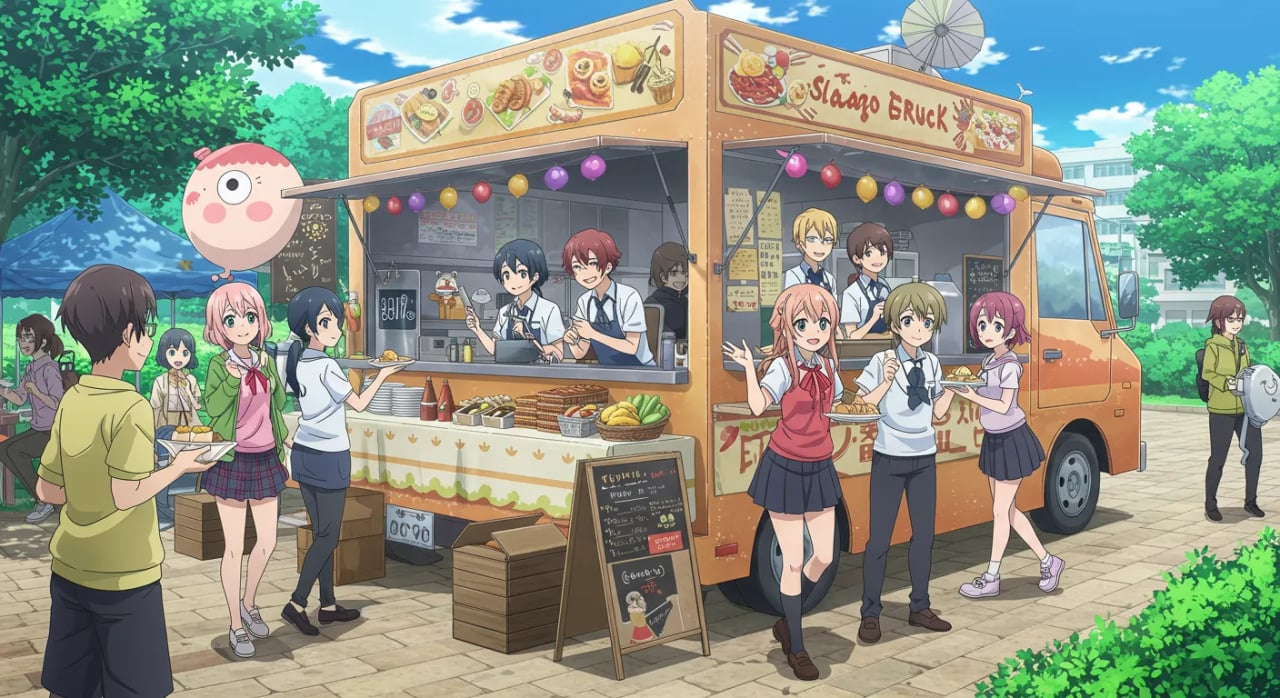



At the end of every school year, I find myself asking—you know the question—'What did we actually learn this time around?' But last month, in a parking lot in Austin, a group of elementary students served up the answer from behind a food truck window. Trust me, nothing puts textbook math to the test like figuring out the profit margin on a tray of homemade French toast during the weekday breakfast rush. Let’s take a peek inside Alpha School’s Lil’ Dippers food truck, where kids swap crayons for spatulas and business calculators, and discover why I’m suddenly craving breakfast!
When a Food Truck Becomes a Classroom: A Surprise Ingredient in Learning
As the school year wraps up, you might find yourself asking students, “What did you learn this year?” At Alpha School in Austin, Texas, the answer comes sizzling out of a food truck window. This isn’t your typical classroom—here, fifth and sixth graders swap textbooks for spatulas, and math problems for menu planning. The Alpha School Food Truck Project, featured on PBS News Weekend on June 7, 2025, takes innovative education to a whole new level, transforming financial literacy into a hands-on adventure.
Step inside the food truck, and you’ll meet students like Vayda, Blake, and Eddie. Their journey began with nerves and uncertainty—after all, stepping into a bustling kitchen is a far cry from solving equations on paper. “It was scary at first,” Eddie admits, recalling the first time he was elected head chef. The pressure was real. Suddenly, teamwork wasn’t just a classroom buzzword; it was the only way to keep up with hungry customers and a ticking clock.
Trial and error became the recipe for success. The students experimented with dinner, lunch, sushi, and Chinese cuisine before finally landing on breakfast. And then, the unexpected star emerged: French toast. It wasn’t just a menu item—it was a phenomenon. Seven students requested the recipe, and soon, French toast became the food truck’s top seller. The students’ pride was obvious, and even teacher Bryan Gordon couldn’t help but rave, calling it “10 out of 10.”
But the lessons went far beyond cooking. The Food Truck Project was designed to immerse students in real-world business challenges. As Bryan Gordon explains, “The best way to learn about money is to get your hands messy—literally.” Instead of lectures, students learned to calculate costs, set prices, and manage inventory by doing it themselves. Research shows that this kind of hands-on learning helps students develop practical skills and entrepreneurial grit—qualities that are hard to teach from a textbook.
Alpha School’s approach is all about project-based workshops. The food truck became a microcosm of the business world, where unpredictability was the norm. Students had to adapt quickly, especially during high-pressure events like their field trip to a car dealership. Tasked with fulfilling 100 breakfast orders, the team was initially overwhelmed. Yet, through collaboration and quick thinking, they turned the chaos into one of their most successful days, earning praise from both patrons and their teacher.
Throughout the project, Gordon maintained a hands-off approach. He didn’t micromanage; instead, he guided students with questions, nudging them to find their own solutions. This strategy fostered leadership and ownership, allowing students to experience the real consequences—and rewards—of their decisions.
At Alpha School, learning isn’t confined to the classroom. The food truck project stands as a testament to innovative education and hands-on learning, giving students the tools to navigate an unpredictable world—one French toast at a time.

Financial Literacy: Why Counting Change in Real Life Beats Any App
If you ask students at Alpha School in Austin, Texas, what they learned this year, you might be surprised by their answer. Instead of reciting textbook facts, they’ll talk about breaking down the profit margin on tacos, the unexpected cost of napkins, and the challenge of budgeting under real customer pressure. This is not your average classroom lesson in Financial Literacy. It’s a hands-on, real-world learning experience—one that’s making waves for its impact on Gen Z Financial Literacy and Cooking Business Skills.
Inside the student-run food truck, Lil’ Dippers, you see kids like Blake, Vayda, and Eddie stepping into roles that demand more than just cooking. They’re learning to price menu items, manage inventory, and prioritize spending—sometimes with a line of hungry customers waiting. There are no do-overs here. Every dollar counts, and every decision matters. As research shows, tangible money-handling builds financial confidence, and these students are living proof.
The lessons go far beyond worksheets or apps. When Eddie, a sixth grader, was elected head chef, he faced the reality of real accounting and real consequences. “I didn’t know French toast could teach you about profit and loss.” That’s how Eddie summed up his experience, and it’s a sentiment echoed by his classmates. The food truck became a laboratory for financial literacy, where every mistake was a chance to learn, and every win was truly earned.
Teacher Bryan Gordon, who guided the project, made a conscious choice to avoid micromanagement. Instead, he let students own the numbers, the mistakes, and the wins. He explains that the unpredictability of running a business—especially inside a cramped food truck—forced students to adapt on the fly. Whether it was calculating if they could afford another bottle of syrup or responding to customer feedback, students were constantly solving real-world problems.
- Breaking down the profit margin on tacos and the unexpected cost of napkins.
- Learning to budget, price, and prioritize—sometimes under customer pressure.
- No do-overs: Real money, real customers, real accounting.
- Kids see firsthand why adaptability and resourcefulness matter.
The first major test came during a field trip to a car dealership, where students had to fill 100 breakfast orders. Overwhelmed at first, they adapted quickly—adjusting their process, tracking sales data, and making business decisions on the fly. This event, as reported by PBS News Weekend, showcased how student engagement in budgeting, pricing, and profit calculation is key to retention and understanding.
Alpha School’s approach to Financial Literacy is more than just innovative—it’s effective. By letting students run their own food truck, the school is preparing them for the unpredictable realities of life and business. Here, financial literacy isn’t just a subject. It’s a lived experience, and one that’s shaping the next generation of entrepreneurs and leaders.
Leadership, Chaos, and Grit: Running a Kitchen is Like Herding Cats (or Students)
Step inside Alpha School’s food truck, and you’ll quickly see that leadership skills aren’t just buzzwords—they’re survival tools. For students like Eddie, the journey from nervous rookie to head chef was nothing short of a trial by fire. The food truck, affectionately dubbed the “soup truck,” became a real-world classroom where chaos reigned, teamwork was tested, and entrepreneurial grit was forged in the heat of the griddle.
At first, the idea of running a kitchen seemed daunting. Students like Blake and Vayda recall the nerves and uncertainty of stepping into a cramped, bustling workspace. The menu changed frequently—dinner one week, sushi the next, before breakfast classics like French toast finally took center stage. Each shift brought new challenges, from recipe drama to kitchen meltdowns, and even the occasional power struggle as the head chef role rotated among students. This wasn’t just about cooking; it was about learning to lead when the pressure was on and sleep was in short supply.
What set Alpha School’s student-led initiative apart was the hands-off approach of their teacher, Bryan Gordon. Instead of micromanaging, Gordon guided with questions, not commands. His philosophy? Let students figure it out, mess and all. As he put it,
“Sometimes the best thing a teacher can do is let you figure it out—mess and all.”This sink-or-swim method forced students to delegate, calm nerves, and adapt on the fly. Research shows that adaptability and resilience are best learned through hands-on experience, not lectures, and Alpha’s food truck was proof in action.
Teamwork was put to the ultimate test during a high-stakes event: a dealership breakfast rush. The challenge? Fulfill 100 breakfast orders under pressure. The students, initially overwhelmed, had to organize themselves, communicate clearly, and keep the kitchen running smoothly. It was a crash course in practical teamwork lessons, with real consequences and real rewards. By the end, not only had they pulled off one of their best-selling mornings, but they’d also earned genuine appreciation from their patrons—and a newfound confidence in their leadership skills.
Throughout the year, the food truck became a microcosm of the entrepreneurial world. Students learned to embrace unpredictability, solve problems in real time, and bounce back from setbacks. The French toast, a crowd favorite, symbolized their journey: it started as a simple idea, improved through trial and error, and eventually became a “10 out of 10” success. This relentless focus on improvement, even after failures, is at the heart of entrepreneurial grit.
Alpha School’s approach—combining accelerated academics with real-world, student-led projects—demonstrates how leadership and resilience can be cultivated outside traditional classrooms. As PBS News Weekend highlighted, these practical teamwork lessons and leadership skills are shaping a new generation ready to tackle challenges head-on, both in and out of the kitchen.
The Unexpected Perks: French Toast Fever, Lasting Memories, and Future CEOs
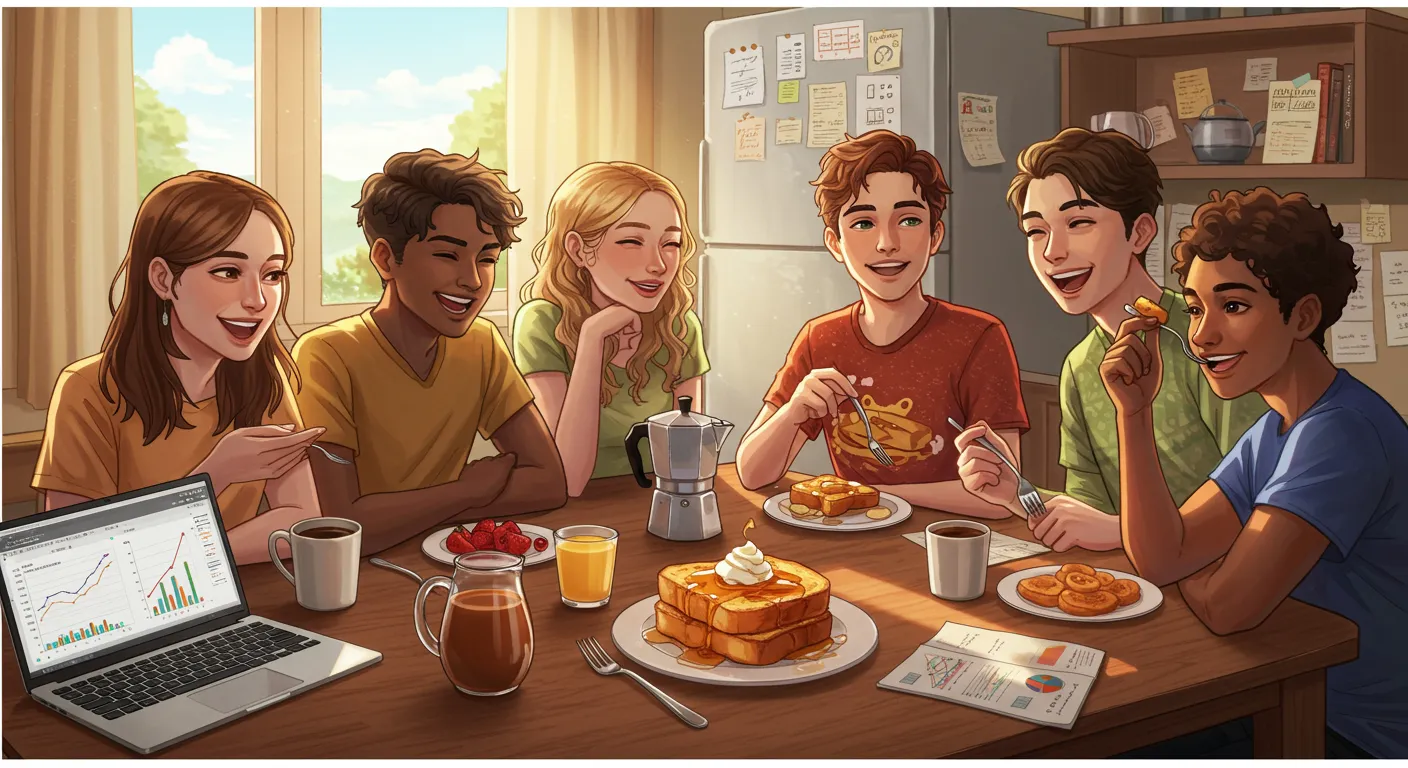
Step inside Alpha School’s food truck project in Austin, and you’ll find more than just sizzling griddles and the aroma of breakfast. Here, Real-World Skills are on the menu, served up alongside a side of confidence and entrepreneurial grit. As featured on PBS News Weekend, this Austin Classroom Project is redefining what it means to learn by doing—especially when the most popular lesson comes dusted with powdered sugar.
For students like Vayda and Eddie, the journey began with nerves and a dash of uncertainty. Cooking for a crowd, managing costs, and collaborating under pressure—these are the ingredients of Entrepreneurship Education that textbooks rarely capture. The food truck, affectionately dubbed the “soup truck,” became a living classroom where Student Entrepreneurs experimented with everything from sushi to tacos before landing on a runaway hit: French toast.
This wasn’t just any menu item. The French toast became a sensation, cited by students and teacher Bryan Gordon as the “biggest hit” and earning a unanimous “10 out of 10” for taste and teachability. The demand was real—seven students requested the recipe, a testament to the power of peer-to-peer learning and the pride that comes from creating something truly memorable. As Vayda, a fifth grader, put it:
“French toast changed how I think about business—and breakfast.”
But the lessons extended far beyond the kitchen. Success, students quickly learned, is as much about flavor as it is about financials. They tracked costs, debated pricing, and learned how a simple dish could become a brand. The French toast wasn’t just food—it was a case study in marketing, teamwork, and adaptability. In the heat of their first big event, a field trip to a car dealership, students faced the daunting task of serving 100 breakfast orders. The pressure was real, the stakes high, but the payoff was lasting confidence and a sense of accomplishment that no worksheet could deliver.
Research shows that popular successes like this boost student engagement and create replicable pride. At Alpha School, the food truck’s triumphs—especially the French toast—sparked a sense of ownership and camaraderie. Students guarded their “top-secret” recipes, shared tips, and reflected on how these experiences connected to their future ambitions. For many, the hands-on business experience became a window into possible careers, linking classroom theory to real-world application.
Teacher Bryan Gordon’s approach was simple: step back, ask questions, and let students lead. This philosophy, echoed in Alpha School’s broader project-based model, is designed to build leadership, adaptability, and self-esteem. As students themselves observed, the skills they gained—problem-solving, teamwork, and resilience—will last long after the food truck packs up for the year.
In the end, the French toast formula proved that sometimes, the most valuable lessons come from the most unexpected places. Beyond math and management, Alpha’s student-run food truck left a legacy of pride—and perhaps, a recipe for the next generation of CEOs.
Zooming Out: Why Alpha School’s Approach Signals a Shift for Gen Z Learning
If you’ve ever wondered what it takes to truly prepare Gen Z for the real world, Alpha School’s food truck project, recently featured on PBS News Weekend, offers a compelling answer. This isn’t just another classroom experiment—it’s a sign of a broader shift in how innovative education methods are reshaping the way young people learn, adapt, and thrive.
At Alpha School in Austin, Texas, students aren’t simply memorizing facts or reciting formulas. Instead, they’re stepping into a hands-on, adaptive environment where real-world skills take center stage. The school’s model is as bold as it is simple: core academics are tackled in just two hours each morning, leaving the rest of the day open for project-based learning. It’s a structure that’s catching national attention, and for good reason. As PBS News Weekend correspondent Ali Rogin put it,
“Teaching kids to calculate risk and make decisions under pressure sets them up for tomorrow’s world.”
You see this philosophy in action with the student-run food truck, where sixth and fifth graders like Blake, Vayda, and Eddie learn far more than just how to make French toast. They’re mastering entrepreneurship skills, financial literacy, and the art of teamwork—skills that textbooks alone rarely deliver. The food truck, affectionately dubbed the “soup truck,” becomes a microcosm of the real world, where adaptability and resilience are tested daily. When students face a rush of 100 breakfast orders at a local car dealership, they’re not just cooking—they’re problem-solving, leading, and learning to thrive under pressure.
What stands out is how Alpha School’s approach aligns with Gen Z’s appetite for relevance and flexibility. Research shows that project-driven, accelerated learning is gaining traction in U.S. schools, and Alpha’s expansion plans to cities like New York and Tampa reflect a growing momentum. Adaptive learning software allows students to move at their own pace, while afternoon workshops and entrepreneurial projects keep engagement high. It’s no wonder that media coverage like the PBS News Coverage is amplifying interest and signaling a wider trend toward real-world learning.
Reflecting on this, you might find yourself wishing your own school days had included such skill-building adventures. Imagine morning announcements featuring the day’s breakfast specials alongside reminders for math homework. But beyond nostalgia, there’s a clear message: education is evolving, and schools like Alpha are leading the way. By blending innovative education methods with practical, real-world applications, they’re not just teaching students what to think—they’re showing them how to navigate, adapt, and lead in a world that’s anything but predictable.
As the story of Alpha School’s food truck project continues to inspire, it’s clear that hands-on, adaptive education isn’t just a passing trend. It’s a blueprint for the future—one where Gen Z students are equipped with the entrepreneurship skills, resilience, and confidence they’ll need to succeed, no matter what challenges lie ahead.
