
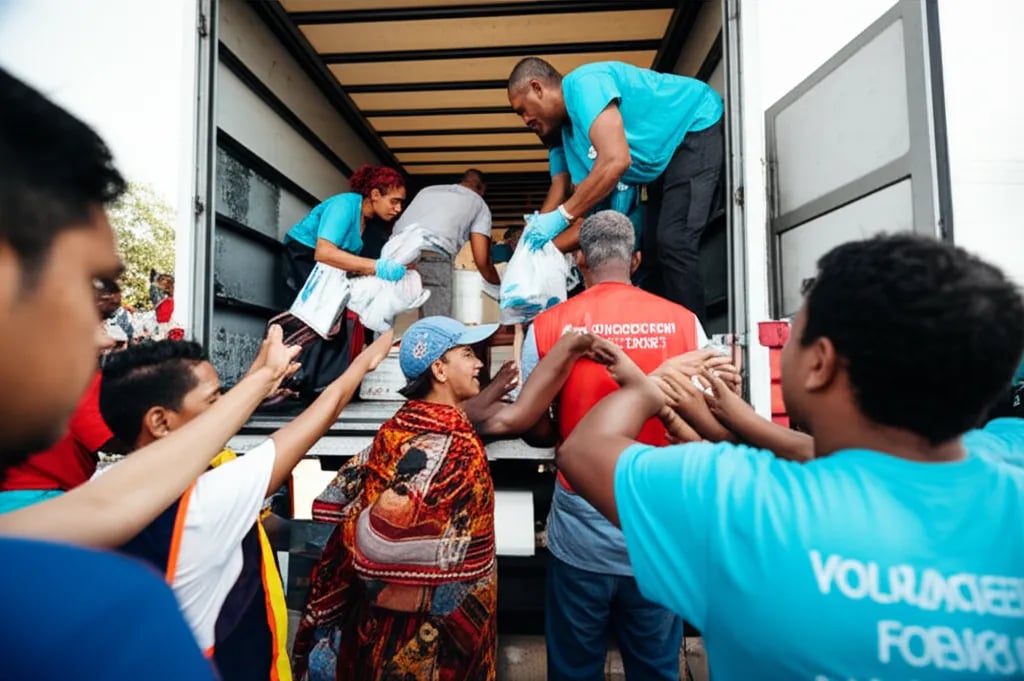



I once spoke with a colleague who dared the border into Gaza as an aid worker. They told me the sounds that haunted them most weren’t from bombs, but the chaos and anguish outside food lines. That memory resurfaced when the news broke of gunfire greeting desperate families at aid distribution points. Gaza today is perched on a knife’s edge, where even hope queues up for ration and survival is a violent gamble. Let’s step into this story—not as distant spectators, but as humans faced with impossible choices.
1. The Chaotic Theater: Aid, Gunfire, and Desperation in Rafah
In Rafah, the Flag Roundabout has become a stark symbol of both hope and mortal danger. As you look closer at the events of June 3, 2025, the reality of Gaza Strip violence becomes impossible to ignore. At least 27 Palestinians were killed by gunfire while trying to access humanitarian aid at a distribution site—an incident that marks the third deadly shooting at such locations in as many days. The Gaza Health Ministry confirmed these deaths, adding to the 34 Palestinian casualties reported at aid sites on the previous Sunday and Monday.
Witnesses and aid workers describe scenes of chaos and panic. Crowds, desperate for food, trampled spilled flour and rice, highlighting the depth of the humanitarian aid access crisis. For many, the risk of starvation is now matched by the threat of being caught in the crossfire. Rasha al-Nahal, a survivor, shared, “There was gunfire from all directions.” She recounted finding more than a dozen bodies along the path to the aid post, only to discover that all the food had already been taken or destroyed. Her words capture the despair:
“Death is more dignified than what’s happening to us.”
The Israeli military claims their shots targeted only a few individuals who left the designated safe corridor and entered a closed military zone. According to their statement, these were warning shots, not aimed at civilians. However, survivors and local residents insist the fire was indiscriminate, and that people were simply trying to reach desperately needed food. Journalist access to these areas is tightly controlled by Israeli forces, making independent verification difficult.
The aid distribution challenges are compounded by the new system established by the Israeli and U.S.-backed Gaza Humanitarian Foundation (GHF). This system operates within Israeli military zones, aiming to bypass Hamas and secure aid deliveries. Yet, the United Nations has rejected this approach, arguing it fails to address the hunger crisis and instead turns humanitarian aid into a tool of conflict. The U.N. points out that, despite Israeli claims, there is no evidence of systematic aid diversion by Hamas. Instead, research shows that Israeli restrictions, the collapse of civil order, and looting are the main obstacles to effective aid distribution.
On June 3, only 21 food trucks reached Rafah, a dramatic drop from the 600 trucks that entered daily during the earlier 2025 ceasefire. The majority of Gaza’s food production infrastructure has been destroyed by ongoing military operations, leaving nearly all residents dependent on humanitarian aid. The situation is dire:
“Palestinians have been presented the grimmest of choices: die from starvation or risk being killed while trying to access the meager food that is being made available through Israel’s militarized humanitarian assistance mechanism,”stated Volker Türk, the U.N. High Commissioner for Human Rights.
The mounting civilian casualties and the desperation at aid distribution points underscore the severe humanitarian crisis in Gaza. As the violence continues and food remains scarce, aid sites have become high-risk zones, forcing people to make impossible choices between hunger and survival.
2. Breaking Down the New Aid System: Power, Politics, and the Anatomy of Scarcity
If you’re following the humanitarian crisis in Gaza, you know that aid distribution challenges have reached a critical point. The new system, run by the Israeli-US-backed Gaza Humanitarian Foundation (GHF), is supposed to deliver life-saving supplies through militarized corridors. But for many Palestinians, this system has only deepened the dilemma: risk starvation or face gunfire in the shadow of aid.
On June 3, 2025, tragedy struck again. Palestinian health officials and eyewitnesses reported that Israeli forces opened fire on people approaching an aid distribution site near Rafah, killing at least 27. This was the third such incident in as many days, with a total of 34 deaths reported on Sunday and Monday. The Israeli military claims it targeted “individual suspects” who entered a closed military zone and ignored warning shots, but denies firing on civilians or blocking access to aid. Still, the facts on the ground point to a deadly pattern at the heart of Gaza’s humanitarian aid distribution.
The GHF’s distribution centers are set up inside Israeli military zones, with access tightly controlled. Journalists are only allowed in under army supervision. Witnesses describe chaos and fear. Yasser Abu Lubda, a displaced Rafah resident, said gunfire erupted before dawn, leaving bodies and wounded scattered on the road. Neima al-Aaraj, from Khan Younis, called the shooting “indiscriminate” and said she would never risk returning for aid. Rasha al-Nahal described “gunfire from all directions” and finding only spilled, trampled food—no supplies left. Her words echo the despair: “Death is more dignified than what’s happening to us.”
The United Nations has rejected the GHF mechanism, arguing it fails to address the root causes of hunger and allows Israel to control humanitarian aid flows. UN agencies say that aid is critically insufficient. On June 3, only 21 trucks reached Rafah—down from 600 per day during a ceasefire earlier in 2025. With Gaza’s food production infrastructure destroyed by war and blockade, nearly 2 million people rely entirely on outside aid. The UN also points out that there’s no evidence of systematic aid theft by Hamas, contradicting Israeli justifications for the militarized setup.
The violence at aid sites has drawn international condemnation. Jeremy Laurence, spokesperson for the Office of the UN High Commissioner for Human Rights , stated,
“Cannibalizing humanitarian aid is not the solution Gaza needs.”Volker Türk, the UN High Commissioner for Human Rights, added, “Palestinians have been presented the grimmest of choices: die from starvation or risk being killed while trying to access the meager food that is being made available through Israel’s militarized humanitarian assistance mechanism.”
Research shows that humanitarian aid distribution in Gaza is hampered less by threats from Hamas and more by Israeli restrictions, the collapse of civil order, and widespread looting. The GHF and Israeli officials cite security needs, but the UN insists the real barriers are the blockade and chaos. With nearly all of Gaza’s population displaced and dependent on humanitarian aid, the anatomy of scarcity is shaped by power, politics, and the ongoing conflict—not just logistics.
3. War’s Uncounted: From Ceasefires to Blockades, The Numbers Behind the Tragedy
You witness the numbers behind Gaza’s humanitarian crisis grow more staggering by the day. On June 3, 2025, the Gaza Health Ministry and the International Committee of the Red Cross (ICRC) confirmed at least 27 Palestinian casualties after Israeli forces opened fire near an aid distribution site in Rafah. The latest incident is part of a grim pattern—three shootings in as many days, with a total of 34 civilian fatalities reported on Sunday and Monday alone. Among the dead: children and women, their lives cut short while seeking food in a landscape marked by violence and deprivation.
Hospital staff at Nasser Hospital in Khan Younis received all 27 bodies from the June 3 shooting, including three children and two women. Most suffered gunshot wounds, according to hospital officials and the Red Cross. The ICRC’s field hospital in Rafah treated 184 wounded that day, with 19 declared dead on arrival and eight more succumbing to their injuries. Journalists on the ground described scenes of chaos—ambulances ferrying the wounded, bloodstained flour bags, and traumatized survivors leaving empty-handed. These are not isolated events; they are part of a pattern that underscores the scale of civilian fatalities in Gaza.
Since the end of the March 2025 ceasefire, the death toll in Gaza has soared. The Gaza Health Ministry reports more than 54,000 deaths since October 2023, with the majority being women and children. UNICEF estimates that over 50,000 children have been killed or injured in the conflict. Yet, independent studies suggest these numbers may be even higher—research indicates that Palestinian casualties could be underreported by as much as 41%. That would put the true death toll closer to 70,000, a figure that highlights the depth of the humanitarian crisis Gaza faces.
The violence is not one-sided. On June 2, three Israeli soldiers in their early 20s were killed in northern Gaza, bringing the total Israeli military fatalities since October 7, 2023, to more than 860. The Israeli army claims its actions are aimed at preventing Hamas from intercepting aid, but the United Nations and humanitarian groups point to Israel’s own restrictions, the collapse of civil order, and widespread looting as the main obstacles to effective aid distribution. The result: a Gaza starvation crisis, with nearly the entire population dependent on humanitarian assistance.
The numbers alone do not capture the full scope of suffering. Witnesses describe “indiscriminate” gunfire at aid sites, with people forced to choose between risking death for food or facing starvation. The U.N. High Commissioner for Human Rights, Volker Türk, summed up the dilemma: “Palestinians have been presented the grimmest of choices: die from starvation or risk being killed while trying to access the meager food that is being made available through Israel’s militarized humanitarian assistance mechanism.”
‘Nearly all Palestinians in Gaza were forcibly displaced, facing severe food insecurity or famine.’ (UNRWA report)
The humanitarian crisis in Gaza is confirmed by multiple organizations and worsened by ongoing violence and disrupted aid. The numbers—whether official or underreported—paint a picture of a population trapped between crossfire and starvation, with civilian fatalities mounting and hope in short supply.
4. The International Scorecard: Who Stands Where Amid Condemnation and Aid Shortfalls
In the shadow of Gaza’s ongoing crisis, the world’s response has become a scorecard of condemnation, legal action, and humanitarian frustration. As you witness the aftermath of the June 3 shooting near Rafah’s aid distribution site—where at least 27 people were killed and dozens more wounded—the international community’s outrage is unmistakable. Yet, as research shows, the impact of this condemnation on the ground remains painfully limited.
The United Nations, along with organizations like the International Committee of the Red Cross (ICRC) and UNICEF, has issued repeated calls for safer, unhindered humanitarian aid delivery. Their statements are blunt: systematic suppression of humanitarian access is “unacceptable,” and the protection of civilians must be urgent and uncompromising. The UN Response to Gaza’s crisis has been clear, but the reality is that nearly 2 million people remain almost entirely dependent on unpredictable and severely limited humanitarian aid.
Israel and the U.S.-backed Gaza Humanitarian Foundation (GHF) defend the current aid system, arguing that strict controls are necessary to prevent Hamas from intercepting supplies. They dispute reports of deliberate shootings on civilians and maintain that their distribution points are designed to keep aid out of militant hands. However, the UN and other agencies counter that Israeli Forces Actions—tight restrictions, military zones, and the collapse of civil order—are the main obstacles to effective aid delivery, not diversion by Hamas. The debate over responsibility is fierce, but for those on the ground, the difference is academic: food remains scarce, and every trip to an aid site could end in tragedy.
The International Criminal Court (ICC) has stepped in, issuing arrest warrants in 2025 for leaders on both the Israeli and Hamas sides, citing war crimes and crimes against humanity. Legal pressure is mounting, but as studies indicate, the humanitarian outlook is still dire. The world’s legal and diplomatic machinery turns slowly, and for Gaza’s civilians, relief is elusive.
Global outrage over the violence and aid shortfalls is visible in headlines and official statements. Yet, as the UN’s Jeremy Laurence put it, “ Accountability is the only way to break the cycle of impunity harming Gaza’s civilians. ” For now, accountability feels distant. The suffering continues, with over 54,000 Palestinians killed since October 2023, most of them women and children, and the majority of Gaza’s food production destroyed by ongoing Israeli offensives. Aid trucks that once numbered 600 a day during a ceasefire have dwindled to a fraction, and the specter of famine looms large.
Imagine yourself standing in line with your children, the air thick with fear and uncertainty. Will relief reach you first, or will crossfire? This is the grim dilemma facing Gaza’s families, caught between starvation and violence, as the world watches and waits for change that remains heartbreakingly out of reach.
