
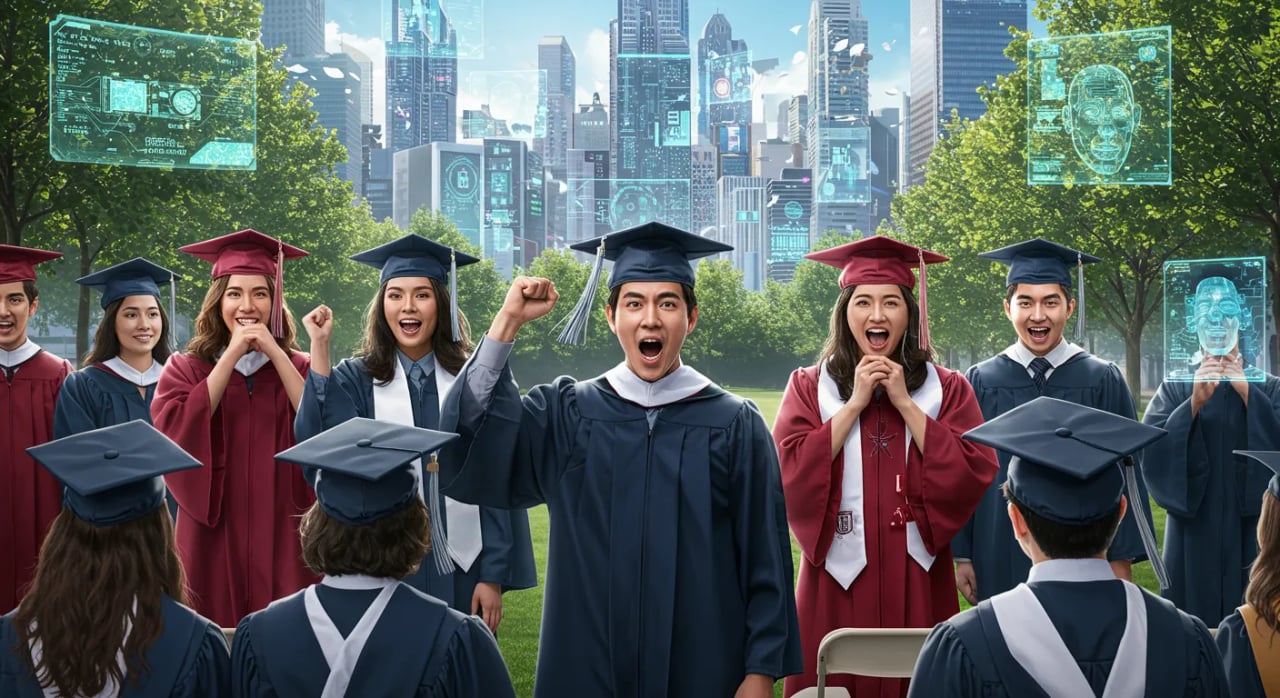



I still remember the optimism in my first job interview—nervously reciting my canned answers, fumbling with my tie, all while imagining a future that felt wide open. Fast forward to 2025, and it seems that vision has clouded over for many new graduates. With entry-level hiring shrinking and AI nabbing tasks once reserved for the rookies, the class of 2025 walks a tightrope between hope and anxiety. And yet, is this the end of an era or just a strange detour on the path to success? Let’s dig into what’s at stake when robots are the competition on day one.
The Vanishing Launchpad: Entry-Level Jobs Under Siege
Take a moment to think back to your first office job. Maybe you fetched coffee, sorted spreadsheets, or handled some basic research. Fast forward to 2025, and you’ll find there’s a bot for nearly every one of those classic entry-level tasks. For today’s college graduates, especially the Class of 2025, the traditional launchpad into the workforce is rapidly disappearing. The culprit? The accelerating impact of AI automation on entry-level jobs.
Entry-level positions, once seen as a rite of passage for new college graduates, are now the first to feel the squeeze from artificial intelligence. Research shows that AI is automating tasks like data entry, simple coding, and even legal research—work that used to be the bread and butter for newcomers. The result? A job market that’s tougher than ever for those just starting out.
According to recent data, the unemployment rate for new graduates has jumped to 5.8% in the first three months after graduation. That’s a notable spike, and it’s hitting the Class of 2025 particularly hard. Tech companies, which once led the charge in entry-level hiring, have slashed new graduate positions by more than 50% since 2019. The numbers tell a stark story: fewer opportunities, more competition, and a growing sense of uncertainty for those entering the workforce.
LinkedIn’s chief economic opportunity officer, Aneesh Raman, draws a striking parallel between today’s AI-driven disruption and the decline of manufacturing jobs in the 1980s.
AI is ‘breaking’ entry-level jobs much like manufacturing jobs disappeared in the ‘80s.It’s a comparison that resonates with many, as the landscape for entry-level hiring shifts under the weight of rapid technological change.
For the Class of 2025, the challenges are real and immediate. The tasks that once helped new hires learn the ropes—routine research, basic coding, administrative support—are now being handled by sophisticated AI systems. Even the humble office coffee run isn’t safe; automation has found its way into every corner of the workplace.
Studies indicate that this AI impact is not just a temporary blip. Entry-level jobs are being reduced or redefined, and the unemployment rate for college graduates is rising faster than for other groups. The economic opportunities that once awaited new grads are narrowing, forcing many to rethink their career paths before they’ve even begun.
As AI automation continues to reshape the job market, the traditional entry-level launchpad is vanishing—leaving the newest wave of college graduates to navigate a landscape that looks nothing like the one their predecessors faced.
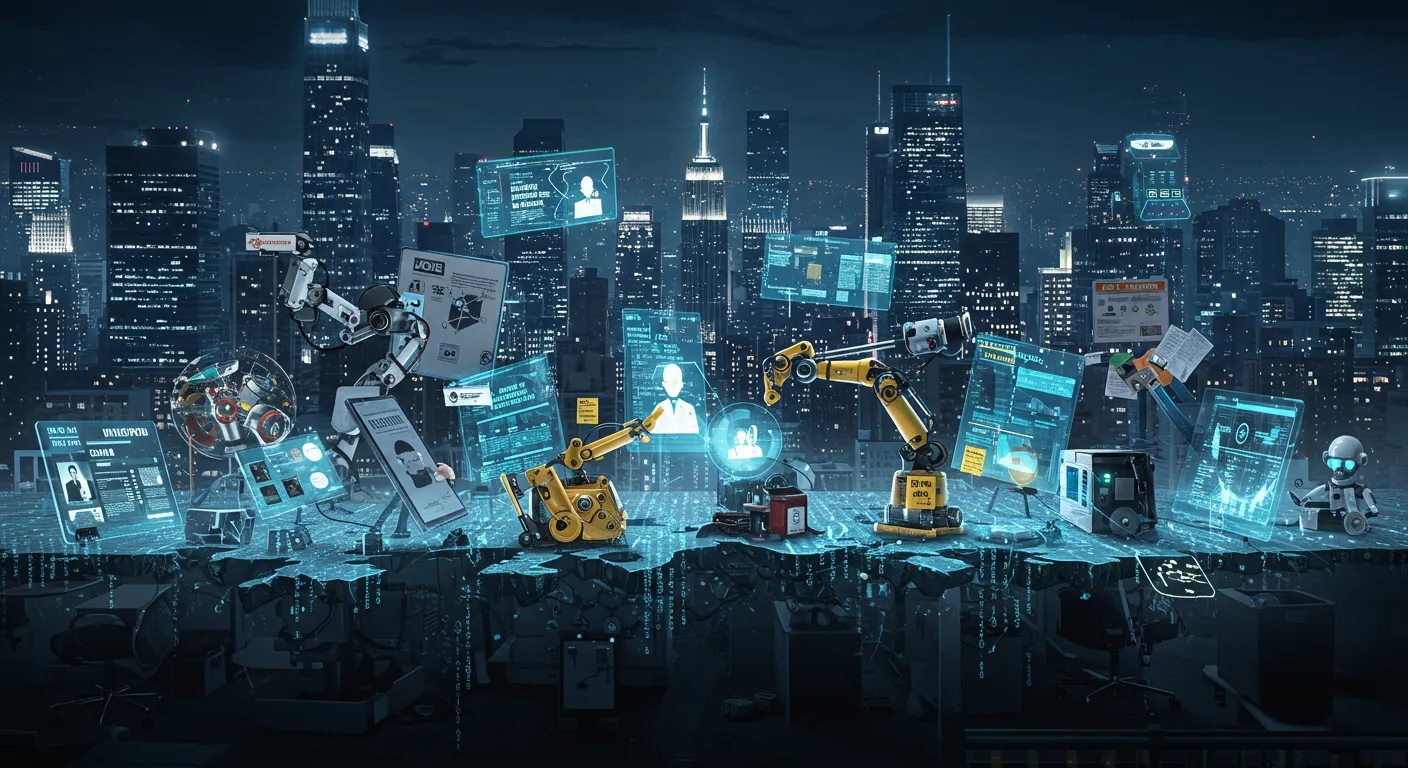
A Day in the Life: Hypothetical Meet-Up Between a New Grad and Their AI Colleague
Picture this: It’s your first week on the job, and you’re settling in, eager to prove yourself. But instead of a fellow new hire at the next desk, you’re greeted by an algorithm—your new AI colleague. The morning starts with a familiar request: “Do you mind handling the spreadsheets?” But before you can even reach for your mouse, your digital desk mate chimes in, “Sorry, already done—my code beat you to it.”
This isn’t science fiction. It’s the new reality for the class of 2025, entering a job market where AI in the workplace is not just common—it’s reshaping the very nature of entry-level work. According to recent reports, artificial intelligence is automating tasks that were once the bread and butter for new graduates: data entry, basic coding, even legal research. As many as 300 million jobs worldwide—about 9.1% of all jobs—could be impacted by AI automation.
For new grads, this shift is more than a technological curiosity. It’s a daily challenge. Onboarding programs now often include training on how to collaborate with machines, not just humans. You might find yourself learning how to prompt an AI tool, troubleshoot its output, or even manage a workflow where your “teammate” never takes a coffee break. The days of learning the ropes by tackling routine assignments are fading fast, replaced by a need to adapt and improvise alongside digital coworkers.
What does this mean for your career? Research shows that AI replacing jobs at the entry level is forcing new graduates to find value in what makes them uniquely human. Emotional intelligence, creative problem-solving, and the ability to improvise—these are suddenly the skills that can’t be automated. As Aneesh Raman, Chief Economic Opportunity Officer at LinkedIn, puts it:
AI creates opportunities for those who can do what AI cannot—think, create, improvise.
In this environment, your ability to read a room, build relationships, and navigate ambiguity is more important than ever. While AI can crunch numbers and generate reports in seconds, it can’t comfort a stressed colleague, pitch a bold new idea, or adapt on the fly when a project goes off script. These are the moments where human skills shine—and where economic opportunities still exist for graduates willing to lean into their strengths.
As AI in the workplace continues to evolve, the class of 2025 faces a landscape where adaptability and emotional intelligence aren’t just nice to have—they’re essential. The job market may be tough, but those who can collaborate with machines while doubling down on what makes them human are finding new ways to stand out.
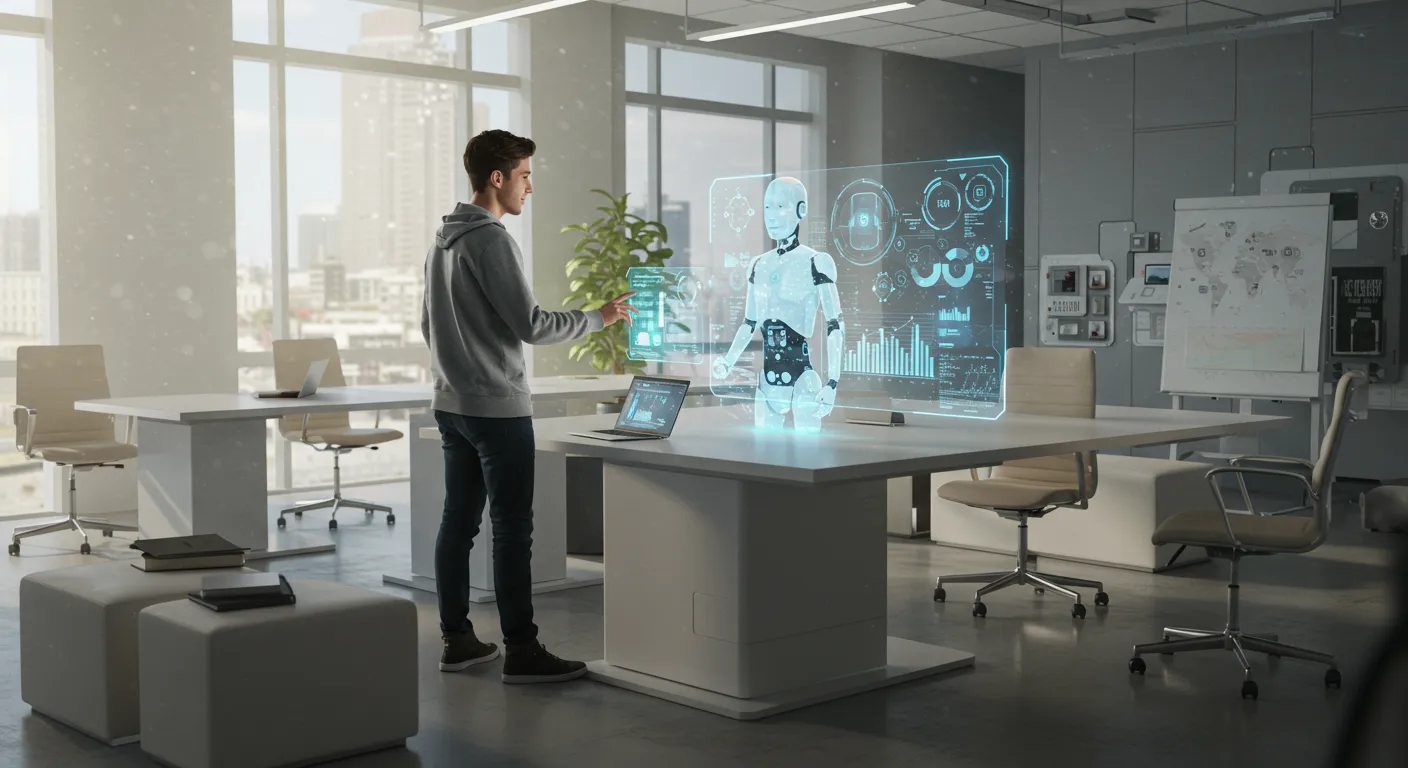 Job Market Trends and Surprising Detours" />
Twists in the Road: Job Market Trends and Surprising Detours
If you’re part of the class of 2025, you’re staring down a job market that looks nothing like what your older siblings or mentors faced. The latest job market trends reveal a landscape full of sharp turns and unexpected roadblocks, especially for those seeking entry-level jobs. The numbers don’t lie: since 2019, tech companies have slashed new graduate hiring by more than 50%. That’s not just a dip—it’s a nosedive, and it hits harder than a bad cup of cafeteria coffee on a Monday morning.
But the tech sector isn’t the only one feeling the squeeze. Workforce reduction is spreading across industries. Law firms, research labs, even traditional business roles—many are being reimagined or outright replaced by AI. Tasks that once gave new hires their start—drafting legal briefs, sifting through data, or even coding—are now increasingly handled by algorithms and automation. As research shows, this isn’t just a blip. It’s a fundamental shift in how work gets done.
Aneesh Raman, LinkedIn’s chief economic opportunity officer, put it bluntly during a recent PBS News Weekend segment:
“The nature of work itself is shifting, not just the jobs.”
That shift is leaving many new graduates in limbo. The unemployment rate for recent grads jumped to 5.8% in the first three months of 2025, outpacing the national average. While there’s no single culprit, AI replacing jobs is a major factor. Automation is not just trimming the fat—it’s cutting into the muscle of entry-level hiring.
Yet, it’s not all doom and gloom. As traditional roles disappear, new and unpredictable opportunities are emerging. Companies are now looking for people who can bridge the gap between humans and machines—think AI support specialists, prompt engineers, and roles focused on human-AI collaboration. These positions didn’t exist a few years ago, but now they’re among the fastest-growing segments for new graduate hiring.
Non-tech sectors aren’t immune to these changes. Law and research, once considered safe bets for new grads, are also being reshaped by automation. The message is clear: adaptability and upskilling are no longer optional. They’re essential. As studies indicate, the push for new skills is rising just as fast as the unemployment rate.
So, if you’re navigating this new job market, expect detours. The road ahead is anything but straight, but with every twist comes a new opportunity—sometimes in places you’d never think to look.

Tough Choices: Emotional Toll and Adaptive Playbooks
If you’re a member of the Class of 2025, you’re facing a job market unlike any in recent memory. The challenges are real, and the AI impact on entry-level jobs is impossible to ignore. Recent data shows the unemployment rate for new college graduates has jumped to 5.8% in the first three months of the year—a figure that’s hard to miss if you’re sending out applications and getting little more than automated rejections in return.
It’s not just the numbers that sting. The emotional toll is everywhere. Job hunting in 2025 feels like a crash course in resilience. Many of you are opening emails that don’t just say “no,” but add a new twist: “your skills have been automated.” That’s a gut punch, and it’s changing the way graduates approach their first steps into the workforce.
Stories are emerging from campuses across the country. Take the engineering major who, after months of fruitless applications, found a new path—leading improv sessions for AI trainers. Or the communications grad who now helps design empathy modules for virtual assistants. These pivots aren’t just clever; they’re necessary. The Class of 2025 challenges are forcing you to rethink what opportunity looks like, and what it means to be “job-ready” in an age where machines can do so much.
Career counseling offices have noticed. The old advice—polish your resume, practice your handshake—now seems almost quaint. Instead, counselors are urging you to “highlight your humanity.” The focus has shifted to adaptability, creative problem-solving, and emotional intelligence. As Aneesh Raman, LinkedIn’s chief economic opportunity officer, puts it:
Instead of asking ‘what can you do?’, ask ‘what can you do that AI can’t?’
This shift isn’t just about landing a job; it’s about protecting your mental health. Support networks and mental health resources are becoming central to career preparation. Universities are expanding counseling services, hosting resilience workshops, and connecting students to alumni who’ve navigated similar uncertainty. The message is clear: you’re not alone, and your ability to adapt is as valuable as any technical skill.
Research shows that economic opportunities for graduates are evolving rapidly. While AI is closing some doors, it’s also opening new ones—if you’re willing to pivot, learn, and lean into your unique strengths. The AI impact isn’t just a headline; it’s a daily reality shaping how you see yourself and your future.
For the Class of 2025, the playbook is being rewritten in real time. Empathy, creativity, and resilience aren’t just buzzwords—they’re survival skills. And as the landscape shifts, so too does the definition of success.
Where Do We Go from Here? Human vs. Machine, Round Two
As the class of 2025 steps into a job market transformed by the rapid rise of artificial intelligence, the question on everyone’s mind is: what now? The AI Impact on entry-level jobs is clear—automation is reshaping the landscape, and traditional roles for new graduates are disappearing or evolving at a pace few could have predicted. But the narrative isn’t all doom and gloom. In fact, the story of AI in the workplace is still unfolding, and there are reasons to believe that adaptation and innovation could lead to new economic opportunities.
Recent job market trends show that while AI is taking over tasks once reserved for entry-level workers, it’s also opening doors to hybrid roles and new fields that didn’t exist a decade ago. Policy changes and corporate responsibility are emerging as crucial factors in this transition. Companies are being called upon to rethink how they onboard and train new talent, while governments and educational institutions are under pressure to update curricula and provide pathways that prepare graduates for an AI-driven economy.
Aneesh Raman, chief economic opportunity officer at LinkedIn, put it plainly:
“AI’s story in the workplace is only half-written.”That sense of uncertainty is both a challenge and an opportunity. The unpredictable nature of job market trends means surprises—both positive and negative—are likely. For some, this could mean the dawn of a new “golden age” of entry-level jobs, just reimagined for a digital-first world. For others, it may require a willingness to pivot, retrain, and embrace lifelong learning as the new normal.
Research shows that AI is changing, not ending, the story for new graduates. The skills that set humans apart—creativity, empathy, adaptability—are becoming more valuable, not less. While AI can process data and automate repetitive tasks, it still can’t replace the human touch. Even the most advanced algorithm can’t grab coffee after work, brainstorm over lunch, or deliver a killer dad joke in the break room.
As you look ahead, remember that the future of work is not just about surviving the AI jobquake, but about finding ways to thrive alongside it. Policy, education, and creative adaptation will shape which roles survive and which ones are born. The next chapter in the human vs. machine saga is unwritten—and you have a part in how it unfolds.
