
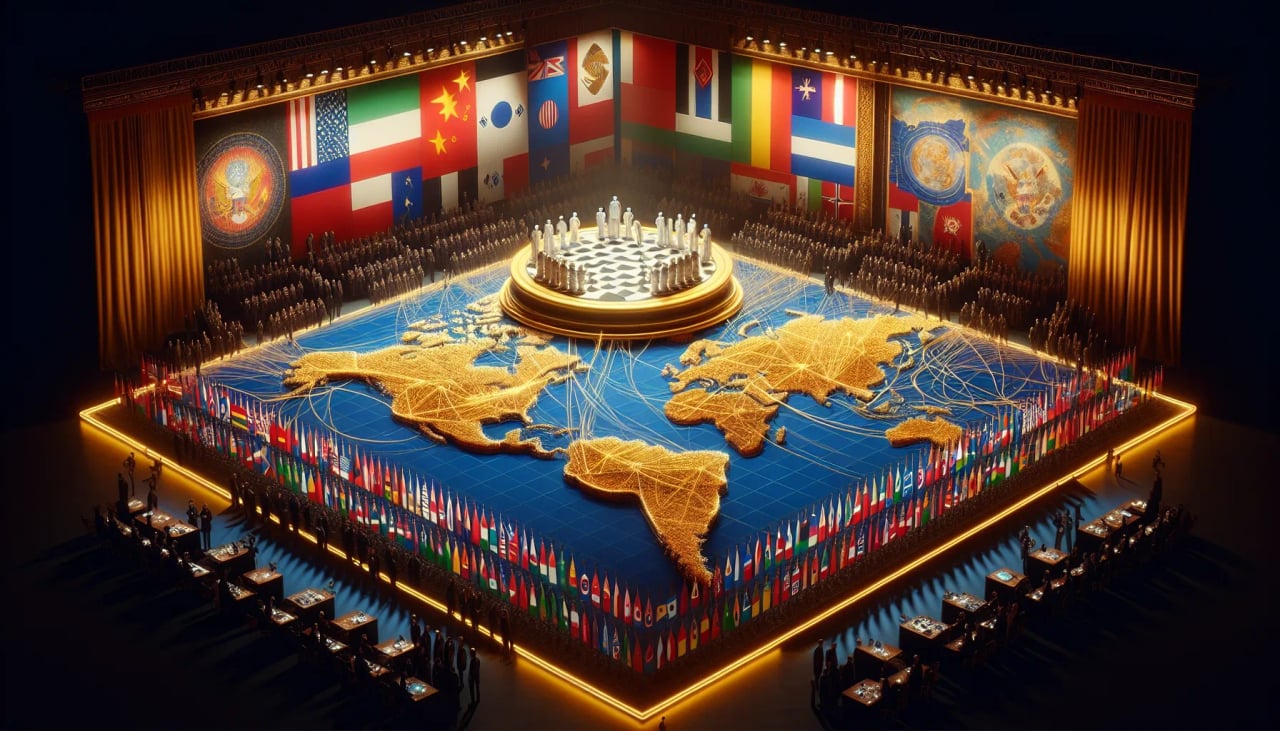



Who would have guessed that a childhood fascination with board games might offer the best lens for understanding the Trump administration’s foreign policy? Every headline out of Washington lately feels less like statecraft and more like a mash-up of Monopoly, chess, and a late-night poker game – where nobody quite knows whose rules we’re following. As President Trump jets off for his grand foreign tour (May 2025), let’s tumble down the rabbit hole of global intrigue, bold moves, and outcomes that puzzle even seasoned diplomats.
Deal or No Deal: The U.S.-China Tariff Tango
A Geneva Breakthrough—But for Whom?
On May 11, 2025, the world watched as the U.S. and China announced a sudden breakthrough in their long-running trade standoff. The venue? Geneva. The headline? Tariffs slashed by 115 percentage points—for 90 days only. Sounds dramatic. But what does it mean for the average American? Not as much as you might hope.
What’s Really Changed?
- Temporary relief: The new deal drops tariffs from a punishing 145% down to 30%. But only for three months. After that, who knows?
- Negotiators in the spotlight: Treasury Secretary Scott Bessent and U.S. Trade Representative Jamieson Greer led the talks. Neither is a seasoned diplomat. Both are now under the microscope.
- Political spin: The Trump administration is touting this as a major win. But U.S. consumers? They’re still paying more for Chinese goods. Prices haven’t magically dropped overnight.
Who’s Feeling the Pinch?
Despite the headlines, shoppers across the U.S. are still seeing higher price tags on electronics, clothing, and everyday imports from China. A 30% tariff is no small fee. For some families, it’s the difference between a new laptop and sticking with the old one for another year.
Chess Moves or Just a Stalemate?
Supporters of President Trump see his unpredictable style as a masterstroke. Senior adviser Stephen Miller even said,
'Watching Trump negotiate is like seeing a chess grandmaster at work.'But critics aren’t buying it. They point out that the 90-day window is just that—a window. What happens when it slams shut? Will tariffs shoot back up? Will trade grind to a halt again? No one seems certain.
Meet the Negotiators
- Scott Bessent: Once a hedge fund manager, now Treasury Secretary. Not your usual face at the bargaining table.
- Jamieson Greer: Trade lawyer turned U.S. Trade Representative. Also new to the world of high-stakes diplomacy.
Their lack of traditional diplomatic experience has raised eyebrows. Some insiders wonder if that’s why the deal is so short-term. Or maybe that’s the plan—keep everyone guessing.
Jobs, Factories, and Unanswered Questions
The administration promised these tariffs would bring manufacturing jobs back to the U.S. But so far, factories haven’t reopened en masse. Skeptics say the real winners might be politicians, not workers.
- Tariff reduction: 115 percentage points
- Tariff duration: 90 days
- Remaining tariff: 30%
- Original maximum tariff: 145%
Is this breakthrough the start of a new era, or just another twist in the ongoing U.S.-China tariff tango? The next move is anyone’s guess.
Negotiation Olympics: From Ukraine to Kashmir
Unpredictable Moves on the World Stage
Diplomacy under Trump’s second term has become a high-stakes contest. Some call it a “Negotiation Olympics,” where unpredictability is the main event. Every week seems to bring a new headline, a new alliance, or a sudden reversal. The latest? A flurry of diplomatic activity stretching from Eastern Europe to South Asia and the Middle East.
1. Ukraine: Talks Under Pressure
The world watched as Ukrainian President Volodymyr Zelensky agreed to face Russian President Vladimir Putin at the negotiating table. The venue? Turkey. Not Brussels, not Geneva—Turkey. This wasn’t a gentle nudge; it was pressure, plain and simple. Trump’s administration made it clear: no talks, no favor. The European Union, meanwhile, pushed for a 30-day ceasefire before any talks. Russia said no. Trump pushed ahead anyway.
European allies felt sidelined. Moscow, on the other hand, saw its leverage grow. The U.S. president’s blunt message on his social network summed up the mood:
“I’m starting to doubt that Ukraine will make a deal with Putin.” – Donald Trump
It’s hard not to wonder—was this negotiation, or just raw power?
2. India-Pakistan: Ceasefire by Outsiders
While the world’s attention was glued to Ukraine, another crisis simmered. India and Pakistan, nuclear rivals, edged dangerously close to open conflict over Kashmir. Enter Vice President JD Vance and Secretary of State Marco Rubio. Neither is a career diplomat. Yet, they somehow brokered a ceasefire.
- Ceasefire brokered by Rubio and Vance
- India cautious, Pakistan welcoming
- Traditional U.S. diplomats left on the sidelines
Is this a new style of peacemaking, or just luck? Hard to say.
3. Gaza: Hostage Release as Leverage
In Gaza, the release of Edan Alexander—the last U.S. hostage—became a bargaining chip. Hamas agreed to let him go, but not out of goodwill. The move was tied to ongoing negotiations with Israel, with the U.S. using the moment to apply pressure on both sides.
- Edan Alexander released
- Hostage diplomacy, not humanitarian gesture
- Israel pushed toward new talks
The lines between diplomacy and deal-making blur. Sometimes, they vanish entirely.
4. Fallout: Allies Frustrated, Russia Emboldened
Across Europe, frustration grows. Trump’s unpredictable tactics have left allies feeling alienated and unsure. Russia, meanwhile, appears emboldened by the U.S. approach. Some say America’s role as an “honest broker” is fading. Others claim the chaos is calculated.
One thing’s certain: the rules of global diplomacy are being rewritten, one unpredictable move at a time.
Chessboard or Casino? Trump’s Unorthodox Playbook
Outsiders at the Helm: Diplomacy Redefined
It’s not business as usual at the State Department. President Trump, in his second term, has swept aside seasoned diplomats, ushering in a new era of outsider negotiators. Real estate investor Steve Witkoff, for example, now leads talks on some of the world’s most volatile crises—think Middle East, Iran, Ukraine. Is this bold or reckless? Depends on who you ask. Critics say these envoys lack the finesse needed for high-stakes diplomacy. Supporters? They call it fresh thinking, a break from “the swamp.”
“Watching a grand master in chess perform.” – Stephen Miller
That’s how senior adviser Stephen Miller described Trump’s approach. But is it really chess—or more like high-stakes poker?
Deals Over Diplomacy: The Transactional Turn
- Ukraine’s minerals: Trump compelled Kyiv to share profits from its mineral wealth with the U.S. Some call it smart business. Others see echoes of colonial exploitation.
- The Boeing 747-8 saga: Trump’s request for a luxury jet from Qatar—worth hundreds of millions—sparked an ethics firestorm. Was it for Air Force One, or personal use after leaving office? The lines blurred. Scrutiny followed.
This isn’t the old handshake-and-photo-op diplomacy. Every negotiation seems to have a price tag attached.
Allies on Edge: The Canada Rift
Traditional alliances? They’re shifting, sometimes fracturing. Canada, once the U.S.’s closest neighbor and partner, is now openly pushing back. Prime Minister Mark Carney didn’t mince words after Trump’s talk of annexing Canada as the 51st state.
“The US-Canada relationship... irreparably altered.” – Mark Carney
That’s not just diplomatic language. It’s a warning. The old North American partnership may never look the same.
Genius or Gamble? Volatility on the World Stage
- Tariffs on China shot up to 145%—then dropped to 30% after Geneva talks. U.S. consumers? Still bracing for higher prices.
- New UK trade deal? A 10% tariff remains on most British goods. Not exactly a free trade revolution.
- Negotiators like Scott Bessent, with little China expertise, now face off with seasoned Beijing officials. The risks? Hard to ignore.
Some call Trump’s tactics “deal-making genius.” Others warn of chaos. Global markets swing. Allies hedge their bets. The world watches, unsure if this is the art of the deal—or the roll of the dice.
Winners, Losers, and the Human Cost: Fallout Across Borders
The U.S.-UK Trade Deal: A Milestone or Just a Mirage?
The ink was barely dry on the new U.S.-UK trade agreement when President Trump boarded Air Force One for his whirlwind tour of the Middle East. His team called it a “milestone.” But was it? The deal, finalized just before Trump’s trip, keeps a 10% tariff on most UK goods. That’s not the relief many hoped for. U.S. consumers and British exporters are still feeling the pinch. Commerce Secretary Howard Lutnick brushed off concerns, calling them
‘Silly arguments’about tariffs raising prices. Yet, for many, the numbers don’t lie. Prices remain high. The promise of cheaper imports? Still out of reach.
Humanitarian Outcomes: Hostage Releases and a Deepening Crisis
There have been some headlines that read like victories. The release of Edan Alexander, the last living U.S. hostage in Gaza, was one. But the bigger picture is grim. Trump’s proposals for Gaza—widely criticized as supporting ethnic cleansing—have inflamed tensions. The humanitarian situation is worsening. Aid convoys struggle to get through. Food and medical supplies are running out. For every family reunited, many more face uncertainty, hunger, and fear. The crisis is far from over.
Foreign Aid Cuts: The Global Ripple Effect
The administration’s approach to foreign assistance has been blunt. Funding for HIV/AIDS prevention and famine relief has been slashed. USAID, once at the forefront of global health, is now a shadow of its former self. What does this mean on the ground?
- Millions at risk of losing access to life-saving HIV medication
- Communities in Africa and Asia facing increased hunger and malnutrition
- International NGOs scrambling to fill the gap, often unsuccessfully
Warnings are growing louder. Some experts say these cuts could cost lives—possibly millions. It’s not just numbers on a spreadsheet. It’s real people, real consequences.
America’s Reputation: Honest Broker or Partisan Player?
Perhaps the most intangible fallout is the damage to America’s reputation. For decades, the U.S. positioned itself as an “honest broker” in global affairs. Now, that image is cracking. Allies in Europe and North America are quietly seeking new security arrangements, hedging their bets. Rivals, meanwhile, see opportunities.
- Canada’s Prime Minister warns the U.S.-Canada relationship is “irreparably altered.”
- European leaders question Washington’s reliability.
The world is watching. Some say America is losing its moral compass. Others argue it’s just a new chapter—one where old alliances matter less, and self-interest rules. But the question lingers: at what cost?
Unraveling the Score: Looking Beyond the Headlines
As Air Force One lifted off from West Palm Beach on May 4, 2025, the world watched. Trump was heading to Saudi Arabia, Qatar, and the United Arab Emirates. Not London, not Berlin—Riyadh, Doha, Abu Dhabi. It’s a clear signal: the U.S. is pivoting, eyes fixed on the Gulf. Some call it pragmatic. Others, opportunistic. Either way, the message is hard to miss.
Middle East in the Spotlight
Trump’s focus on the world’s richest nations isn’t subtle. The Gulf states—flush with oil wealth and ambition—are now central to U.S. strategy. Is this just about money? Or is it about reshaping the very order of alliances? The old transatlantic bonds look strained. New patterns are forming, but they’re not quite solid yet.
Frenzied Diplomacy: Solving or Spinning?
The administration’s pace is dizzying. One day, a breakthrough with China on tariffs. The next, a ceasefire in South Asia. Then, pressure on Ukraine to talk with Russia, even as Europe grumbles. Is all this activity fixing crises—or fueling them? Critics argue that Trump’s own moves have sparked many of these fires. Supporters see a master negotiator at work, playing chess while others play checkers.
'The most unorthodox US foreign policy in modern history.'
It’s not just the destinations. It’s the style. Outsiders, not diplomats, lead talks. Deals are transactional, sometimes personal. The administration touts wins—a tariff cut here, a hostage release there. But the details often reveal more complexity. Tariffs drop, but prices stay high. Hostages come home, but the broader conflicts drag on.
Unanswered Questions
What does all this mean for America’s place in the world? Allies in Europe and North America are uneasy. Some, like Canada, openly warn that the old trust is gone. Global markets wobble, unsure what comes next. The strategic order—once predictable, if imperfect—now feels up for grabs.
There’s a sense of uncertainty in every headline. Will America’s new friends in the Gulf deliver stability, or just more deals? Can old alliances survive the turbulence? And what about the long-term costs—economic, moral, diplomatic?
Trump’s second-term diplomacy is rewriting the script, no question. But the ink is still wet, and the story far from finished. The world is watching, waiting to see if this gamble pays off—or if the price is higher than anyone imagined.
