



Let me tell you about the time I watched global headlines flicker with Tanzania’s promise – a country seemingly turning a new leaf after years of hardline rule. But just this month, while fixing myself a cup of overly sweet tea, I stumbled on a story that made me wince: activists from Kenya and Uganda, both human rights advocates, were reportedly detained and tortured for daring to observe a controversial court case. It was a stark reminder that in politics, celebrations can turn to mourning overnight.
Broken Promises: From Reformist Rhetoric to Repression
When President Samia Suluhu Hassan took office in 2021, many in Tanzania and beyond hoped for a new era. Her early days were marked by bold moves: she unbanned political rallies, repealed restrictive media laws, and released the former leader of the CHADEMA Opposition Party from prison. These actions, coming after the harsh rule of John Magufuli—known as "the Bulldozer"—sparked optimism that real electoral reforms and a more open political climate in Tanzania were finally within reach.
But as the 2025 general elections draw near, that optimism has faded. The shift is stark. By late 2024, the atmosphere had soured. The government’s tone hardened, and the crackdown on opposition voices intensified. Research shows that Tanzania’s international status dropped from “Partly Free” to “Not Free,” a direct reflection of these changes. The reversal of early reforms is now impossible to ignore.
The CHADEMA Opposition Party has been hit hardest. In September 2024, CHADEMA official Ali Kibao was abducted and murdered—a chilling signal to critics. Around the same time, hundreds of party officials and supporters were detained ahead of a planned rally. Human rights groups, including Amnesty International, have documented a wave of forced disappearances, unlawful killings, and mass arrests. The government’s use of anti-treason laws to silence dissent is a recurring theme, especially as elections approach.
The case of Tundu Lissu, CHADEMA’s leader, stands out. Lissu, who survived a 2017 assassination attempt, was arrested in April 2025 on treason charges. He had been organizing rallies under the slogan, “No reforms, no elections,” pushing for fairer rules. Now, with CHADEMA barred from participating in the October 2025 vote, many see the government’s actions as a direct attack on political competition. Lissu’s American lawyer, Robert Amsterdam, called the charges “completely bogus,” warning that the trial is a tool to sideline opposition.
The repression has not been limited to Tanzanian citizens. In May 2025, Kenyan journalist Boniface Mwangi and Ugandan activist Agather Atuhaire traveled to Tanzania to observe Lissu’s court case. Their visit ended in horror. Both activists say they were detained, tortured, and sexually assaulted by Tanzanian security agents. Mwangi described his ordeal at a Nairobi press conference, stating:
“The pain cut so deep that l couldn't even cry, but screamed in excruciating pain.”
Atuhaire, a recipient of the International Woman of Courage award, reported being raped while in custody. The Tanzanian police deny these allegations, but the U.S. State Department has expressed concern. International outrage has followed, with calls for accountability and the immediate release of detained opposition figures.
As the Tanzania government repression deepens, the political climate grows more tense. Studies indicate that the initial reforms under President Samia Suluhu Hassan have been systematically reversed. The crackdown on the CHADEMA Opposition Party, the use of violence and intimidation, and the silencing of critics all point to a government determined to maintain control—no matter the cost to democracy.
‘No Reforms, No Elections’: Inside the CHADEMA Disqualification
As Tanzania approaches its October 2025 general elections, the political landscape is marked by growing accusations of repression and the strategic sidelining of opposition parties. The CHADEMA Disqualification from the upcoming polls has become a flashpoint, drawing attention to the government’s use of both legal and physical threats to silence dissent.
CHADEMA, Tanzania’s main opposition party, was officially barred from participating in the 2025 elections after refusing to sign a government-mandated code of conduct. The party argued that this code was not only restrictive but also unconstitutional, designed to stifle fair competition. This move effectively eliminates significant competition for the ruling party, raising serious questions about the legitimacy of the electoral process.
The disqualification comes amid a broader crackdown on opposition leaders. Tundu Lissu, CHADEMA’s outspoken leader, has become the face of resistance. In April 2025, Lissu was arrested on Tundu Lissu Treason Charges after leading nationwide rallies demanding electoral reforms. His slogan, “No reforms, no elections,” captured the desperation and urgency felt by many Tanzanians seeking a level playing field.
Lissu’s arrest is not an isolated event. He has long been a target of political violence—most notably surviving a 16-bullet assassination attempt in 2017. Now, with treason charges hanging over him, Lissu faces the death penalty if convicted. Under Tanzanian law, treason is non-bailable, a fact his American lawyer, Robert Amsterdam, has called out as a deliberate tactic to suppress political opposition. As Amsterdam told NPR,
“We demean the concepts of courts and justice when we talk about the kind of trials that are happening in East Africa.”
The use of the legal system to stifle dissent is not new in Tanzania, but recent events have intensified international scrutiny. In June 2025, Kenyan journalist Boniface Mwangi and Ugandan activist Agather Atuhaire held a press conference in Nairobi, recounting harrowing details of their detention and alleged torture by Tanzanian authorities. The activists had traveled to Tanzania to observe what they described as a “sham” court case against Lissu. Their claims of sexual assault and torture have been denied by Tanzanian police, but the U.S. State Department and human rights groups have expressed grave concern.
Research shows that the government’s actions extend beyond the courtroom. In 2024, CHADEMA official Ali Kibao was abducted and murdered, and hundreds of party members were detained ahead of planned rallies. Amnesty International has documented a pattern of disappearances, unlawful killings, and mass arrests targeting government critics. These actions, coupled with the CHADEMA Disqualification and Tundu Lissu Charges, paint a picture of a legal system leveraged to prevent political dissent.
As the Tanzania Elections 2025 draw near, the crackdown on opposition leaders has intensified. The government’s strategy—disqualifying major parties, arresting opposition figures, and using anti-treason laws—has drawn condemnation from rights organizations and foreign governments alike. The fate of Lissu and CHADEMA remains uncertain, but the message is clear: dissent in Tanzania now comes with unprecedented risks.
 Human Rights Violations" />
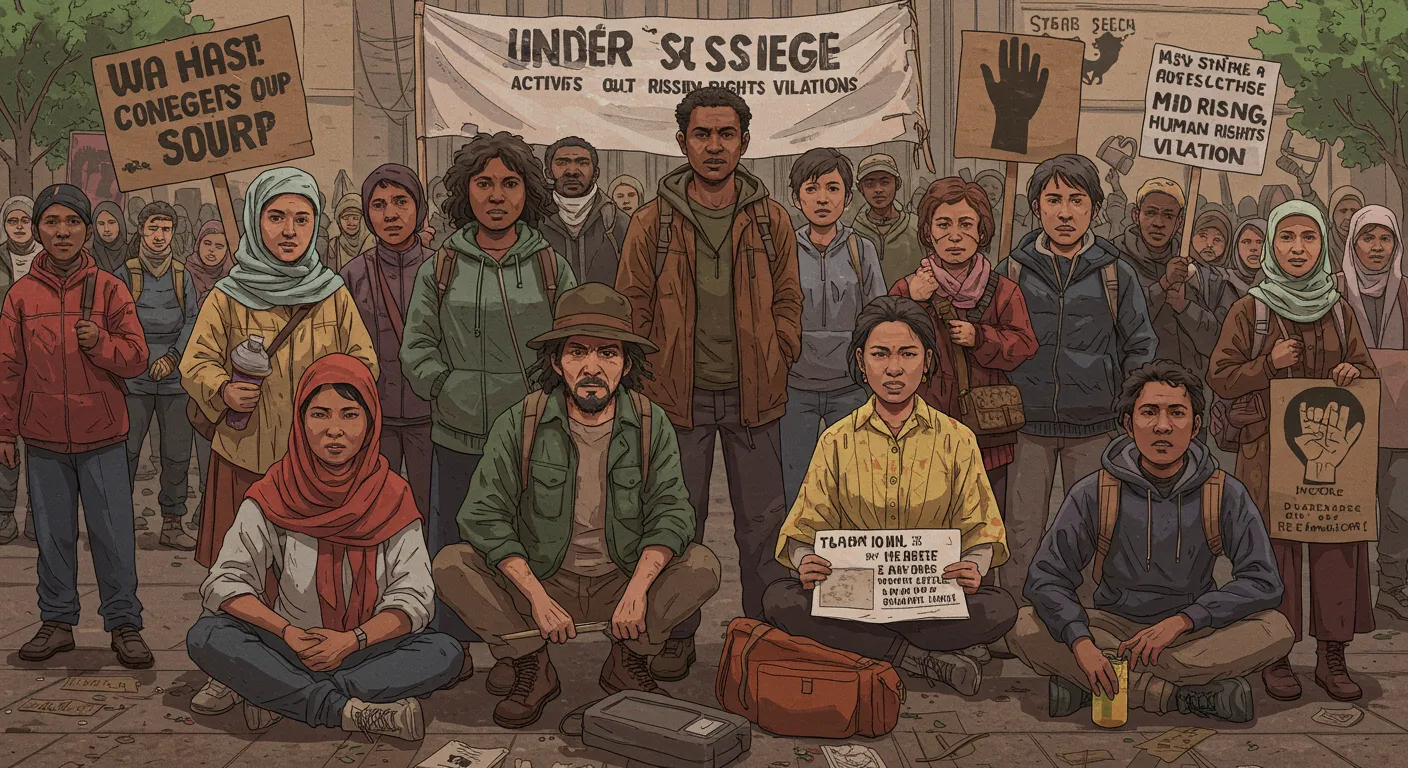
Under Siege: Activists Speak Out Amid Rising Human Rights Violations
On June 2, 2025, the world’s attention turned to Nairobi, where Kenyan journalist Boniface Mwangi and Ugandan activist Agather Atuhaire stood before reporters and described a harrowing ordeal. Both activists, known for their outspoken defense of human rights, alleged they were detained, tortured, and sexually assaulted by Tanzanian security forces after traveling to observe the trial of opposition leader Tundu Lissu. Their press conference, covered by NPR and other major outlets, brought the issue of Activists Detained Tortured in Tanzania into sharp focus just months before the country’s general elections.
Mwangi recounted, in distressing detail, being stripped, hung upside down, and sexually assaulted, all while being forced to shout praises for President Samia Suluhu Hassan. Atuhaire, a recipient of the US State Department’s International Woman of Courage award, stated she was separated and raped in custody. The activists say they were eventually dumped near the border, traumatized and shaken. “The pain cut so deep that I couldn't even cry, but screamed in excruciating pain,” Mwangi told the press, his voice breaking.
Tanzanian authorities have denied these allegations. Yet, the US Department of State has publicly expressed concern, and Amnesty International has called for an immediate investigation. The Amnesty International Report for 2024 documents a chilling pattern: four government critics forcibly disappeared, one unlawfully killed, and widespread reports of arbitrary detention and torture. These incidents are not isolated. Instead, they fit a broader trend of Human Rights Violations and Tanzania Government Repression that has intensified as the October 2025 elections approach.
International watchdogs, including NPR, have corroborated these troubling accounts. Their reporting points to a wave of abductions and abuses, especially targeting opposition figures and their supporters. The ongoing trial of Tundu Lissu, leader of the CHADEMA party, is a focal point. Lissu, who survived a 2017 assassination attempt, now faces treason charges that his American lawyer, Robert Amsterdam, calls “completely bogus.” If convicted, Lissu could face the death penalty. Amsterdam told NPR, “We demean the concepts of courts and justice when we talk about the kind of trials that are happening in East Africa.”
The crackdown on dissent is not new, but research shows it has intensified under President Hassan. After an initial period of reform, her administration has reverted to tactics reminiscent of her predecessor, John Magufuli. In September 2024, CHADEMA official Ali Kibao was abducted and murdered. Hundreds of party officials have been detained, and the opposition has been barred from the 2025 elections. The government’s use of security agencies to silence critics is now seen as a repeated pattern, drawing rare international pressure.
Foreign activists have alleged unimaginable cruelty by security forces, highlighting torture and human rights violations.
Amnesty International and the US Department of State are not alone in raising alarms. NPR’s editorial coverage places Tanzania’s crisis within a wider context of state-driven abuses across Africa. As the October elections near, the fate of activists like Boniface Mwangi and Agather Atuhaire serves as a stark warning about the costs of speaking out under a regime increasingly intolerant of dissent.

The International Backdrop: Why Tanzania’s Crackdown Matters Beyond Its Borders
As Tanzania moves closer to the October 2025 general elections, the world is watching. The recent Tanzania crackdown on opposition leaders and activists is not just a local story—it is part of a larger pattern of political repression sweeping across Africa. When you look at the details, it’s clear that what’s happening in Tanzania echoes the struggles for freedom of expression and democracy in neighboring countries like Uganda and Sudan.
The NPR report from June 7, 2025, brings these connections into sharp focus. The harrowing accounts of Kenyan journalist Boniface Mwangi and Ugandan activist Agather Atuhaire, who allege torture and sexual assault while in Tanzanian custody, have shocked international audiences. Their stories, told at a Nairobi press conference, highlight the risks faced by those who dare to observe or challenge the Tanzanian government’s actions. These events are not isolated. Instead, they fit a troubling regional trend: the rollback of democratic norms and the shrinking of civic space.
Tundu Lissu’s case is emblematic. His American lawyer, Robert Amsterdam—who also represented Ugandan opposition figure Bobi Wine—draws a direct line between Tanzania’s use of treason charges and similar tactics used elsewhere to silence dissent. “We demean the concepts of courts and justice when we talk about the kind of trials that are happening in East Africa,” Amsterdam told NPR. The parallels are hard to ignore. In both Uganda and Tanzania, opposition leaders face trumped-up charges, arbitrary detention, and the threat of violence, all under the guise of legal process.
International media coverage, especially from outlets like NPR, plays a crucial role in keeping these stories alive. By linking Tanzania’s crackdown to global democracy struggles, such reporting ensures that the plight of activists and opposition figures is not forgotten. This sustained attention matters. Research shows that global scrutiny can put pressure on governments to change course—or at least to moderate their most repressive actions. Conversely, when the world looks away, crackdowns often intensify.
Organizations like Amnesty International have been vocal in their condemnation, calling for the immediate release of Tundu Lissu and an end to the repression of opposition leaders. The US Department of State has also expressed concern, signaling that Tanzania’s actions are being closely monitored by the international community. These responses underscore the stakes: Tanzania’s fate is a bellwether for the health—or frailty—of democracy in the region.
The broader context is sobering. Across Africa, and indeed worldwide, civic space is shrinking. Governments are tightening their grip ahead of elections, using legal and extralegal means to stifle dissent. The Tanzania Elections 2025 will be a critical test—not just for Tanzanians, but for the principle of freedom of expression everywhere. As one observer put it,
'When dissent is crushed, democracy dies.'
In the end, the international spotlight is both a shield and a warning. For Tanzania, and for the region, the coming months will reveal whether that light is enough to protect the fragile promise of democracy.
