
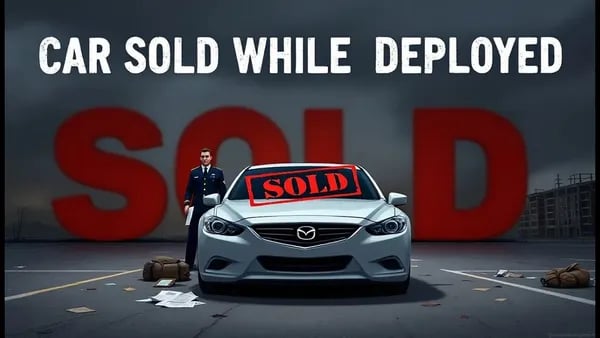



Imagine serving your country overseas, focusing on your mission, only to return home and discover that your car has been sold at auction without your consent. This is the harsh reality faced by one Navy lieutenant, highlighting the importance of laws like the Service Member Civil Relief Act. In this post, we'll delve into this surprising incident and its implications for those who serve our nation.
The Eye-Opening Incident
Imagine returning home after serving your country, only to find that your car has been auctioned off while you were deployed. This is exactly what happened to a Navy lieutenant, and it’s a story that raises serious questions about the treatment of our service members.
Summary of the Incident
The incident revolves around a Navy lieutenant who was deployed when his car, a 2011 Mazda 626, was auctioned by a towing company. This wasn’t just any vehicle; it held personal items and memories for the lieutenant. The emotional impact of losing such a possession while serving overseas is profound. Can you imagine coming back to find that your belongings have been sold off without your consent?
Details on the Towing Company’s Actions
What’s even more shocking is that the towing company auctioned the car without obtaining a court order. This is a blatant violation of the Service Member Civil Relief Act (SCRA), which is designed to protect military personnel from such actions. The SCRA ensures that service members cannot have their property repossessed or auctioned without proper legal proceedings. The towing company’s failure to follow this protocol raises serious concerns about their practices.
As one observer noted,
“It’s wild that the towing company didn’t even get a court order.”
This statement encapsulates the disbelief many feel regarding the towing company’s actions. Were they simply unaware of the law? Or was it a case of negligence? Either way, the lieutenant suffered unnecessary distress.
The Emotional Impact on the Service Member
Returning home from deployment is supposed to be a joyous occasion. However, for this lieutenant, it was marred by the realization that his car was gone. The emotional toll of such an experience cannot be overstated. It’s not just about the vehicle; it’s about the sense of security and belonging that comes with having your personal items intact.
For many service members, their belongings represent a connection to home. Losing them can feel like losing a part of oneself. This incident highlights the importance of legal protections for military personnel. Without them, service members are vulnerable to actions that can have lasting emotional and financial consequences.
Legal Context: The Service Member Civil Relief Act (SCRA)
The SCRA was enacted to provide essential protections for active-duty military members. It ensures that they are not unfairly treated while serving their country. This includes safeguards against repossession and auctioning of property without proper legal proceedings. The lieutenant’s situation underscores the critical need for these protections.
Statistics show that violations of the SCRA are not uncommon. The Justice Department has recovered over $481 million due to such violations. This alarming figure indicates that many service members face similar challenges. It raises the question: how many more individuals are affected by negligence or ignorance of the law?
Consequences for the Towing Company
In this case, the lieutenant was awarded $7,500 in damages, and the towing company faced a $2,000 penalty. While it may seem like a victory, the penalties feel inadequate when weighed against the emotional distress caused. The towing company’s actions should serve as a wake-up call for others in the industry.
There is a pressing need for systematic changes within towing companies. They should be required to check military databases before taking action against a vehicle. This simple step could prevent unnecessary complications and show respect for those who serve our nation.
Final Thoughts
As we reflect on this incident, it’s essential to recognize the sacrifices made by service members. The legal frameworks in place, like the SCRA, are designed to protect them. However, as this case illustrates, there are still significant gaps that need to be addressed.
We must remain vigilant and advocate for the rights of those who protect our freedoms. The story of the Navy lieutenant serves as a reminder of the importance of compliance with legal protections and the need for respect towards our military personnel.
Understanding Legal Protections for Service Members
When you think about the sacrifices made by service members, it’s essential to understand the legal protections in place to support them. One of the most significant laws is the Service Member Civil Relief Act (SCRA) . This act is designed to provide vital safeguards for active-duty military personnel. But what exactly does it entail, and how does it impact you or someone you know in the military?
Overview of the Service Member Civil Relief Act (SCRA)
The SCRA is a federal law that offers a range of protections for service members. Its primary purpose is to ensure that those who are serving our country are not unfairly treated while they are away. Here are some key points about the SCRA:
-
Protection Against Repossession: One of the most crucial aspects of the SCRA is that it prevents the repossession of vehicles without a court order. This means that if you're deployed, your car cannot be taken away without proper legal proceedings.
-
Housing Protections: The SCRA also provides protections related to housing. For instance, it can prevent landlords from evicting service members without a court order.
-
Credit Protections: The act helps service members manage their credit obligations, ensuring that they are not penalized for missing payments while they are deployed.
These protections are vital. They ensure that service members can focus on their duties without worrying about their personal affairs back home. But despite these safeguards, many misconceptions persist about military legal rights during deployment.
Common Misconceptions About Military Legal Rights
Many people believe that service members have unlimited protections under the SCRA. However, this is not entirely true. Here are some common misconceptions:
-
Myth 1: Service members are completely immune from legal actions.
-
Myth 2: All debts are automatically forgiven during deployment.
-
Myth 3: The SCRA applies to all service members equally, regardless of their status.
Understanding these misconceptions is crucial. They can lead to confusion and, in some cases, exploitation of service members who may not know their rights. You might wonder, how can such misunderstandings persist when the stakes are so high? The answer often lies in a lack of awareness and education about the SCRA.
Examples of Legal Conflicts Military Personnel May Face
Service members can encounter various legal conflicts while deployed. Here are a few examples:
-
Vehicle Repossession: As mentioned earlier, there have been cases where towing companies auctioned off vehicles without following legal protocols. Such actions can lead to significant losses for service members.
-
Evictions: Some landlords may attempt to evict service members without adhering to the legal requirements set forth by the SCRA.
-
Credit Issues: Service members may face difficulties with creditors who do not recognize their military status, leading to unfair treatment.
These conflicts highlight the importance of understanding your rights under the SCRA. It’s about fairness. As one expert noted,
“It’s about fairness if someone’s unavailable because they’re serving, the law steps in to protect them.”
This statement encapsulates the essence of the SCRA and its role in safeguarding the rights of those who serve.
Conclusion
The SCRA plays a crucial role in protecting deployed service members from unjust legal actions. However, it’s essential to remain vigilant and informed about your rights. Misunderstandings can lead to significant consequences, as seen in various legal conflicts faced by military personnel. By understanding the SCRA and its protections, you can better navigate the complexities of military life and ensure that your rights are upheld.
The Need for Change in Towing Company Policies
Have you ever thought about how towing companies operate? Most people don’t give it much thought until they find themselves in a tough situation. Recently, a troubling incident involving a towing company auctioning off a Navy lieutenant’s car while he was deployed has highlighted significant gaps in the protection of service members’ rights. This situation raises serious questions about the industry standards surrounding towing and military considerations.
Understanding Industry Standards
The towing industry is governed by various laws and regulations. One of the most critical is the Service Member Civil Relief Act (SCRA). This law is designed to protect active-duty military personnel from losing their property without due process. It includes safeguards against repossession and auctioning of vehicles while service members are deployed. Yet, in this case, the towing company auctioned the lieutenant’s vehicle without securing a court order. This blatant disregard for legal protocols is alarming, especially in areas like Chula Vista, which is home to many military personnel.
Why did this happen? Was it ignorance or negligence? Perhaps it was a mix of both. But ignorance is no excuse when it comes to federally mandated protections. The lieutenant had personal items in his car, making it more than just a vehicle; it was a part of his life. Fortunately, he received $7,500 in damages and a $2,000 penalty from the towing company. But does that really make up for the loss? It feels like a small consolation for such a significant violation.
Proposed Changes to Prevent Future Incidents
So, what can be done to prevent such incidents in the future? Here are a few proposed changes:
-
Better Training: Towing companies need enhanced training on military laws and the rights of service members. This should be a priority.
-
Verification Process: Implementing a verification process for military status before towing or auctioning vehicles could be a game-changer. A simple check could prevent a massive headache plus it shows basic respect for the people who protect us.
-
Accountability: Towing companies must be held accountable for their actions. This includes strict penalties for violations of the SCRA.
These changes are not just about compliance; they are about respect. Respect for those who serve our country. When companies fail to recognize the sacrifices made by military personnel, it sends a troubling message. It’s time for a shift in how towing companies approach their responsibilities.
The Importance of Accountability and Respect
Accountability is crucial in any industry, but it’s especially important when dealing with service members. They put their lives on the line for our freedoms, and the least we can do is ensure their rights are protected. The towing industry must step up and take responsibility for its actions. This isn’t just about following the law; it’s about doing what’s right.
Moreover, the Justice Department has been active in enforcing these protections, recovering over $481 million due to violations. This statistic highlights the alarming frequency of mistakes made by various companies, including towing firms. It’s clear that a systemic change is necessary.
Imagine a world where towing companies routinely check military databases before auctioning vehicles. This simple step could prevent unnecessary complications and reaffirm a basic level of respect for those in the military. It’s a straightforward solution that could make a significant difference.
A Call for Systemic Reforms
This situation serves as a call for systemic reforms in towing practices. We need to ensure that military personnel are treated with the respect they deserve. The incident involving the Navy lieutenant should serve as a wake-up call for the towing industry. It’s time to implement changes that protect the rights of those who serve our nation.
In conclusion, the need for change in towing company policies is clear. We must advocate for better training, a verification process for military status, and greater accountability. These changes will not only protect service members but also foster a culture of respect within the towing industry. Let’s hope that this unfortunate incident leads to positive reforms, ensuring that those who protect our freedoms are treated with the dignity they deserve.
