




You find yourself in Rome on a sun-baked Saturday, navigating narrow cobbles only to be swallowed by a sea of banners and rainbow flags. The air is thick with urgency—people of all ages and backgrounds press shoulder-to-shoulder, chanting for Gaza, calling out the government’s silence. Maybe you hadn’t planned to end up at a protest, but sometimes history sweeps you up regardless of your intentions. This isn’t just news; it’s the city’s heart pounding out a political message. Let’s unravel how a single protest became Italy’s rallying cry against the Gaza war—and how, if you’d been there, it might have changed you too.
A River of Protest: What 300,000 People in Rome Really Means
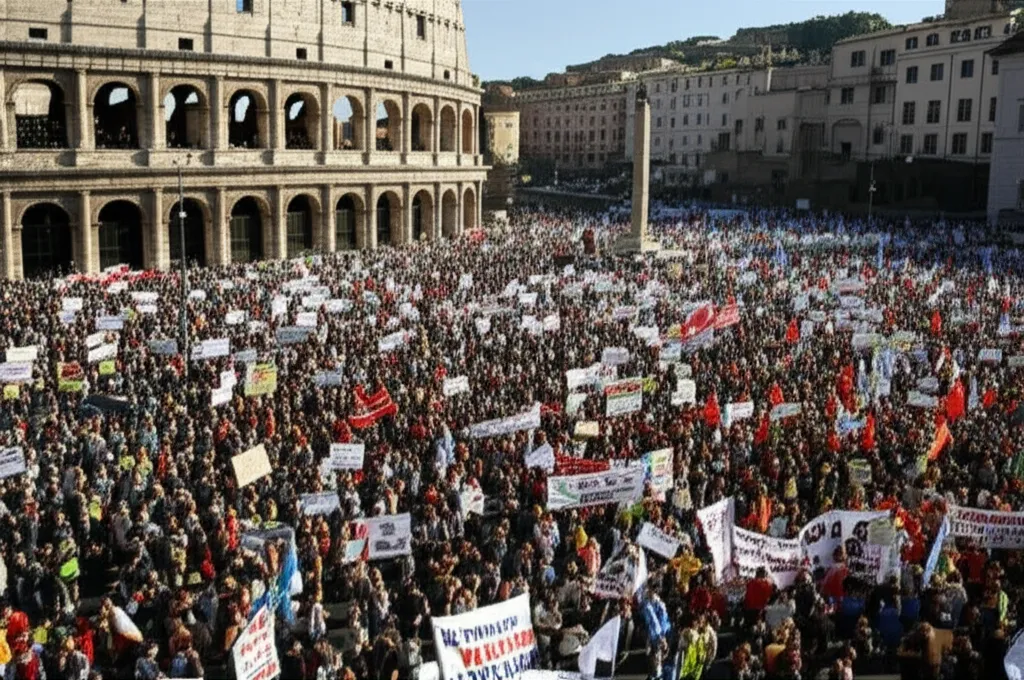
On June 7, 2025, the heart of Rome transformed into a living river of protest. If you were anywhere near the city’s historic center, you couldn’t miss it: banners stretched wide, flags from every corner of the world fluttered overhead, and chants echoed off ancient stone. Organizers estimate that up to 300,000 people joined the Rome Protest Gaza march, making it one of the largest demonstrations Italy has seen in recent years. The sheer scale of the Italy Gaza Protest was impossible to ignore, both for the government and for anyone following the Gaza Conflict 2025.
What set this Gaza War Protest apart wasn’t just the numbers. It was the diversity. You would have seen families with young children, seasoned activists, students, retirees, and party loyalists all walking side by side. Some carried rainbow flags, others waved Palestinian banners, and many held up signs with urgent messages—most notably, a massive banner at the front reading, “Stop the massacre, stop complicity!” The crowd’s makeup reflected a cross-section of Italian society, united by frustration over the government’s perceived silence on Gaza.
Despite the high emotions and political stakes, the protest remained peaceful. The demonstration, called by Italy Opposition Parties including the Democratic Party, Green and Left Alliance, and Five Star Movement, was a direct response to what many see as the Meloni government’s lackluster reaction to the crisis. As research shows, opposition parties played a key role in mobilizing this enormous turnout, channeling public outrage into a coordinated, visible action.
Visuals from the day told their own story. Central Rome was blanketed in color—Palestinian flags mingled with party insignias, and rainbow banners signaled solidarity across causes. The spectacle was striking, a reminder that the Gaza Conflict 2025 is not just a distant issue for Italians. It’s personal, immediate, and urgent.
Elly Schlein, leader of the Democratic Party, captured the mood:
“This is an enormous popular response to say enough to the massacre of Palestinians and the crimes of (Israeli leader Benjamin) Netanyahu’s government.”
As you watched the crowd move through Rome, it was clear this wasn’t just a protest—it was a statement. The Italy Gaza Protest sent a message not only to the Italian government but to the world: silence is no longer an option. The peaceful, passionate turnout reflected a groundswell of public opinion, one that opposition parties were quick to harness.
The Opposition’s Stand: Political Drama and Public Critique
When you look at the heart of the massive protest in Rome, it’s clear that Italy Opposition Parties were not just present—they were leading the charge. The demonstration, which drew an estimated 300,000 people from across the country, became a powerful stage for public critique and political drama. The rally, organized by the Democratic Party (PD), the Green and Left Alliance (Avs), and the Five Star Movement (M5S), was a direct response to what many see as the Giorgia Meloni Government’s silence on the Gaza conflict.
As you walked through the sea of rainbow, Palestinian, and party flags, the message was unmistakable: the Italian Government Response to the war in Gaza was not enough. Protesters held banners reading “Stop the massacre, stop complicity!”—a pointed accusation that the government’s hesitancy amounted to complicity in the crisis. This sentiment was echoed by Elly Schlein, leader of the Democratic Party, whose statements became a rallying cry for many. She told reporters at the march:
“There is another Italy that doesn’t remain silent as the Meloni government does.”
Elly Schlein’s statements didn’t just criticize Israel’s military actions; they also took aim at her own government’s lack of clear condemnation. Her vocal leadership and public messaging have shaped much of the current Public Opinion in Italy, especially among those who feel the government’s response has been too soft. Research shows that the opposition parties’ role was to spotlight what they called government ‘complicity’—a theme that resonated throughout the protest.
Prime Minister Giorgia Meloni and her right-wing coalition have faced mounting pressure. Earlier in June 2025, Meloni urged Israel to halt its campaign in Gaza, acknowledging that the attacks had grown “disproportionate.” However, critics, including opposition leaders, found her words lacking in force. Many observers and demonstrators described the Italian Government Response as “timid,” especially given the scale of the humanitarian crisis in Gaza and the rising international criticism of Israel’s actions.
The demonstration in Rome amplified existing tensions between the opposition and the governing coalition. For many, it was not just about foreign policy—it was about the kind of country Italy wants to be. The opposition’s message was clear: silence is not an option. As one Tunisian demonstrator put it, “The (Italian) government remains silent,” even in the face of what they described as an “abnormal massacre.”
This public critique has pushed the conversation forward, forcing the Giorgia Meloni Government to confront growing demands for a stronger, more decisive stance. The protest, driven by Italy Opposition Parties and fueled by Elly Schlein’s statements, has become a defining moment in the debate over Italy’s role and responsibility in the Gaza conflict.
Stories from the Streets: Why Ordinary People Joined the Rome Gaza Protest
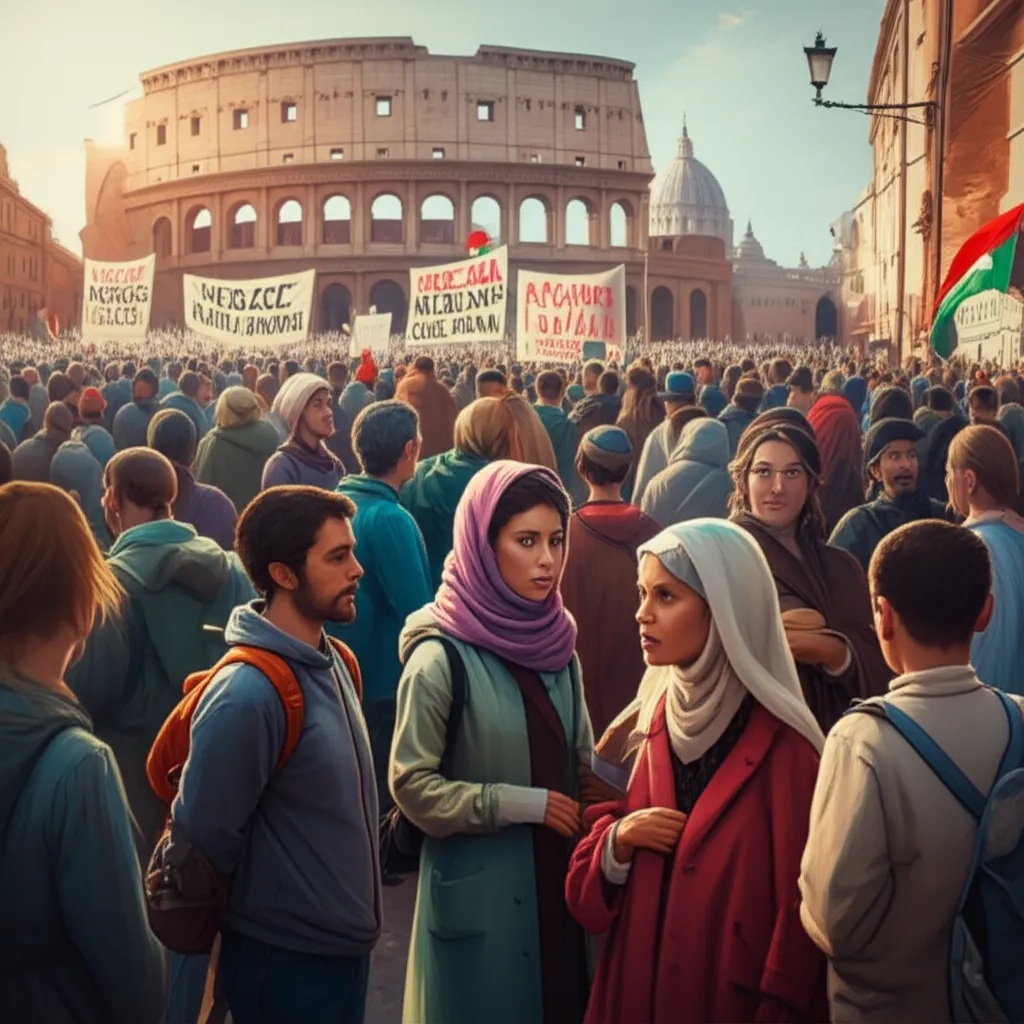
Step into the heart of the Rome Protest Gaza, and you’ll find a crowd that defies easy definition. On June 7, 2025, the city’s historic streets filled with a tapestry of voices—parents pushing strollers, students waving banners, seasoned activists, and first-time demonstrators. The sheer scale was staggering: organizers estimated up to 300,000 people, a turnout that underscored the depth of public opinion in Italy regarding the ongoing Gaza Humanitarian Crisis.
What brought such a diverse group together? For many, it was a sense of moral outrage over Palestinian casualties. The numbers are hard to ignore—over 54,000 Palestinians killed since October 2023, according to the Gaza Health Ministry, most of them women and children. News reports and social media posts circulated images and stories that struck a nerve. Some participants described joining the march as a “moral imperative,” a way to stand in solidarity with the victims and demand an end to the violence.
But the motivations ran deeper than just humanitarian concern. Anger at the Italian government’s perceived silence was a common refrain. Protesters carried banners reading, “Stop the massacre, stop complicity!” The message was clear: many Italians feel their leaders have not done enough to address the crisis. As Nadin Unali, a Tunisian demonstrator, put it,
“The (Italian) government remains silent, despite an abnormal massacre.”
That frustration was echoed by Elly Schlein, leader of the Democratic Party, who told reporters, “There is another Italy that doesn’t remain silent as the Meloni government does.” The protest, organized by opposition parties, became a stage for citizens to voice their discontent with official policy and to call for a stronger stance against the war in Gaza.
Rome’s protest was peaceful, but the atmosphere was charged with emotion. Families brought their children, some saying they wanted the next generation to “remember which side of history to stand on.” The city felt transformed—less like a capital and more like a communal living room, only louder, as strangers united by a common cause shared stories, hopes, and heartbreak.
Research shows that the humanitarian crisis in Gaza, coupled with mounting Palestinian casualties, has galvanized public opinion in Italy. The demonstration’s significance extended beyond party politics, reflecting a groundswell of concern that transcends traditional divides. In the streets of Rome, personal stories and collective outrage merged, giving voice to a movement that refuses to be silent.
Gaza’s Reality: Famine, Casualties, and the Global Stage
When you look at the heart of the Gaza Humanitarian Crisis, the numbers are staggering—and the stories behind them even more so. As of June 2025, Gaza has endured a near-total blockade for almost three months. This blockade, imposed by Israel, has left nearly 2 million residents at acute risk of famine. Food, clean water, and medical supplies are running dangerously low, and the humanitarian situation grows more desperate with each passing week.
The impact of the Gaza Blockade is not just about shortages. It’s about daily life grinding to a halt. Eid celebrations, once marked by joy and community, now unfold in the shadow of rubble and scarcity. Families gather for outdoor prayers amid ruins, their hopes for relief dimmed by the ongoing conflict.
Since the outbreak of the Gaza Conflict 2025, the violence has been relentless. The catalyst was the Hamas Attack on Israel on October 7, 2023—a surprise assault that killed around 1,200 Israelis, mostly civilians, and resulted in 251 hostages being taken. Today, 56 hostages are believed to remain in captivity, their fate uncertain.
In response, Israel launched a military campaign that, according to the Gaza Health Ministry, has killed more than 54,000 Palestinians—many of them women and children. The ministry’s figures do not distinguish between civilians and combatants, but the scale of loss is undeniable. Each statistic represents a family shattered, a community in mourning.
The Palestinian Casualties have become a central point in international discussions. Research shows that the humanitarian appeal is at the core of protest messaging across Europe, including the massive demonstration in Rome. Protesters there, waving rainbow and Palestinian flags, called for an end to the violence and demanded urgent humanitarian relief. Their banners read, “Stop the massacre, stop complicity!”—a direct challenge to both Israel’s actions and the perceived silence of Italy’s government.
International Criticism of Israel has reached new heights. As one protest banner put it,
“Israel faces mounting international criticism for its offensive and pressure to let aid into Gaza during a humanitarian crisis.”The world is watching, and the pressure for a ceasefire and humanitarian corridors is growing louder.
The Gaza Blockade Impact is not just a regional issue. It’s a global flashpoint, fueling anger, empathy, and activism far beyond the Middle East. The deadly statistics and urgent pleas for support echo in capitals across Europe, shaping public opinion and political debate. For many, the crisis in Gaza is no longer distant—it’s a call to action.
From Rome to the World: What This Protest Signals for Global Solidarity
If you ever wondered whether a single city’s outcry can ripple across continents, the Rome Protest Gaza march offers a resounding answer. On June 7, 2025, as many as 300,000 people—families, students, activists—flooded Rome’s streets, their voices rising above political divides and government silence. This was not just an Italy Gaza Protest; it was a signal flare for global solidarity, echoing far beyond the city’s ancient walls.
Rome’s demonstration is part of a broader European movement. In recent months, cities like London and Paris have seen similar mass gatherings, all demanding an end to the Gaza conflict and amplifying International Criticism of Israel’s military campaign. The sheer scale of these protests reflects a growing trend: public opinion is no longer confined by borders. Instead, it’s shaping the international conversation, pushing governments to confront uncomfortable truths and reconsider their diplomatic stances.
Italy’s protest stands out for its direct challenge to the government’s muted response. Opposition parties, including the Democratic Party and the Five Star Movement, organized the march to call out what many see as Prime Minister Giorgia Meloni’s “silent” stance on the Gaza war. Protesters carried banners reading, “Stop the massacre, stop complicity!”—a message aimed squarely at Italy’s leaders. As Elly Schlein, leader of the Democratic Party, put it: “There is another Italy that doesn’t remain silent as the Meloni government does.” Her words, and the crowd’s presence, underscored a crucial point: Public Opinion Italy is not just a domestic matter; it has international significance.
Research shows that such mass mobilizations can influence government messaging and humanitarian priorities. The Rome Protest Gaza event, in particular, may pressure not only Italy’s government but also others across Europe to take clearer positions on the Gaza Conflict 2025. As the humanitarian crisis in Gaza deepens, with experts warning of famine and mounting casualties, the urgency of these protests becomes even more pronounced.
Ultimately, the Rome protest signals a new chapter in international activism. It demonstrates that, even when governments equivocate, ordinary citizens can set the terms of public morality. “Sometimes you realize the world is smaller than you think, and Rome’s roar can echo all the way to Gaza.” That echo is now reverberating through capitals across Europe and beyond, reminding us that solidarity is not just a slogan—it’s a force that can shape history.
