


Picture this: You're inching through Kansas traffic, lost in thought, when red-and-blues flash behind you. Your heart pounds. Maybe you think back to every law you could’ve violated—speeding, taillight out, the usual suspects. But what if the reason is that run-of-the-mill license plate frame —maybe with your alma mater or favorite burger joint—hugging the edges of your plate? Turns out, after a Kansas Supreme Court decision, that alone probably won't earn you an unexpected roadside interrogation. Let’s unpack the story of State v. Beck, a ruling that just changed what police can use as probable cause for a stop. Oh, and brace for some detours: we’re taking the scenic route through quirky stories, legal minutiae, and real road wisdom.
The Quirky Backstory: From Plate Frames to the Kansas Supreme Court
If you’ve ever glanced in your rearview mirror and spotted flashing lights after noticing a tiny tassel or a license plate frame on your car, you’re not alone. For years, Kansas drivers—like motorists across the country—have found themselves pulled over for the smallest things: a graduation tassel dangling from the mirror, a faded ski tag, or, more recently, a license plate frame that covers part of the state name. These stops have felt random, almost like a game of highway roulette. One day, it’s your lucky day. The next, you’re explaining to an officer why your plate frame is there at all.
It’s not just anecdotal. Research shows that a large number of traffic stops in Kansas have hinged on minor technicalities—especially so-called “ obstructed license plate ” violations. Sometimes, these stops have led to major investigations and even criminal charges. The infamous State versus Beck case is a prime example. In 2021, a Kansas driver was pulled over simply because the state name on his license plate was partially covered by a frame. That routine stop escalated quickly: a search turned up 2.13 pounds of contraband, and the case soon became a flashpoint for debates about motorist rights and police authority.
For many, this wasn’t surprising. As one observer put it,
‘If they can find an excuse and they need an excuse, they will. They'll find an excuse.’The “obstructed view” rationale has been a go-to for officers for decades. Whether it’s a fuzzy dice, a dealership plate frame, or a souvenir from a ski trip, these minor infractions have often been enough to justify a stop—and sometimes, much more.
But everything changed on July 3rd, when the Kansas Supreme Court issued a landmark opinion in State v. Beck. The court ruled that Kansas law does not require the state name on a license plate to be clearly visible—only the numbers, letters, and registration decal must be unobstructed. This decision sent shockwaves through the legal and law enforcement communities. Law enforcement websites quickly posted internal notices: officers could no longer use a partially covered state name as grounds for a stop. For drivers, it was a seismic shift in their rights on the road.
The public response was immediate and intense. Lawyers, motorists, and the simply curious were all buzzing about the ruling. The case underscored just how trivial some traffic stops can be—and how those stops can spiral into life-changing legal battles. The Kansas Supreme Court’s decision in State versus Beck didn’t just clarify the law; it put a spotlight on the fine line between legitimate enforcement and overreach, and it set a new precedent for motorist rights in Kansas.

License Plate Frame Legality and Statutory Quirks: How Much Plate Has to Show?
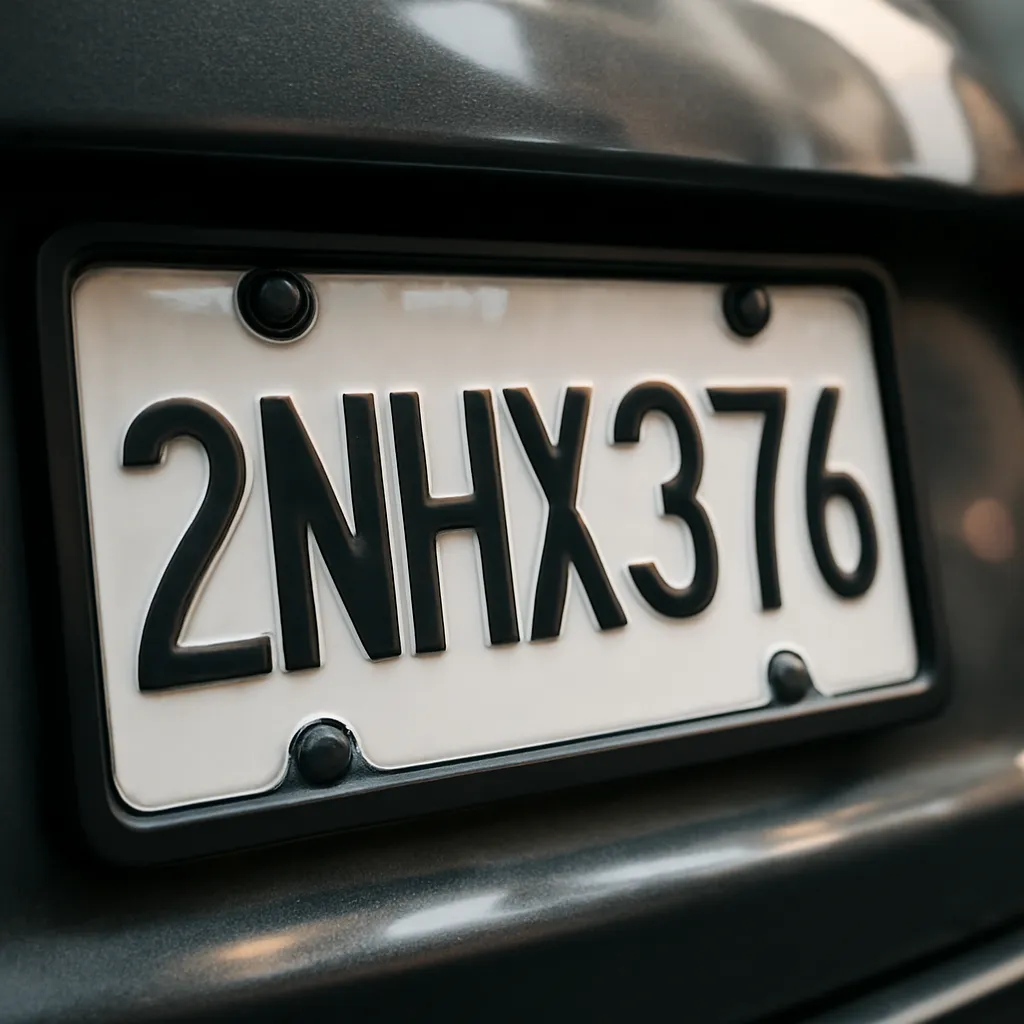
If you’ve ever wondered whether your license plate frame could get you pulled over in Kansas, recent legal developments may offer some clarity. The Kansas Supreme Court’s latest License Plate Ruling has shifted the landscape, making it clear that the state’s law doesn’t require the state name on your plate—like “Kansas” or “kansas.gov”—to be visible at all times. Instead, the Kansas License Plate Law focuses on the legibility of the alphanumeric display and the registration decal. That’s it.
Let’s break down what the law actually says. Since 1929, Kansas statutes have required that license plates be securely fastened, visible, and maintained free from foreign materials. They must be “clearly legible,” but the statute never spells out that the state name must be readable. The law does, however, set some serious penalties: a violation can mean a misdemeanor, a fine up to $2,500, and even jail time ranging from 30 days to six months. But here’s the catch—those penalties only apply if the numbers, letters, or registration decal are obscured or unreadable. A muddy or fully obstructed plate is still grounds for a stop, but a frame covering the state name? Not anymore.
This interpretation didn’t come out of nowhere. The Supreme Court’s decision in 2024 clarified a long-standing gray area. Previously, some lower courts and law enforcement officers believed that any obstruction—including a license plate frame covering part of the state name—could justify a traffic stop. But the high court rejected this approach, saying, “We accordingly reject a rule that focuses on a single fact without regard for the totality of the circumstances.” In other words, just because your frame hides “Kansas” doesn’t mean you’re breaking the law.
What about other states? License plate designs vary widely, and some states might require the state name to be visible. But in Kansas, the law is now clear. As one legal observer put it,
‘If a state wanted to, they could pass a law and say, it is illegal to have a license plate frame covering any portion of your plate. And that would be a different matter.’For now, Kansas hasn’t done that.
Research shows this ruling also impacts Traffic Stop Criteria. Officers must now base stops on whether the plate’s numbers, letters, or decal are unreadable—not just because the state name is blocked. This shift strengthens motorists’ rights and limits arbitrary stops for minor infractions. Still, keep your plate clean and legible, because a dirty or fully blocked plate remains a violation under Kansas License Plate Law.
Fourth Amendment Implications: Can Cops Still Pull You for That Frame?
If you’ve ever worried about getting pulled over in Kansas because your license plate frame covers part of the state name, the recent Kansas Supreme Court decision brings some clarity—and relief. The ruling directly addresses the Fourth Amendment Implications of traffic stops, tightening what counts as sufficient grounds for law enforcement to pull you over.
At the heart of the matter is the constitutional requirement that every traffic stop must meet a “reasonable suspicion” threshold. The Fourth Amendment protects you from unreasonable searches and seizures, meaning officers can’t just stop you on a whim. They need a legitimate reason to believe you’ve broken the law. This principle was front and center in the case of State v. Beck , where an officer claimed a license plate frame obscured key information. However, the officer was still able to call in the plate number and state correctly, raising questions about whether the stop was truly justified.
During oral and written arguments, both sides debated what the law really requires. The Kansas license plate statute says plates must be “clearly visible” and “clearly legible,” but it doesn’t spell out whether the state name must be fully readable. The court pointed out that the law’s main focus is on the alphanumeric display and registration decal, not the state name itself. This distinction became crucial in determining Traffic Stop Criteria and Motorist Rights .
In its analysis, the court applied a two-pronged test:
- Was the officer’s action justified at the start?
- Was the detention reasonably related in scope to the circumstances?
For a stop to be constitutional, an officer must have reasonable suspicion that an offense is occurring, has occurred, or is about to occur. The court emphasized that just seeing part of the state name—especially if everything else is clear—does not meet this standard. As research shows, the court rejected the idea that a single fact, like a partially covered state name, can justify a stop without considering the totality of the circumstances.
In fact, the court cited a federal case, US v. Carter , which found that even when half the state name was obscured, officers could still identify the vehicle. The Kansas Supreme Court echoed this logic, stating:
‘Court found there was no probable cause or reasonable suspicion that the vehicle was in violation of the statute.’
This Kansas Supreme Court Decision means police can no longer rely on minor plate frame obstructions as a reason to pull you over. Substantial violations must exist for a stop to comply with the Fourth Amendment. The decision not only clarifies the law but also strengthens Motorist Rights by limiting arbitrary traffic stops based on technicalities.
Beyond Kansas: Could This Ruling Hit the Road in Other States?
If you’re driving outside Kansas with a license plate frame, you might be wondering: will this new Legal Precedent protect you elsewhere? The recent Kansas Supreme Court License Plate Ruling has certainly made waves, but the road ahead isn’t as clear-cut in other states. While the decision set a persuasive precedent, research shows that each state’s laws—and how they’re enforced—can look very different.
In Kansas, the Supreme Court reversed convictions that were based on evidence from a traffic stop involving a partially covered license plate. The justices found that as long as the important parts of the plate—the numbers, letters, and registration decal—are visible, you’re in the clear. The state name? Not required to be fully legible. This ruling means officers in Kansas can no longer pull you over just because your plate frame covers “Kansas” or any other non-essential detail. As one law enforcement official put it,
‘Major case law just came down, and, you cannot use this as an excuse anymore to pull people over.’
But what about the rest of the country? There’s no nationwide rule. States write their own statutes, and law enforcement agencies interpret them in their own ways. Some states might see the Kansas ruling as a model, but others could stick to stricter interpretations. The impact on Law Enforcement is immediate in Kansas—KPOA has already issued new guidance to officers—but elsewhere, it’s a patchwork.
The case of US versus Carter in Kansas federal court is a good example of this patchwork. In that case, a plate frame covered half of the word “Ohio,” but the court ruled it wasn’t illegal. It highlights the inconsistencies between federal and state approaches to license plate obstruction. In some states, even a minor cover-up could still get you pulled over, while others may start to question if those stops are justified at all.
There’s also the possibility of legislative change. If states want to tighten their laws, they can. As the Kansas Supreme Court noted, a state could pass a law making it illegal for any part of the plate to be covered. That could spark a whole new debate—lobbyists for car dealers, auto accessory makers, and even fast food chains (think branded frames) might jump into the fray. For years, people have been stopped for things as minor as a license plate frame or even an air freshener hanging from the mirror. This ruling may ripple regionally, but each state’s statute—and its enforcement culture—will ultimately decide the fate of license plate frames.
As research indicates, other states may examine and possibly revise their licensing laws in light of this, but outcomes will vary. For now, the only certainty is that the conversation about license plate frames and Law Enforcement Impact is far from over.
Roadside Realities: What This Means for Motorists, Police, and Everyday Commutes
If you drive in Kansas, the recent Supreme Court ruling on license plate frames is more than just legal jargon—it’s a real change you’ll notice every time you hit the road. For years, motorists worried that even a simple novelty frame , the kind that might cover the state name but leaves numbers and decals visible, could land them in a traffic stop. That’s no longer the case. The Kansas Supreme Court has clarified the Kansas License Plate Law : police can’t pull you over just because a frame partially blocks the state name. The law only requires that the alphanumeric display and registration decal are clearly visible.
What does this mean for you? First, it’s a win for Motorist Rights . As one legal expert put it,
‘The decision strengthens motorists' rights by limiting arbitrary traffic stops based on minor infractions like license plate frames.’Research shows that police are now discouraged from citing trivial plate obstructions. If your plate is readable—numbers, letters, and decal—then a decorative frame is no longer a reason for flashing lights in your rearview mirror.
But don’t get too comfortable. The ruling doesn’t give you a free pass to ignore your plate’s condition. If your plate is caked in mud, covered in debris, or hidden behind a reflective “stealth” cover, you’re still at risk. Officers can—and will—pull you over if they can’t read your plate at all. One officer described sitting in traffic behind a car with a plate so obscured by a cover that it was impossible to see. That’s still a clear violation under the Obstructed License Plate rules, and the law covers these major obstructions.
For law enforcement, the impact is immediate. Kansas police departments have already updated their protocols, notifying officers that they can no longer use a partially blocked state name as a go-to excuse for a stop. This shift is more than procedural—it’s a direct response to the Supreme Court’s interpretation of the Kansas License Plate Law . Officers must now focus on legitimate infractions, not minor technicalities.
Legal observers are calling this a boost for constitutional protections. The ruling sets a new precedent, giving motorists fresh legal ground to challenge dubious stops. It also means that cases built solely on minor plate frame issues may not hold up in court.
In summary, most law-abiding drivers with novelty frames can breathe a little easier. On Kansas roads, there’s now a bit more freedom for personal expression—just don’t let mud or grime make your plate unreadable. The open road still demands responsibility, but the days of being pulled over for a harmless frame are, for now, in the rearview mirror.
