
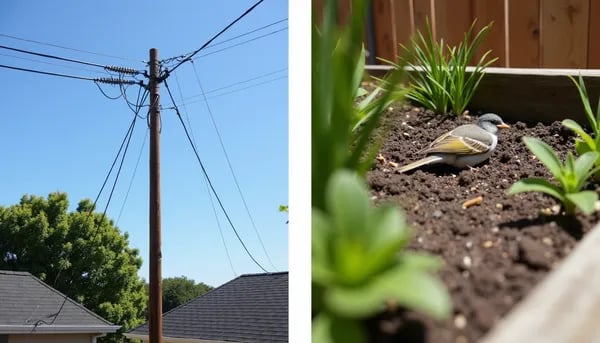



If you took a stroll down Bernhard Avenue this spring, you might have thought you’d wandered into an eerie scene from a mystery novel — except the feathers littering the sidewalk are heartbreakingly real. I remember one overcast afternoon, chatting with a neighbor about baseball, when a loud pop cracked the air and a black starling dropped from the sky, right in front of us. It left us with so many questions, a lingering sense of unease, and a community united by grief and curiosity. Welcome to the neighborhood where birds are suddenly falling out of the sky, and not even the experts have clear answers.
A Neighborhood's Troubling Pattern: When Birds Drop from the Sky
Something disturbing is happening on the 6100 block of Bernhard Avenue in Richmond. Birds are literally falling from the sky.
More than 50 feathered creatures have plummeted to their deaths in recent weeks along this single city block. The incidents have left residents shaken and searching for answers.
A Pattern Emerges
Have you ever witnessed something so bizarre that it defies explanation? That's exactly what Bernhard Avenue residents are experiencing this spring.
The pattern is always the same:
- A distinctive "pop" sound echoes through the air
- Seconds later, a bird drops lifeless to the ground
- Bystanders are left confused and disturbed
The timing is eerily consistent - many incidents occur around 5:00 pm, like one documented case on April 26, 2025.
"It sounded like a firecracker, and a black bird—a starling—just plummeted to the ground," said Mark Hoehner, who witnessed one such incident firsthand.
Community Response
You might wonder how residents are coping. They've taken matters into their own hands by:
- Posting warning signs on utility poles
- Documenting each incident
- Sharing information with neighbors
One woman, living across from the suspected power lines, has sadly become accustomed to collecting dead birds from her yard. She's filed a report with the Contra Costa County Sheriff's Office.
"It's very traumatic," local resident Maximilian Bolling explained, capturing the neighborhood's collective distress.
Theories and Investigations
Initial suspicions pointed to electrocution from power lines. PG&E, however, claims the California Department of Fish & Wildlife examined some bird corpses and found no evidence of electrocution.
Instead, officials suggest the deaths may result from trauma - potentially from a BB gun or slingshot.
But residents remain skeptical.
"It's a mystery—that's how we all feel. It's inexplicable," said resident Heather Jones. "I feel like a BB gun doesn't make a firecracker noise. This sounds exactly like a firecracker."
Other neighbors question how someone could be so consistently accurate with a weapon. Some report seeing the wires "sizzle and arc" at times.
A Community on Edge
The mysterious deaths have created a sense of dread along Bernhard Avenue. When neighbors hear that distinctive "pop," they now brace themselves for another falling victim.
Eyewitnesses including Sharon Anderson, Jan Solomon, and others have formed an informal network to track these disturbing events.
The California Department of Fish & Wildlife continues investigating, but for now, the bizarre phenomenon remains unsolved - leaving you to wonder what unseen force is causing birds to drop from Richmond's skies.
The Hunt for Answers: Science, Speculation, and Skepticism
When birds began dropping from the sky on Bernhard Avenue, residents immediately suspected electrocution. The evidence seemed clear - birds perched on power lines, a loud pop, and then lifeless bodies on the ground below.
Official Investigation Findings
PG&E and the California Department of Fish & Wildlife quickly stepped in to investigate. Their conclusion? Not what residents expected.
- No electrocution evidence found in examined birds
- Physical trauma consistent with projectile weapons (BB gun, pellet gun, or slingshot)
- PG&E confirmed the power pole was "compliant with avian safe standards"
- Only two birds (a mourning dove and European starling) underwent official examination
The California Department of Fish & Wildlife clarified they received just two birds for evaluation, not "several" as initially reported. The specimens were "significantly degraded," making definitive conclusions challenging.
Residents Question Official Explanation
Despite these findings, many locals remain unconvinced. The noise associated with the deaths doesn't match what they'd expect from a BB gun.
"I feel like a BB gun doesn't make a firecracker noise. This sounds exactly like a firecracker." - Heather Jones
Others question the logistics. How could someone consistently hit birds with such precision? The power lines where birds perch aren't exactly easy targets, especially for amateur marksmen.
Jan Solomon expressed her doubts: "I can't fathom someone being so accurate all the time."
The Electrical Theory Persists
Several residents continue to report suspicious electrical activity near the affected power lines, fueling alternative theories.
"That particular wire does sizzle and arc at times." - Sharon Anderson
This observation raises questions about whether intermittent electrical issues might be responsible - problems that wouldn't necessarily be detected during a standard inspection.
The sheriff's office became involved on April 26, 2025, responding to reports of "suspicious circumstances" on Bernhard Avenue. Deputies documented the situation and requested PG&E inspect the power lines.
Evidence Gap
Perhaps most concerning is the discrepancy between reported deaths and examined evidence. While residents claim over 50 birds have died, only two underwent official examination.
Photos of other birds were reviewed by authorities, who noted "injuries consistent with trauma." But without proper examination, the exact cause remains elusive.
The investigation highlights a clash between scientific findings and community observations. As residents continue to witness birds falling from the sky, the mystery deepens. Is it human intervention with projectile weapons? Electrical issues? Or something else entirely?
What's clear is that the residents of Bernhard Avenue want answers - and the birds deserve protection from whatever mysterious peril awaits them on those power lines.
The Human Side: Fear, Frustration, and Neighborhood Solidarity
When Birds Fall from the Sky
On Bernhard Avenue, the mysterious deaths of birds have transformed more than just the local wildlife population—they've reshaped an entire community.
You can feel the tension in the air. Residents walk their streets differently now, eyes constantly scanning the power lines above. Every "pop" sound sends hearts racing.
"It's very traumatic," says local resident Maximilian Bolling. The emotional toll is visible on neighbors' faces.
For Sharon Anderson, the experience has been particularly distressing. "It was just horrifying," she recalls, describing the upsetting task of putting multiple dead birds in her trash can in recent weeks.
From Individual Concern to Community Action
What began as isolated incidents has evolved into a neighborhood-wide response:
- DIY warning signs now dot the area, posted by concerned residents
- Neighbors have created an informal tracking system to document each incident
- Casual sidewalk conversations have transformed into impromptu strategy sessions
The community hasn't waited for official action. Residents have taken matters into their own hands, with some staying up late to monitor suspicious activity. Others keep detailed logs of every fallen bird.
"We just want it solved at the end of the day." - Maximilian Bolling
Seeking Official Help
The crescendo of community concern has finally reached official channels:
At least one resident filed a formal report with the Contra Costa County Sheriff's Office, which dispatched deputies to investigate. PG&E was subsequently requested to inspect the power lines.
Yet many residents feel the official response hasn't matched their urgency. There's a growing undercurrent of mistrust—not just about what's causing the deaths, but about whether authorities are taking their concerns seriously enough.
Neighbors United by Tragedy
Perhaps the one silver lining to this disturbing situation is how it's strengthened neighborhood bonds. Strangers have become allies in a common cause.
Bernhard Avenue residents now text each other when they hear suspicious sounds. They share photos of affected birds. They check in on each other.
This crisis has created a unique solidarity. Neighbors who might have previously exchanged nothing more than passing waves now stand together, united in their determination to protect the wildlife that shares their community.
The emotional weight is heavy. Some residents report losing sleep. Others feel anxious each time they hear birds chirping, wondering if they'll witness another tragedy.
Yet through collective action, this Richmond neighborhood demonstrates how communities can rally together when faced with unexplained threats to their shared environment.
Wider Implications: Urban Wildlife and the Mystery of Unseen Harm
The bizarre bird deaths on Bernhard Avenue aren't just a local Richmond mystery. They're a window into a growing national concern about how wildlife fares in our urban landscapes.
Think about it. How often do you actually notice what happens to birds in your neighborhood?
When Cities Become Wildlife Hazards
The Richmond case mirrors a troubling trend we're seeing across America. Birds and other wildlife face invisible dangers in our cities that most of us never consider until something dramatic happens.
Human infrastructure creates unexpected challenges for our feathered neighbors. Power lines, windows, communication towers - all these modern necessities pose risks we're only beginning to understand.
- More than 1 billion birds die annually from collisions with buildings
- Power lines kill millions more through collision or electrocution
- Roads fragment habitats and create dangerous crossings
What's particularly striking about the Bernhard Avenue case is how it revealed our limited understanding of these dangers.
"The birds show no evidence of electrocution, and their deaths were caused by trauma, potentially from a pellet or BB gun or a slingshot." - PG&E Statement
While residents initially suspected electrocution, investigations pointed elsewhere. This highlights how even our assumptions about urban wildlife dangers can be flawed.
Are Our Standards Adequate?
PG&E insisted their equipment met "avian safe standards, as established by the Avian Powerline Interaction Committee." Yet the birds kept dying. This raises uncomfortable questions about whether our current safeguards are truly sufficient.
Similar mysteries have surfaced elsewhere. Remember the starving brown pelicans showing up in strange places around the Bay Area? Wildlife authorities struggled to identify clear causes there too.
When these unusual wildlife deaths occur, local authorities face a difficult balancing act:
- Respond quickly to community concerns
- Conduct thorough scientific investigation
- Implement effective solutions
Beyond One Neighborhood
The Bernhard Avenue mystery ultimately forces us to reflect on larger questions about coexistence. How do we design cities that don't inadvertently harm wildlife? What responsibility do we bear when our modern infrastructure creates deadly hazards?
Despite PG&E's compliance with industry standards, Richmond residents weren't reassured. And perhaps they shouldn't be. The recurring deaths suggest our understanding of urban wildlife interactions remains incomplete at best.
As cities expand and wildlife habitat shrinks, these tensions will only increase. The Richmond case might be just one small example of a much broader challenge facing urban communities nationwide.
Outliers and Oddities: What We Still Don't Know (and What If…)
As the investigation into Bernhard Avenue's bird deaths continues, we're left with more questions than answers. That mysterious "pop" sound? Still unverified. Is it mechanical, intentional, or something completely different?
The Unsolved Mysteries
The California Department of Fish & Wildlife didn't mince words in their report:
"The exact cause of the trauma to all of these birds could not be determined."
This official admission opens the door to endless possibilities. Could we be dealing with a rare technical fault that only occurs under specific conditions? Maybe it's even a bizarre psychological effect making residents interpret normal sounds as something sinister?
Here's what makes this case so puzzling:
- Only two birds were actually examined in a lab
- Authorities reviewed several photos, but is that enough?
- More than 50 sightings reported, yet no conclusive evidence
The Contradictions
The anecdotal evidence simply doesn't align with the official theories. Some residents report wires that "sizzle and arc at times" – suggesting electrical issues. Yet officials found no signs of electrocution.
Others question how anyone could be so consistently accurate with a BB gun or slingshot. "I can't fathom someone being so accurate all the time," one neighbor remarked.
What If It's Something Else Entirely?
Let's think outside the box for a moment. What if the cause is something no one has considered?
- Resonance effects from nearby machinery or infrastructure
- Unknown wildlife interactions causing birds to panic
- A coordinated mischief using technology we haven't identified
The mystery has spawned impromptu community science. A local science teacher has organized observation sessions. Neighbors are planning stakeouts to catch whatever's happening in real-time.
You might wonder why this matters so much. For residents, it's not just about solving a puzzle – it's about restoring peace to their neighborhood.
A Community on Edge
Bernhard Avenue residents remain caught between hope for answers and fear of recurrence. Every time they hear a sound from above, they glance skyward, wondering if another bird will fall.
This case highlights how gaps in official explanations can fuel community anxiety. With neither a clear mechanical cause identified nor a culprit caught, speculation runs wild.
The most unsettling part? Without knowing exactly what's happening, residents can't take effective action to prevent more deaths. They can only wait, watch, and wonder.
Will the mystery of Bernhard Avenue ever be solved? Or will it join the countless other neighborhood oddities that remain unexplained? Only time – and perhaps a vigilant resident with a camera – will tell.
