
When Apologies Miss the Mark: The Curious Case of Ned Fulmer’s Comeback
Let me confess something: I once tried to give a heartfelt apology via group text. The result? Let’s just say I relate to the awkwardness of Ned Fulmer’s now-infamous attempt at internet redemption. When public figures fall, a strange ritual plays out— YouTubers scramble to apologize, viewers tune in, and sometimes, nobody ends up satisfied. Stick with me as we wade through the tangled mess of the ‘Try Guy’ gone rogue, his uncomfortable podcast, and why his public atonement landed with a thud instead of applause. Act One: The Setup – From Wife Guy to ‘That Guy’ If you spent any time on YouTube in the late 2010s, you probably knew Ned Fulmer as the ultimate “wife guy.” He was the wholesome, bespectacled member of The Try Guys, a group famous for their goofy challenges and genuine friendship. Ned’s whole brand was loving his wife, Ariel. He mentioned her in almost every video, wore his devotion like a badge, and built a loyal following around being the internet’s model husband. But as we all learned in 2022, sometimes the internet’s golden boys have secrets that can’t stay hidden forever. The Ned Fulmer cheating scandal broke with a single, jaw-dropping confession: “I cheated on my wife with an employee of my business.” It was short, blunt, and instantly viral. The news hit like a tidal wave. Fans who had once seen Ned as the epitome of loyalty and family values were suddenly left reeling. The Try Guys controversy wasn’t just about workplace drama or a messy breakup—it was about betrayal on a public stage, and the internet was not about to let it slide. Within hours, memes, think pieces, and reaction videos flooded every corner of social media. The “wife guy” jokes turned sour. Discussions about power dynamics, workplace ethics, and parasocial relationships exploded overnight. For many, the real sting was the clash between Ned’s carefully crafted persona and the reality of his actions. The Ned Fulmer public scandal became a case study in how quickly a reputation can unravel when the truth comes out. The Try Guys themselves didn’t waste time. In a move that was both swift and decisive, they removed Ned from their videos and company. Their statement was clear: they were cutting ties, both professionally and personally. The group’s response only fueled more conversation, as fans and critics alike debated whether it was enough—or too much. But one thing was certain: the internet was mourning (and roasting) the fall of the “wife guy” brand. For those who followed the Try Guys from the start, the betrayal felt personal. Ned Fulmer’s wife, Ariel, had been a beloved part of the channel’s extended family. Seeing her name dragged through the headlines added another layer of heartbreak. The Ned Fulmer audience betrayal was real, and it left a lasting mark on the community. In the end, Ned went from being the guy everyone trusted to “that guy” everyone talked about. The Try Guys controversy dominated online discourse, and Ned’s reputation tanked almost overnight. As the dust settled, one question lingered: how do you come back from a scandal that shattered the very image you built your career on?The Patchwork Apology – Speaking, But Not Quite Listening When Ned Fulmer launched his Rock Bottom podcast, the internet collectively braced itself. The first episode? A self-led couples therapy session with his wife, Ariel. If you watched it, you know: the awkwardness was off the charts. This wasn’t just another celebrity apology—it was a public airing of marital wounds, with Ned steering the conversation and Ariel forced to relive the pain. The vibe was less “healing” and more “cringe content for clicks.” Viewers tuned in by the millions—1.2 million, to be exact, for that first episode. But what did they get? Not the accountability or sincerity people expect after a scandal. Instead, the Ned Fulmer apology video and podcast episode felt like a patchwork of therapy buzzwords, rationalizations, and self-congratulation. Ned spoke at length about his therapy journey and personal growth, dropping lines like: "It's something that I'm really proud of that's really changed my life." But here’s the thing: the audience wasn’t looking for a TED Talk on self-improvement. They wanted to see if Ned actually understood the hurt he caused—not just to Ariel, but to fans and colleagues. Instead, the focus stayed on Ned’s feelings, Ned’s process, and Ned’s pride in how far he’s come. The apology felt less like a genuine reckoning and more like a PR move designed to rehabilitate his image and, let’s be honest, monetize the backlash. When Ned addressed the public backlash in a follow-up video, the pattern continued. He talked about therapy, group sessions, and the “mental clouds” that led him astray. He acknowledged cheating, but the language was clinical and detached—almost as if he was narrating someone else’s story. At one point, he even suggested that people judging him were just seeing “15-second TikTok clips,” ignoring the fact that over a million people sat through the full, excruciating podcast. This is where the Ned Fulmer podcast Rock Bottom really misses the mark. Instead of listening to what viewers wanted—real accountability and a sense that he truly ‘gets it’—Ned doubled down on therapy-speak and self-focus. The result? A massive drop-off in interest. The first episode with Ariel pulled 1.2 million views; a recent episode managed just 2,700. The internet’s verdict was clear: people weren’t buying what Ned was selling. Why do so many internet apologies feel this way? Because, more often than not, they’re crafted to protect reputations, not relationships. The Ned Fulmer couples therapy episode became a case study in how apologies can sound like you’re speaking, but not quite listening. When therapy journeys and self-growth become shields instead of bridges, the apology turns into just another awkward performance—and the public can spot the difference a mile away.Data Doesn't Lie (But Sometimes It Groans) – The Collapse of Content Performance When it comes to Ned Fulmer content performance, the numbers paint a pretty clear—and honestly, pretty rough—picture. If you’ve been following Ned Fulmer’s podcast journey post-scandal, you’ve probably noticed the dramatic shift. The first episode, featuring his wife Ariel, pulled in a staggering 1.2 million views. That’s viral territory, the kind of number that would make any YouTuber’s day. But fast forward to the most recent Ned Fulmer podcast episode, and you’re looking at just about 2,700 views. That’s not a typo. That’s a drop so steep it’s almost hard to believe. Let’s break it down: First episode (Ariel apology): 1.2 million views Most recent episode: 2,700 views For a channel that once thrived on loyal fans and viral moments, this is a collapse in content performance that’s hard to ignore. It’s not just about views, either. When you look at Ned Fulmer YouTube monetization issues, the reality is even starker. With 2,700 views, you’re looking at about $7 in ad revenue, if that. As one observer put it: "2700 views on YouTube is like $7. He can't, he can't be making money off of this." It’s not just the money, though. The engagement is gone. The audience that once tuned in for every upload is now, well, just not there. Even with celebrity guests, the new solo content struggles to attract even legacy fans. It’s as if the trust was broken, and no amount of rebranding or apology can patch it up overnight. The Ned Fulmer podcast Rock Bottom isn’t just a metaphor—it’s a measurable, data-driven reality. Are Even the Defenders Real Anymore? Scroll through the comment sections on these recent videos and you’ll notice something odd. There’s a suspiciously high number of positive, defensive comments about Ned. Whenever someone posts anything even slightly negative, there’s an immediate wave of replies defending him, insisting he did nothing wrong. It’s led many to wonder: are these real fans, or is there bot activity at play? It’s a fair question. When your content is struggling this much, and your reputation has taken such a hit, seeing a sudden burst of unwavering support feels out of place. Some speculate that Ned is employing bots to manage his image in the comments, trying to drown out criticism and keep the narrative positive. But if you have to rely on bots to defend you, what does that say about your real audience? Ultimately, the data doesn’t lie. The numbers show a dramatic fall in both engagement and earnings. For Ned Fulmer, the challenge of rebuilding trust and audience interest after a public scandal is proving to be an uphill battle—one that can’t be fixed with just a new podcast or a few positive comments.Parasocial Whiplash – When Audiences Take Celebrity Scandals Personally Let’s be honest: the Ned Fulmer cheating scandal hit fans harder than anyone expected. Why? Because Ned wasn’t just another internet personality—he was the “wife guy,” the relatable husband from the Try Guys who built his entire brand around loyalty and family. When the news broke, the Ned Fulmer internet reaction was swift and intense. But if you step back, it’s wild to realize that most people reacting so strongly had never met Ned, his wife, or anyone else involved. So, why did it feel so personal? Enter the world of parasocial relationships. These are the one-sided bonds you form with people you see online or on TV—people who don’t know you exist, but who feel like friends or even family. Research shows that when a creator’s public persona feels authentic, fans start projecting their own values and expectations onto them. That’s exactly what happened with Ned Fulmer. His carefully curated image as a loving, devoted husband made viewers emotionally invest in his marriage. So when the Try Guys controversy exploded, it felt like a personal betrayal. Think back to when a favorite childhood show’s cast imploded. Remember that weird sense of loss, like you’d lost a friend? That’s parasocial whiplash. The internet makes it even more intense. Every time new content references the scandal—even years later—commentary surges again. It’s as if the wound never fully heals. In fact, the Ned Fulmer public backlash reignites whenever the topic trends, showing just how deep these connections run. But here’s the thing: as one commentator bluntly put it, "You are letting parasocial relationships ruin your life." It’s a strong statement, but it gets to the heart of the issue. When you find yourself deeply upset over a stranger’s marriage, it might be time to log off and reflect. After all, this happened years ago, this is a person that you don't know cheating on a person that you don't know. The internet’s tendency to pile on and re-open old wounds isn’t always healthy. Sometimes, it seems like we crave the drama, even if it’s at the expense of our own peace of mind. It’s also worth noting that neither Ned, his ex-wife, nor the internet needed a public-sized, hour-long livestream of a “shitty couples therapy session” to move on. Yet, the demand for public apologies and explanations persists. Why? Because viewers project their own experiences and expectations onto creators, setting standards that are often impossible to meet. The Ned Fulmer audience betrayal wasn’t just about infidelity—it was about the collapse of a carefully constructed fantasy, one that fans had emotionally invested in for years.When Silence is Louder Than Words – Lessons in Internet Apology Fatigue Let’s be real: not every internet scandal needs a redemption arc, no matter how much pop culture tries to convince us otherwise. The Try Guys controversy and the Ned Fulmer cheating scandal have shown us that sometimes, the best move isn’t a therapy-flavored hour-long YouTube confession—it’s a humble, straightforward post. Or, honestly, just radio silence. When it comes to Ned Fulmer addressing backlash, his relentless attempts at public forgiveness have only made things messier, not better. Think about it. Every time Ned pops up with another video or statement, it feels less like genuine remorse and more like a desperate attempt to control the narrative. The internet is quick to spot when someone’s apology is more about self-promotion than real growth. If Ned had just paused, maybe dropped a simple Instagram note, and then quietly worked on himself, would people have moved on faster? As the saying goes, "Sometimes, silence (or a simple Instagram post) really is golden." There’s a reason why Ned Fulmer redemption attempts keep falling flat. The more he talks about the scandal, the less people want to hear it. It’s almost like he’s stuck in a loop, hoping that if he just explains himself enough times, the internet will forgive him. But here’s the twist: serial apologies don’t breed sympathy—they breed cynicism. People get tired. The memes start rolling in. The apology itself becomes a punchline. That’s apology fatigue in action. Imagine if Ned had made an apology pie chart—80% humility, 20% self-promotion. Would the internet have forgiven him, or just turned it into another meme? My guess is the latter. The more you try to engineer forgiveness, the less authentic it feels. And nothing gets meme-ified faster than a try-hard apology. I’ll admit, I’ve been there on a much smaller scale. Once, I ate my roommate’s leftovers and tried to apologize with a carefully edited Snapchat story. Spoiler: it did not help. Sometimes, less is more. A simple “I’m sorry” (or even just letting things cool off) does way more than a drawn-out explanation. The same goes for creators facing public backlash. Ongoing public self-flagellation doesn’t defuse the situation—it keeps the wound open. In the end, Ned Fulmer personal growth claims and his endless content grind have only deepened the disconnect with his audience. The lesson here? Not every drama needs a redemption arc. Sometimes, the most powerful response is to step back, say less, and let actions—not words—speak for themselves. The internet may never forget, but it does get bored. And that, ironically, might be the best kind of forgiveness anyone can hope for.TL;DR: Ned Fulmer’s public apology tour—marked by awkward therapy podcasts, dwindling views, and online skepticism—serves as a cautionary tale about the pitfalls of trying to explain your way back into public favor. Sometimes, silence (or a simple Instagram post) really is golden.
DNPL Services
Nov 14, 2025 • 12 Minutes Read


Nov 14, 2025
Would You Really Want a 50-Year Mortgage? Unpacking the Wildest Home Loan Idea Yet
Picture this: you're house hunting in 2025, overwhelmed by soaring prices, and your lender drops a golden ticket—the mythical 50-year mortgage. "Pay less per month!" they promise. I remember laughing when the idea first popped up on my feed. Who would tie themselves to a half-century of payments? Spoiler: apparently more people than you’d think. Today, we're digging into this bold new mortgage trend—debunking myths, sharing what the experts (and TikTok) are saying, and maybe even confronting a few uncomfortable truths about the so-called solutions to America’s affordability crisis. 1. Modern-Day Mortgage Madness: The 50-Year Proposal Hits the Scene Just when you thought home loans couldn’t get any wilder, the 50-year mortgage proposal 2025 has officially landed—and the internet is losing its mind. In November 2025, President Donald Trump took to Truth Social to float the idea, saying it could make home buying more affordable for Americans. As CNBC put it, “In an attempt to make home buying more affordable, President Donald Trump floated the idea of a 50-year mortgage.” But is this really a solution, or just the latest episode of modern-day mortgage madness? From Social Media Buzz to Mainstream Debate The reaction online has been nothing short of explosive. On TikTok and Reddit, you’ll find everyone from first-time buyers to seasoned realtors weighing in. Some are calling it “genius,” while others are convinced it’s a trap. One viral TikTok summed up the mood: “Are we crazy? Is everybody okay? And if you sign up for it, you are a dummy. I don’t care. I’m going to make a fortune off of this.” That’s the kind of sarcasm and skepticism you’ll see everywhere right now. Why the 50-Year Mortgage Proposal 2025? The idea behind stretching a mortgage to 50 years is simple: lower monthly payments. With home prices and interest rates both sky-high, the hope is that spreading payments over a longer period will make homeownership possible for more people. But here’s the catch—many are pointing out that the savings aren’t as big as you’d hope. As one TikTok user joked, “To only take off like what? $100, $200 from your mortgage.” Public Opinion on 50-Year Mortgages: Skepticism and Sarcasm Public opinion on 50-year mortgages is split, but skepticism is running high. Many people worry that this proposal is less about helping buyers and more about padding the profits of banks and lenders. Mortgage industry insiders aren’t exactly hiding their excitement, either. As one originator put it, “Oh, a 50-year mortgage. You’re going to pay $10 million for a half a million dollar house.” Affordability: Will a 50-year term really make homes more affordable, or just keep buyers in debt longer? Profit Motive: Is this a genuine solution, or just a new way for banks to cash in? Public Reaction: Social media is full of disbelief, memes, and heated debates about whether anyone should sign up for such a long-term commitment. With the 50-year mortgage proposal 2025 making headlines and stirring up strong feelings, it’s clear that this idea is anything but boring. Whether you see it as a lifeline or a scam, the debate is just getting started.2. Show Me the Money: 50-Year Mortgage vs. 30-Year Mortgage (and Your Wallet) Let’s get real about the 50-year mortgage vs 30-year mortgage debate—because when it comes to your wallet, the numbers are anything but subtle. Sure, the idea of a lower monthly payment sounds tempting, but what does it actually cost you in the long run? Let’s break down the cost of 50-year mortgage loans and see how much you’re really paying for that “affordability.” Monthly Payment Reduction: Not as Big as You’d Think At first glance, stretching your loan from 30 to 50 years seems like a budget-friendly move. According to CNBC, if you’re buying a median-priced home (let’s say $415,000) at an interest rate of about 6.3%, a 50-year mortgage would cut your monthly payment by around $233 compared to a 30-year mortgage. That’s a nice dinner out, but not exactly a game-changer for most budgets. 30-year mortgage: Higher monthly payment, but you pay off your home faster. 50-year mortgage: Slightly lower monthly payment (often less than $250/month difference), but you’re locked in for an extra two decades. Total Interest Paid: The Real Shock Here’s where things get wild. The total interest paid over the life of a 50-year loan is where your jaw might drop. Let’s use a $450,000 home as an example, based on CNN Business data: Loan Type Interest Paid Difference 30-Year Mortgage $547,000 - 50-Year Mortgage $1,020,000 +87% That’s right—“With a 50-year loan, you will be paying about $1.02 million in interest.” (CNN Business) That’s nearly double the interest of a 30-year loan. In fact, over five decades, you’ll pay about 225% of your home’s price just in interest. Imagine buying a $40,000 car and ending up paying $75,000 for it, just because the monthly payments felt easier. That’s the kind of math we’re talking about here. Equity: The Slow Lane to Homeownership Another hidden cost? Equity. With a 50-year mortgage, you’ll spend the first 15 to 20 years mostly paying interest, barely making a dent in your principal. That means you won’t see much ownership or equity for decades. If building wealth through homeownership is your goal, this is a serious drawback. The real estate industry may pitch the 50-year mortgage as a more “affordable” option, but the numbers paint a riskier—and much more expensive—picture for homebuyers in the long run.3. The Borrower’s Dilemma: Equity, Ownership, and the Forever Home Mirage If you’re eyeing a 50-year mortgage as a way to finally break into the housing market during this affordability crisis, you’re not alone. A lot of folks think, “If I can just get my foot in the door, I’ll start building equity, right?” But building equity with a 50-year mortgage is a whole different ballgame—and not in a good way. Let’s break it down. With a traditional 30-year mortgage, you pay off about 46% of your principal after 20 years. But with a 50-year mortgage, you’d only pay off about 11% in 20 years. That’s right—just 4% after 10 years, and only 11% after two decades. That’s a painfully slow pace for equity generation. In fact, as Richard Green, professor at USC, puts it: "With a 50-year loan, it could take like 30 or 40 years before you've even paid half of your mortgage principal." So, what does that mean for you? For decades, you’re mostly paying interest—about 40% more interest overall compared to a 30-year loan, according to CNBC. Your monthly payments might be lower, but you’re not really chipping away at the amount you owe. It’s almost like renting from the bank, except you’re on the hook for all the repairs, property taxes, and insurance. The bank gets the money, and you get the bills. Now, think about why people want to own homes in the first place. For many, it’s about tapping into home equity—maybe to buy another property, invest, or help out family. But with equity generation on a 50-year mortgage moving at a snail’s pace, you could be paying for decades before you have enough equity to do anything meaningful. For a lot of people, that raises the question: What’s the point? There’s another layer to this dilemma. The average age of first-time homebuyers in the U.S. is now 40. If you start a 50-year mortgage at 40, you’ll be 90 by the time it’s paid off—if you even make it that far. And if you pass away before the loan is done, your heirs might not want, or be able, to take over the debt. In that case, the home could end up back with the bank, not your family. Over time, this could mean more homes staying in banks’ hands, not families’, which could widen the generational wealth gap. Equity generation with a 50-year mortgage is painfully slow. Homeowners pay much more in interest and build equity at a crawl. Many may never fully own their home, especially if they start later in life. This could lead to more homes ending up with banks, not families. 4. Banks, Brokers, and the ‘Solution’ That Just Might Not Be Let’s get real about the mortgage industry perspective on long-term loans—especially these new 50-year mortgages. If you talk to anyone who works as a mortgage broker or loan originator, you’ll hear a lot of excitement. Why? Because every time someone signs up for a loan, that’s a commission in their pocket. One loan originator even put it bluntly: "I'm going to make a fortune off of this, which is great for me." It’s not hard to see why. When you’re looking at a monthly payment that suddenly drops to something you can “afford” (say, $1,200 a month), it’s tempting to jump right in. And that’s exactly what the industry is counting on. Brokers and bankers know that if 50-year mortgages become the norm, there will be a rush of new signups—and a windfall of commissions. Who Really Wins? (Hint: It’s Not Always You) But here’s the thing: even the people who stand to make the most from these loans admit that the real winners might be the banks, not the buyers. Sure, you get a lower monthly payment, but you’re also signing up for a much longer commitment. And over 50 years, you’ll pay a lot more in interest. This is where the financial implications of 50-year mortgages start to look less like a solution and more like a trap. Mortgage brokers and originators are paid per loan—so they have every reason to upsell these products, even if they’re not the best deal for you. Banks love these loans because they stretch out the repayment period, locking in your payments (and their profits) for decades. The “Double Whammy” of Long-Term Loans Here’s another wrinkle in the mortgage industry perspective: longer loans usually mean higher interest rates. Why? Because lenders see a 50-year mortgage as a bigger risk. There’s more time for things to go wrong—job loss, economic downturns, or simply life changes. To protect themselves, banks often charge higher rates for these ultra-long loans. That means you could end up paying even more over time. It’s a classic “double whammy”—more years and more interest. Is It Really Your Dream—Or Theirs? Homeownership is often sold as the ultimate dream. But with a 50-year mortgage, some industry insiders say it’s actually the banks who are dreaming big. The longer you pay, the more they make. As one originator admitted, “I have been avenged”—finally, a product that fills their pockets after years of slow business. So, when you hear about 50-year mortgages as a “solution,” remember who’s really benefiting. The mortgage industry perspective on long-term loans is clear: it’s a great deal for them, but maybe not for you.5. Wild Cards: Tangents, TikTok Takes, and the People’s Verdict If you want to know how the public really feels about 50-year mortgages, just open TikTok. The “mean streets” of social media are full of sarcasm, skepticism, and a healthy dose of disbelief. One creator summed up the mood perfectly: “50-year mortgage loan? Are we crazy? Is everybody okay?” The general vibe? Most people can’t imagine signing up for a loan that could last longer than their career—or even their house. Let’s break down the public opinion on 50-year mortgages. The average first-time homebuyer in the U.S. is now 40 years old. Add a 50-year mortgage to that, and you’re looking at making payments until you’re 90. That’s not just a punchline—critics genuinely wonder if it makes sense to commit to a debt that could outlive your working years, or even your ability to maintain the home. On TikTok, users joke that by the time you pay off a 50-year mortgage, you might be ready for assisted living. Some even say they’d rather rent forever, since the early decades of such a loan are mostly interest payments. As one user pointed out, “You won’t even have 10 to 20% ownership on your home for the first 15 to 20 years because all you would have been paying for those first few years is interest.” That’s a tough pill to swallow in an affordability crisis housing market, where building equity is already a challenge. There are also real fears about what happens if you can’t finish the marathon. What if your kids inherit a half-paid-off house—and a mountain of debt? What if property taxes or maintenance costs force you out before the finish line? And, as one TikTok creator joked, “Some of these houses might not last 50 years. The way that they're being built now, they're not built how they used to be.” It’s a wild analogy, but it hits home: Would you ever sign a 15-year car loan on a car that won’t last that long? Then why do it for a house? Beyond the jokes and hot takes, there’s a serious legal hurdle: current legislation for 50-year mortgages simply doesn’t exist. Thanks to the Dodd-Frank Act after the 2008 crisis, conforming loans are capped at 30 years. For a 50-year mortgage to become reality, lawmakers would need to overhaul those rules—a move that would spark even more debate about what’s best for homebuyers and the housing market. So, would you really want a 50-year mortgage? If TikTok and the wider public are any indication, the answer is a resounding “no.” The verdict is clear: for most people, the risks, costs, and sheer length of the commitment just don’t add up—no matter how wild the housing market gets.TL;DR: The 50-year mortgage may lower your monthly payment, but it comes with steep downsides: far higher interest paid, slow equity growth, and a risk of never truly owning your home. A tempting offer—or a one-way ticket to the American debt plan?
12 Minutes Read

Nov 14, 2025
Beyond the Headlines: How a $3 Million Apology Redefined Press Freedom in Kansas
Back in 2023, I remember double-checking my phone when I first heard about the police raid on the Marion County Record —it sounded like something from a bygone era, not modern-day Kansas. A newspaper office stormed by law enforcement? It felt surreal, and yet it was painfully real for a small-town team that dared to dig where some wished they wouldn’t. This post isn’t just about the headlines or settlements—it’s a journey through unexpected legal fights, the fragile lives behind the newsprint, and why what happened in a rural prairie town matters far beyond state lines. Let’s unpack this tangle of justice, heartbreak, and the relentless resilience of local reporting. (Warning: If you’re looking for simple heroes and villains, you might be in for a surprise!) When Small-Town News Collides with Big Trouble: Anatomy of the Marion County Record Raid Imagine working at a small-town newspaper, where the biggest stories usually revolve around local events and community updates. Then, suddenly, your newsroom becomes the center of a national debate on press freedom. That’s exactly what happened to the Marion County Record in August 2023, when a police raid on the newspaper office—and even the homes of its staff—shook the quiet prairies of Marion County, Kansas. The Raid That Shocked a Community The Marion County Record raid began when law enforcement officers, armed with search warrants, stormed not only the newspaper’s office but also the private homes of publisher Eric Meyer and a city council member. The warrants were tied to an alleged investigation into identity theft and the illegal access of a local restaurant owner’s driving record. The newspaper, however, firmly denied any wrongdoing, insisting their reporting was both legal and ethical. During the raid, police seized computers, cell phones, and other reporting materials. Reporters’ desks were rifled through, and sensitive information was taken. The event was not just a shock to the staff—it sent ripples across the entire community and quickly caught the attention of journalists and press advocates nationwide. From Local Dispute to National Outcry What started as a local licensing dispute and allegations of leaked information soon escalated into a national—and even international—story. The Associated Press and other major outlets reported on the law enforcement raid on the newspaper , sparking heated discussions about the rights of the press and the responsibilities of law enforcement. The raid highlighted the fragile balance between local government power and the freedom of the press, especially in smaller communities where personal relationships and politics often intertwine. As Eric Meyer, Editor & Publisher of the Marion County Record, put it: "They intentionally wanted to harass us for reporting the news and you're not supposed to do this in a democracy." The $3 Million Apology: More Than Just Money The fallout was swift and significant. Marion County agreed to pay a $3 million settlement and issued a formal apology to the newspaper. While the financial compensation was substantial for a small town, the real impact went far beyond dollars. The apology was a public acknowledgment that the raid had crossed a line, violating the principles that protect journalists and their sources. Date of Raid: August 2023 Settlement Amount: $3 million paid by Marion County Targets: Newspaper office, publisher’s home, city council member’s home The Marion County Record raid became a flashpoint for democracy debates, showing how even a small newsroom can become the center of a global conversation about press freedom. The story’s reach proved that when law enforcement raids a newspaper, the whole world takes notice—and the cost of such actions is measured in more than just money. Justice or Symbolism? Unpacking the $3 Million Apology—and What It Can’t Fix When you hear about the $3 million apology in the Marion County Record lawsuit , it’s easy to focus on the numbers. But behind those figures is a story of deep loss, trauma, and a fight for press freedom in Kansas that money alone can’t resolve. How the Settlement Was Divided The settlement, which stemmed from the controversial raid on the Marion County Record newsroom, was distributed among those most directly impacted: $1 million went to the estate of Joan Meyer, the 98-year-old co-owner who died of a heart attack the day after the raid. $1.1 million was split between editor Eric Meyer, two former reporters, and the paper’s business manager. $650,000 was awarded to a former city council member caught up in the fallout. This breakdown reflects the legal and personal consequences of the raid, but it doesn’t begin to measure the emotional cost. The Human Toll: What Money Can’t Mend Joan Meyer’s death remains the most painful chapter in this story. Her family, including Eric Meyer, blames the stress of the raid for her passing. Police body cam footage showed Joan, visibly shaken, pleading with officers to “get out of my house.” No amount of settlement money can bring her back or erase the trauma experienced by her loved ones and colleagues. As Eric Meyer put it, “The goal isn’t to get the money. The money is symbolic. The press has basically been under assault.” The emotional fallout is still felt by those who lived through the raid. The loss of Joan Meyer, the disruption of the newsroom, and the fear of government retaliation have left lasting scars. While the settlement is unprecedented, it can’t undo the days of anxiety or restore a sense of safety overnight. Symbolic Victory or Real Justice? For many, the $3 million apology is more about symbolism than justice. Eric Meyer hopes the size of the payout will serve as a warning: “Raid a newsroom, pay the price.” The hope is that this financial penalty will discourage similar overreach by law enforcement in the future, reinforcing the importance of press freedom in Kansas and beyond. Some recipients are considering using their share of the settlement to support Marion County Record funding future initiatives, such as training young reporters or strengthening local journalism. This is a powerful, if ironic, twist—using money paid out for government overreach to protect the very institution that was targeted. What Remains Unresolved While the county’s settlement has been finalized, claims against the city and certain officials are still pending. Eric Meyer believes even larger judgments could follow, but he’s clear: no amount of money can truly compensate for the loss of his mother or the fear instilled in the newsroom. The Marion County Record lawsuit may have set a new standard for press protections, but it also serves as a reminder of what financial settlements can—and cannot—fix. Laws, Loopholes, and Shield Laws: The Legal Storm Around Press Freedom in Kansas If you want to understand the legal chaos that followed the Marion County Record newsroom raid, you need to look closely at the laws meant to protect journalists—and how they were ignored. The incident didn’t just make headlines; it triggered a legal firestorm that put press freedom in Kansas under the microscope and raised urgent questions about First Amendment violations, the state’s shield law, and the risks journalists face when law enforcement oversteps. Shield Laws Ignored: A Direct Hit to Press Rights Kansas has a press association shield law designed to protect journalists from being forced to reveal confidential sources or hand over unpublished materials. This law requires law enforcement to show a “compelling interest” and prove they’ve exhausted all other options before seizing anything from a newsroom. In the Marion County case, these steps were skipped entirely. As a retired Kansas Press Association executive director put it: "The raid violated the state’s shield law for journalists." The law has been on the books for years, and experts agree that local authorities should have known about it. Instead, they went straight for a search warrant, bypassing the legal safeguards that exist to protect press freedom in Kansas. Legal Fallout: Lawsuits and Scrutiny The fallout was immediate and intense. Within days, the local prosecutor admitted there was not enough evidence to justify the raid. Special prosecutors later reviewed the case and found that the search warrants contained inaccurate information and that no crimes had been committed by the newspaper staff or the city council member involved. In fact, five federal lawsuits were filed against the county, city, and officials, piling civil liberties issues high on Kansas’s legal radar. No criminal charges were ever filed against the newspaper or council member. The police chief now faces his own trial, shifting legal scrutiny onto law enforcement’s actions. Legal experts, including a University of Kansas media law professor, called the raid “an egregious violation of the First Amendment rights of Meyer and the weekly.” First Amendment Violation: A Chilling Effect The raid didn’t just threaten the rights of the journalists involved. According to legal scholars, it also violated the rights of the newspaper’s readers and the entire community, who rely on a free press to stay informed. The use of search warrants on a newsroom exposed a dangerous legal gray zone, showing how easily press rights can be trampled if law enforcement ignores established protections. "It’s not just theirs. It’s violating the rights of all the readers of the paper… the community counts on the paper to publish the news." The case also highlighted a troubling loophole: if law enforcement can simply fill out an affidavit with inaccurate information and swear to it, the system meant to protect against abuse can be easily bypassed. This raises serious questions about perjury and accountability for those who misuse their power. Legal Lessons: Press Freedom in Kansas Remains Fragile The Marion County police chief trial and the wave of lawsuits show that legal mechanisms meant to target crime can, if abused, intimidate or suppress the press. The $3 million apology may serve as a deterrent, but the case is a stark reminder that press freedom in Kansas is only as strong as the laws—and the people—who defend it. Apologies, Accountability, and the Odd Rituals of Institutional Shame When you hear about a $3 million apology in Marion County, it’s easy to focus on the dollar amount. But the real story is about how institutions—like the Marion County Sheriff’s Office—publicly admit fault, especially after a police raid on a newspaper shakes the trust of an entire community. The Marion County sheriff apology wasn’t just a formality. It was a requirement of the settlement, and it carried both legal and social weight. The process was swift. The Marion County Commission discussed the settlement for just 15 minutes behind closed doors before approving it. That’s unusually fast—almost like a jury that returns with a verdict after barely any deliberation. This speed shows how clear the current administration felt the responsibility was, and how urgent it was to address the damage done by the police raid newspaper incident. But here’s where it gets interesting: the apology didn’t come from the individuals who actually led the raid. The former police chief had already resigned. Instead, the new sheriff issued the official statement on behalf of the department. This raises a question you might have asked yourself: does an institution need to apologize for the actions of people who are no longer there? This is part of what Steve Leto calls the “odd rituals of institutional shame.” When a teacher makes a child apologize, it’s personal. But when a department apologizes, it’s something different. As Leto puts it: “This department apologizing is pointing out that as an organization, previously, this organization did something wrong.” In legal terms, the $3 million apology Marion County offered is more than just words. It’s an admission that the sheriff’s office, as an institution, failed. Even if the people who made the decisions are gone, the organization itself still bears responsibility. The apology is both a historical marker and a legal maneuver. It confirms, for everyone watching, that what happened was wrong—and that the current leadership is willing to own up to it. Institutional apologies like this serve two purposes: Legal Liability: They fulfill settlement requirements and can limit further legal exposure. Social Atonement: They publicly acknowledge wrongdoing, which can help rebuild trust—or at least show that the institution is trying to make amends. Still, there’s a lingering tension. Should the people who left—the “bad apples”—be required to apologize, too? Or is it enough for the organization to take the blame? In many cases, those individuals move on, leaving the institution to clean up the mess. The apology from the sheriff’s office, not the former police chief, highlights this separation between personal and institutional regret. Ultimately, when you see a public apology like this, remember that it’s not just about the words. It’s about the institution stepping forward, admitting past mistakes, and trying to restore a sense of accountability—even if the faces behind the wrongdoing have already changed. From Prairie Towns to National Headlines: Why Local Journalism Still Matters (Tangent Warning!) If you ever wonder whether local journalism still matters, just look at what happened in Marion, Kansas. With only about 1,900 residents, it’s the kind of place you might drive through without a second thought. But when the Marion County Record raid made international headlines, it became clear that press freedom in Kansas is not just a local issue—it’s a global concern. The story of the Marion County Record, led by editor Eric Meyer, is a dramatic reminder that local journalism is essential, even—maybe especially—in small towns. When police raided the newspaper’s office and the home of its publisher, it wasn’t just a First Amendment violation. It was a warning shot to every reporter who’s ever quietly taken notes at a city council meeting, hoping to keep their community honest. I still remember the first time I saw a reporter at a city council meeting. They weren’t flashy or loud. They just sat in the corner, scribbling in a notebook, listening to every word. It struck me then, and it still does now: these reporters aren’t superheroes, but their work is often the only safeguard against unchecked power. Without them, who would notice if something went wrong? Who would tell the truth about your local government when no one else is watching? That’s why the $3 million apology to the Marion County Record matters so much. It’s not just about money—it’s about recognizing the harm done when journalists are threatened or silenced. As one University of Kansas professor put it, "We need to stay vigilant against government incursions on the press." The repercussions of undermining press freedom echo everywhere—not just in big cities, but in every small community where democracy depends on accountability. The raid on the Marion County Record was covered by news organizations around the world. Even first graders could understand that what happened was wrong. It’s a basic lesson: newspapers are there for a reason, and they should be allowed to report on our government officials. If journalists are cowed into silence by fear of retaliation, even basic freedoms can erode in plain sight. Press freedom isn’t just a lofty principle—it’s a daily necessity. Sadly, no settlement or apology can undo all the damage. The raid cast a long shadow, and the loss of a life—a woman who suffered a heart attack during the ordeal—reminds us that the stakes are painfully real. But the outcry, from Marion to the world, proves that people still care. They recognize that local news outlets, small as they are, play an outsized role in safeguarding democracy. So, as the dust settles in Kansas, let’s remember: the fight for press freedom is never over. It starts in prairie towns and ends up on national headlines, because the truth matters everywhere. And without local journalists, that truth is far too easy to lose. TL;DR: The story of the Marion County Record raid is a crash course in press freedom: a $3 million settlement, a hard-won apology, lives upended, and a powerful reminder that the cost of silencing journalists often reverberates well beyond the newsroom.
14 Minutes Read

Jul 15, 2025
Behind the Curtain: MAGA, The Epstein Investigation, and the Battle for Transparency
Let me be honest: I didn’t plan to spend last Saturday down a rabbit hole of message boards and late-night phone calls, all because the latest government briefing on the Jeffrey Epstein investigation set the internet ablaze. But sometimes, news has a way of crashing your weekend plans. If you’ve ever watched a community turn on its own leaders because of a single name, you know the situation brewing on the right right now is anything but ordinary. Here’s why the Epstein case, MAGA loyalty, and official secrecy have collided in a uniquely American spectacle. A MAGA Revolt: When the Faithful Demand More Answers If you’ve been following the latest twists in the Epstein investigation, you’ve probably noticed a new surge of frustration—this time, not from political opponents, but from within the heart of the MAGA movement itself. The MAGA supporters Epstein backlash is real, and it’s growing louder as the Department of Justice and FBI announce they will not release any more information about the infamous case. For many in Trump’s base, this decision feels like a betrayal, fueling a wave of skepticism and conspiracy theories that refuse to die down. Grassroots MAGA groups are now demanding Epstein investigation transparency. Online forums and social media channels are buzzing with anger, as supporters question why the government is keeping files sealed. Some are even calling for a special counsel to dig deeper, convinced that the full truth about Epstein’s connections and possible ‘client list’ is being hidden from the public. The White House, sensing the unrest, is scrambling to regain control of the narrative. But as the backlash grows, it’s clear that many loyalists aren’t satisfied with official explanations. One major flashpoint in the Epstein client list controversy came from former Florida Attorney General Pam Bondi. Initially, Bondi suggested she had a list of Epstein’s clients—an explosive claim that instantly set MAGA circles ablaze. But just a week later, she walked back her statement, saying, Pam Bondi: “I was asked a question about the client list, and my response was, it’s sitting on my desk to be reviewed, meaning the file along with the JFK, MLK files as well.” This reversal only deepened suspicions. Research shows that Bondi’s shifting story has worsened credibility issues, with many supporters now doubting whether any transparency will be achieved at all. Adding fuel to the fire, figures like Kash Patel and Dan Bongino—both with deep ties to the MAGA movement—have previously amplified Epstein conspiracy theories. Their involvement has kept speculation alive, even as the DOJ and FBI maintain that further disclosure isn’t appropriate, citing victim protection and sealed court records. Still, for many in the movement, these explanations ring hollow. It’s a classic case of grassroots energy colliding with institutional secrecy. The anger is palpable, echoing the chaos you might see in a neighborhood Facebook group when a recycling bin goes missing—people crave answers, and when they don’t get them, suspicion fills the void. For now, the MAGA supporters Epstein backlash shows no sign of fading, and the demand for transparency remains at the center of this political storm.The DOJ, the FBI, and the Truth No One Wants If you’ve followed the DOJ FBI Epstein review over the years, you know the story has always been shrouded in secrecy, suspicion, and a relentless demand for answers. Officially, the Department of Justice and the FBI have drawn a hard line: there is no killer client list, no murder plot, and no secret cabal hiding in the shadows. Instead, what you find is a mountain of sealed records and a web of victim protection laws that keep much of the Jeffrey Epstein investigation out of public view. For years, high-profile figures like Kash Patel and Dan Bongino fueled speculation, suggesting there was more to the story—perhaps a hidden list of powerful clients or a cover-up at the highest levels. Even former attorney general Pam Bondi once hinted at the existence of a client list, telling reporters, “It’s sitting on my desk right now to review.” But when pressed last week, Bondi clarified, “I was asked a question about the client list, and my response was, it’s sitting on my desk to be reviewed, meaning the file along with the JFK, MLK files as well.” In other words, there was never a list—just a file, and a lot of speculation. The DOJ FBI findings are clear. After combing through over 300 gigabytes of digital evidence—an enormous trove by any standard—investigators found no evidence of a “client list” or murder. The official ruling remains: Epstein’s death was a suicide. As one agency statement put it: The DOJ and FBI concluded there is no evidence of a 'client list' or murder in Epstein's case, supporting the official suicide ruling. But if you’re waiting for the full story to come out, you might be waiting forever. The agencies say legal constraints tie their hands. Grand jury secrecy, sealed court orders, and the need for Epstein victim protection all limit what can be released. Even with the massive cache of evidence, most of it remains locked away, protected by laws designed to shield victims and ongoing legal processes. This lack of transparency only adds fuel to the fire. Conspiracy theorists—some with large followings—refuse to accept the finality of the official story. They point to the sealed files and unanswered questions, insisting there must be more. But as the DOJ and FBI see it, the truth is simple: sometimes secrets are kept not to protect the powerful, but to honor the promises made to victims and uphold the law. It’s a legal bind that might feel familiar. Did you ever keep a secret just because you promised? That’s the position American justice finds itself in now—caught between public pressure for answers and the unyielding demands of privacy and due process. The Trump Factor: Intervention, Defense, and Political Calculus When it comes to the Trump response to the Epstein case, you’re witnessing a rare moment of public division inside the MAGA movement. The president, known for his combative style, is now urging his own supporters to back off. The target of their anger? Former Florida Attorney General Pam Bondi, who has found herself at the center of the Epstein case backlash. Despite Trump’s public praise—calling Bondi “fantastic”—the criticism from his base hasn’t let up. Trump’s involvement in the Epstein saga isn’t new. Like many New York celebrities, he had a distant association with Jeffrey Epstein. When Epstein was arrested in 2019, Trump was quick to clarify that they’d had a falling out and hadn’t spoken in fifteen years. But now, as the Epstein investigation continues to spark outrage among his supporters, Trump is stepping in directly. He’s reportedly reached out to Bondi and even called on his followers to stop “wasting time and energy on Jeffrey Epstein, somebody that nobody cares about.” Yet, the pushback inside the Trump administration is real. Laura Trump, the president’s daughter-in-law, has taken a softer approach. She’s acknowledged the growing demand for answers, telling reporters, “I do think that there needs to be more transparency on this, and I think that that will happen.” Her comments reflect the ongoing tension: supporters want more openness, but the administration is struggling to deliver. Behind the scenes, Trump and Bondi have held calls and face-to-face meetings to try to contain the unrest. Research shows that these efforts have exposed cracks in the once-solid MAGA unity. Some supporters remain convinced that there’s more to the Epstein story—despite official findings from the DOJ and FBI that contradict popular conspiracy theories. Others are frustrated by what they see as a lack of transparency from the Trump administration on Epstein. Political opponents are seizing the moment. Top Democrats argue that this firestorm is a self-inflicted wound, pointing to years of conspiracy rhetoric from Trump’s camp. They claim that Trump, Bondi, and MAGA influencers have “fanned the flames” of Epstein speculation, and now the backlash is threatening to burn the house down. The spectacle is striking: a president, usually the movement’s chief instigator, suddenly forced into the role of peacemaker within his own ranks. As the debate over the Epstein case backlash continues, the Trump administration’s handling of the controversy remains under intense scrutiny. The calls for transparency aren’t going away, and neither is the political calculus behind every move. For now, the battle lines are drawn—not just between parties, but within the MAGA movement itself. The Hunt for a Special Counsel—and When Enough is ‘Enough’ If you’ve followed the Epstein investigation update over the past year, you know the story hasn’t faded quietly. Despite the Department of Justice and FBI closing the books—publicly stating there’s no evidence of a hidden “client list” or foul play—calls for a special counsel Epstein investigation still echo through MAGA circles and beyond. The push for more transparency is loudest among some of Trump’s most loyal supporters, who argue that only a truly independent probe can satisfy public skepticism. Over the weekend, President Trump reportedly worked the phones, aiming to calm the storm. Meanwhile, Attorney General Pam Bondi and FBI Director Kash Patel were seen at the White House, where, sources say, the Epstein controversy was very much on the agenda. Yet, according to senior officials, the message from inside the administration is clear: it’s time to move on. As one senior White House official put it, “The president has made it perfectly clear that he wants to move on.” Still, the demand for a special counsel isn’t going away. Outside the White House, some MAGA supporters insist that only a new, independent investigation will deliver the MAGA demands Epstein transparency movement seeks. The divide is stark—officials want closure, but grassroots voices refuse to accept the official narrative. It’s a classic case of political trust issues: even after exhaustive reviews, why do so many remain unconvinced? Research shows that this desire for disclosure highlights the limits of trust in high-stakes scandals. The DOJ and FBI have released enhanced video footage, combed through over 300 gigabytes of data, and repeatedly denied the existence of a secret list. Yet, speculation thrives. The more authorities insist there’s nothing left to reveal, the more some believe there must be something hidden. Let’s be honest—if every internet rumor was true, a lot of us would still be grounded for things we never did. The Epstein case is a wild card for conspiracy theorists. Imagine, for a moment, that there really was a secret list. Would that actually restore public trust, or would it just supercharge the next round of suspicion? In the current climate, it’s hard to say. For now, the official stance is firm: no new special counsel is planned. The White House is signaling it’s time to turn the page, even if not everyone is ready. The calls for a special counsel Epstein investigation may persist, but the administration’s position is unwavering. The battle for transparency, it seems, is as much about psychology as it is about politics—and the mystery, for some, is far from over.Conspiracies, Secrecy, and the Lingering Shadow Step behind the curtain of the Epstein investigation, and you find yourself in a world where facts and speculation blur. For years, prominent figures like Kash Patel and Dan Bongino have fueled Epstein conspiracy theories, especially within MAGA circles. Their voices, amplified by social media and talk radio, have kept the story alive, even as official investigations tried to close the book. You might wonder why these theories persist, even after the FBI and DOJ released new evidence and reiterated that there is no secret “client list” or murder cover-up. The answer, in part, lies in the vacuum left by incomplete information. When Pam Bondi, as attorney general, hinted she had a list of Epstein’s clients—“It’s sitting on my desk right now to review”—it set off a firestorm. Later, Bondi clarified, saying she meant only the file, not an actual list. But by then, the narrative had taken on a life of its own. Research shows that when official channels leave gaps, creative, often unverified, theories rush in to fill them. In the case of Kash Patel Bongino Epstein narratives, these gaps became breeding grounds for suspicion and digital folklore. Even the White House has struggled to contain the fallout. President Trump, once associated with Epstein, tried to distance himself, telling supporters not to “waste time and energy on Jeffrey Epstein, somebody that nobody cares about.” Yet, the story wouldn’t go away. His daughter-in-law, Lara Trump, called for more transparency, reflecting the ongoing tension between public curiosity and official secrecy. Meanwhile, top Democrats have pointed fingers at Trump and his allies, saying, “This was a conspiracy that Donald Trump, Pam Bondi, and these MAGA extremists have been fanning the flames of for the last several years, and now the chickens are coming home to roost.” Despite the DOJ and FBI’s efforts—releasing enhanced video footage, reviewing hundreds of gigabytes of evidence, and reiterating the official suicide ruling—speculation has outpaced facts. The political implications Epstein case carries are undeniable. High-profile figures have shaped public perception, sometimes overshadowing the findings of law enforcement. The result is a uniquely 21st-century phenomenon: a cycle where rumors, partial truths, and digital whispers become as powerful as official statements. If you imagine a museum of American conspiracy, the Epstein wing would be crowded, noisy, and unfinished. The story lingers, not just because of what’s known, but because of what’s still hidden. In the end, the shadow of secrecy remains, reminding us that in the absence of full transparency, conspiracy theories will always find room to grow. TL;DR: MAGA circles are still fuming over the Epstein case secrecy, even as Trump calls for calm. The DOJ and FBI insist there are no new client list revelations, citing victim privacy. Despite presidential intervention, calls for transparency and conspiracy theories endure, leaving trust and truth up for debate.
12 Minutes Read
Jul 15, 2025
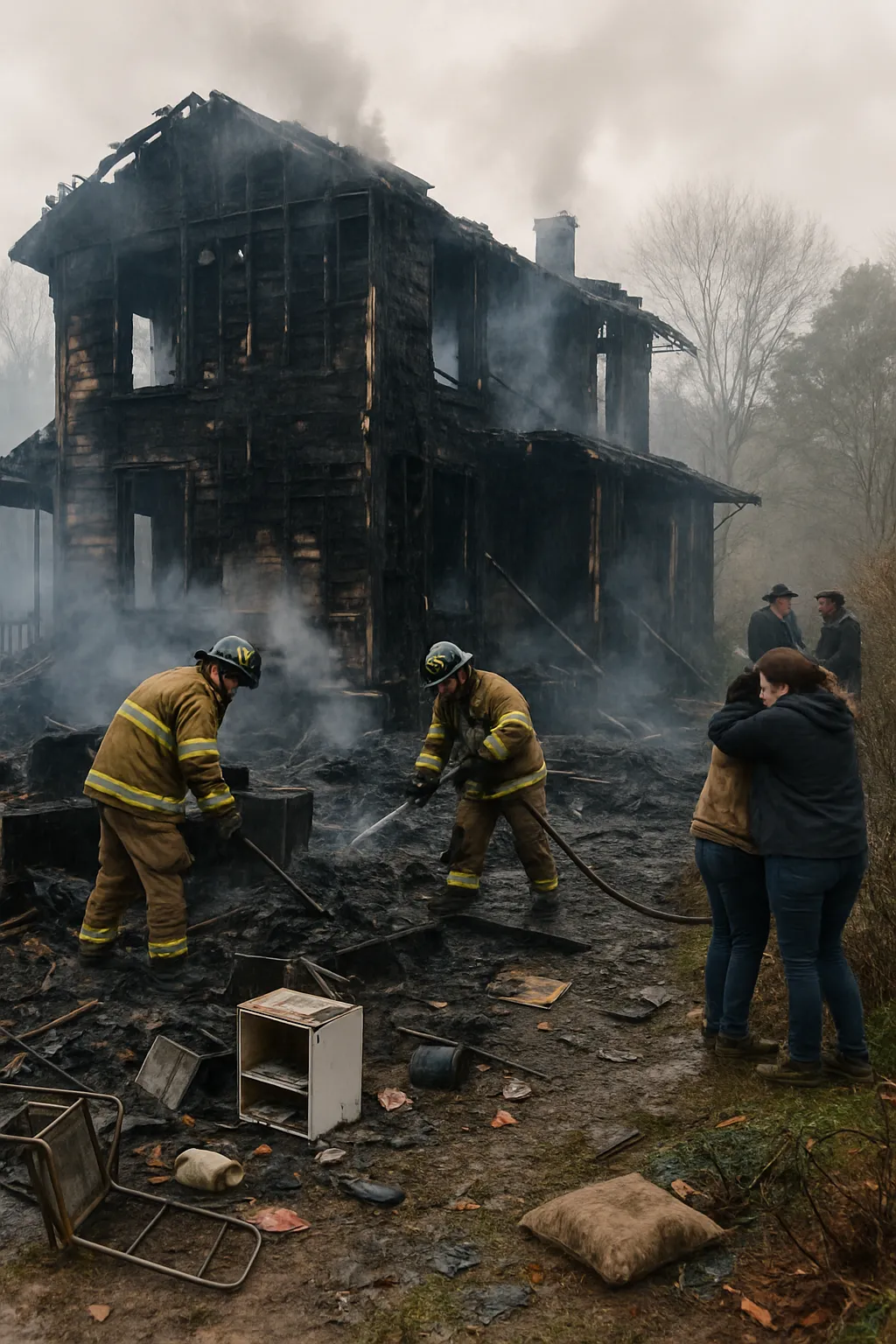
Through the Smoke: Inside the Gabriel House Fire and Its Unseen Ripples
You never expect disaster to choose your block—until the sirens become your sirens. I grew up two streets over from a place like Gabriel House, a spot where generations found comfort. But on a night in Fall River, comfort gave way to chaos, and the meaning of home was rewritten for dozens of families. Let’s walk together through those smoke-filled halls—not as distant observers, but as neighbors piecing together the hours that changed everything. The Unseen Face of Tragedy: Who Were the Gabriel House Fire Victims? When the Gabriel House fire broke out late Sunday night, the assisted living facility was home to some of the city’s most vulnerable residents. Most were elderly, many wheelchair-bound or needing special care. For these fire victims and survivors, escaping the smoke-filled hallways was a struggle few could have imagined. The fire, which quickly became one of the state’s deadliest in recent memory, left nine people dead and over thirty hospitalized, with the community now mourning the loss and grappling with the aftermath. The Gabriel House fire unfolded as residents were preparing for bed. For some, there was little warning. “I thought I was dead. I really thought I wasn’t going to make it,” one survivor recalled, voice trembling as they described the panic and confusion. Thick smoke filled the corridors, making escape nearly impossible for those with mobility issues. Firefighters, including thirty who rushed in while off duty, worked frantically—breaking windows, carrying residents down ladders, and searching rooms one by one. “First room empty. Second door, I kicked in, body. Next room, empty. Next room, body,” a first responder recounted, underscoring the grim reality that unfolded inside. Among the deceased was Eleanor Willett, the oldest victim at 86. Her son received the devastating call just before midnight. “I’m very religious… but very outgoing,” he shared, reflecting on his mother’s life and the faith that now helps him cope. Richard Rochon, a Vietnam veteran, was also lost in the fire. Family members described their heartbreak and the challenge of staying strong for each other. “I had my breakdown, but right now I’m just trying to be strong for her because that was her brother,” one relative said, their grief still raw. The tragedy did not end with the fatalities. Brenda Hurley remains in critical condition, suffering burns to half her body. Her family keeps vigil at her bedside, hoping for a miracle. In total, thirty residents were hospitalized, most for smoke inhalation—a reminder of how quickly a fire’s unseen dangers can spread through an assisted living facility. Research shows that elderly individuals and those with disabilities are at greatest risk during such emergencies, and the Gabriel House fire has brought that reality into sharp focus. The ripple effect of these fire injuries and fatalities extends far beyond the walls of Gabriel House. Many victims had deep roots in the community, their absence now felt by neighbors, friends, and loved ones. As the investigation continues, the stories of those lost and those who survived remain a powerful testament to the human cost of this tragedy. Into the Smoke: Heroics and Hazards of the Firefighter Rescue Efforts When the fire alarm blared at Gabriel House in Fall River, the reality of the emergency was immediate and overwhelming. Residents, many elderly and vulnerable, were just getting ready for bed. Suddenly, their world filled with smoke, panic, and the desperate need for rescue. In the chaos, the firefighter rescue efforts became a lifeline—one that would test the limits of courage and endurance. Research shows that the fire department response was nothing short of massive. Fifty firefighters rushed to the scene, with thirty arriving off-duty—an extraordinary show of community commitment. These weren’t just professionals on the clock; they were neighbors, friends, and family, answering the call when it mattered most. You can almost picture it: men and women, some still in street clothes, grabbing gear and running toward the flames. The rescue operations unfolded with a mix of urgency and improvisation. Dramatic video from that night shows firefighters swarming the building, ladders propped against windows, and shouts echoing through the smoke. Some responders climbed ladders to reach residents trapped on upper floors. Others charged into smoke-filled corridors, sometimes without the protection of air tanks. One firefighter recalled, “I went in. I didn’t have an air tank or anything.” The risks were staggering, and exhaustion set in quickly. For those inside, the terror was real and personal. Imagine your own parent or grandparent waiting by a window, hoping for help. Albert Almanza, a resident, described the moment: "I yelled help, help, help, and the firemen came up the ladder, broke the window, and got me out and carried me down the ladder." The elderly residents rescue was complicated by the building’s layout and the residents’ mobility issues. Many were wheelchair-bound or dependent on oxygen. The sprinkler system activated, but thick smoke remained the greatest hazard. Firefighters kicked in doors, searching room after room. Sometimes, they found empty beds. Other times, they found residents in desperate need of help. Despite their heroic actions, five firefighters were injured in the fire emergency response. All were later released from care, but the dangers they faced were clear. Quick action by first responders is credited with preventing even greater loss of life. Still, the toll was heavy: nine residents lost, dozens hospitalized, and a community left reeling. By the next day, Gabriel House stood silent—its windows boarded, its halls empty. Survivors and families faced the aftermath, grateful for the bravery shown but forever changed by what happened in those smoke-filled moments. A Night That Won’t Fade: The Community Impact and Emotional Cost When disaster strikes, it’s the ordinary things you miss first. For the residents of Gabriel House, the impact of the fire on residents was immediate and overwhelming. In a matter of minutes, the place they called home—filled with clothes, medication, treasured photos, and lifelong friends—was reduced to boarded-up windows, doors wrapped in caution tape, and a haunting silence. By dusk on Monday, the devastation was clear. Survivors stood outside, watching as everything familiar disappeared behind yellow tape. You can’t prepare for the emotional cost of losing not just your possessions, but your sense of safety and community. Many residents lost everything. Some lost friends they had known for years. One family member, speaking about Brenda Hurley, shared the heartbreak: burns covered half her body, and her loved ones waited for news, not knowing if she would make it. “It’s devastating. And I just think through what these people went through,” a witness said, echoing the shock felt by so many fire victims and survivors. The community impact goes far beyond the physical loss. Gabriel House was more than an assisted living facility; it was a network of relationships, a place where people looked out for each other. When a single home burns, neighbors often rally with casseroles and comfort. But when an entire building is lost, the scale of grief and need is almost impossible to grasp. Residents displaced by the fire found themselves suddenly without homes, forced to navigate a new world of uncertainty. A shelter was quickly established for those displaced. The Red Cross stepped in, offering support, blankets, and a place to sleep. But the trauma lingers. Families now face the challenge of rebuilding not just their lives, but their community. As one survivor put it, “They both tell me every day they love me, and I tell them I love them.” The bonds formed inside Gabriel House are now tested in ways no one could have imagined. Governor Mara Healy’s visit brought a moment of recognition. She praised the first responders who risked their lives to save others, but she also acknowledged the devastation left behind. Research shows that the emotional toll of such disasters can last long after the smoke clears. The entire assisted living population was displaced, and while shelter and Red Cross involvement offered immediate relief, the ongoing trauma is a stark reminder of how quickly a community can be ripped apart. For the fire victims and survivors, the journey forward is uncertain. The loss is not just about things—it’s about people, memories, and the invisible threads that tie a community together. Searching for Answers: Ongoing Fire Investigation and Safety Reckonings When a fire tears through a close-knit community like Gabriel House, the questions come fast and the answers, if they come at all, arrive slowly. You can sense the urgency in Fall River as state and local authorities dig into the fire investigation, hoping to uncover what truly sparked the tragedy on July 13, 2025. The state fire marshal is leading the fire cause investigation, but tonight, the community is left with more questions than answers. The facts are stark: The blaze began around 9:30 p.m., quickly engulfing the assisted living facility. Despite the presence of fire safety measures—sprinklers, smoke detectors, and a functioning alarm system—the fire still became one of the deadliest in Massachusetts in years. Residents, many elderly and vulnerable, were trapped as smoke and flames spread. Firefighters rushed in, rescuing dozens, but nine lives were lost and more than 30 people were injured, including five firefighters. All injured firefighters have since been released from the hospital, but the scars remain. As the fire investigation continues, the spotlight is on fire code compliance. Did Gabriel House meet all the requirements? Were there fire code violations that could have contributed to the disaster? The systems designed to protect—sprinklers and alarms—did activate, but the outcome was still devastating. One resident shared, "Residents tell us they saw the sprinkler system turn on through this, but tonight it's unclear how it all started." That uncertainty is what haunts so many tonight. You might wonder why closure is so elusive after a disaster like this. Part of the answer lies in the tension between what’s supposed to work on paper and what happens in the chaos of a real emergency. Research shows that even when fire safety measures in assisted living facilities are up to code, the unique challenges of evacuating elderly, wheelchair-bound, or oxygen-dependent residents can overwhelm the best-laid plans. Public scrutiny is mounting. Gabriel Care, the facility’s owner, and Dennis Etzkorn, listed as the owner, have not responded to requests for comment. Pressure is building on management to explain what went wrong and what could have been done differently. There’s also a wild card in this story—what if emergency services had more funding? Firefighters and first responders have quietly suggested that with more resources, outcomes might have been different. Tonight, the fire investigation in Fall River presses on. The community waits, hoping for answers that might bring some measure of understanding, if not peace. For now, the only certainty is that the tragedy has forced a hard look at fire safety measures in assisted living and the systems meant to protect those most at risk. The Fragility of Home: Lessons from Gabriel House for Our Future Tonight, as you reflect on the aftermath of the Gabriel House assisted living facility fire, the reality of what unfolded in Fall River becomes painfully clear. The boarded-up windows and doors, the caution tape, and the stories shared by survivors all point to a single truth: home can be far more fragile than we ever imagine, especially for our most vulnerable neighbors. This was not just another assisted living facility fire—it was a tragedy that exposed the urgent need for stronger fire safety measures and a renewed commitment to protecting elderly residents. When the fire broke out, most residents were preparing for bed. Many were wheelchair-bound or dependent on oxygen, making a quick escape nearly impossible. You hear the voices of people like Albert Almanza, who described being trapped and enveloped in smoke, saved only by the swift response of firefighters. These first responders—fifty in total, including off-duty personnel—risked everything, carrying residents to safety, braving smoke-filled corridors, and kicking in doors in search of survivors. Their heroism was undeniable, but as the loss of nine lives shows, sometimes courage alone is not enough. The Gabriel House fire is a stark reminder that fire safety measures in assisted living facilities must be more than a checklist. Research shows that even with sprinklers and alarms in place, as was the case here, disaster can strike if systems are not robust enough or if emergency preparedness is lacking. The state fire marshal’s ongoing investigation will likely raise questions about whether current fire safety standards are truly adequate for eldercare housing. For the families of victims like Eleanor Willett and Richard Rochon, these questions are deeply personal. You see the human cost in every interview: residents grieving lost friends, families waiting for updates on loved ones like Brenda Hurley, and a community left to pick up the pieces. The loss goes beyond possessions—clothes, medication, and money were left behind, but so were decades of memories and bonds. It’s a reminder that, for many, the only thing they could rescue was their own life. This tragedy calls for more than just praise for heroism. It demands systemic change—better funding, tighter safety rules, and a more compassionate approach to protecting those who cannot protect themselves. As you consider your own preparedness, ask yourself: what would you save if your home was on fire? For the residents of Gabriel House, the answer was heartbreakingly simple. Sometimes, hope is the last thing boxed up. The lessons from this disaster must shape our future, ensuring that no community faces such loss again. TL;DR: Nine lost, countless hearts broken, and a community forced to confront both the fragility and resilience of home. The Gabriel House fire speaks louder than headlines—it's a call to rethink care, safety, and togetherness in our most vulnerable spaces.
12 Minutes Read

Jul 15, 2025
Moments That Made Headlines: From Chelsea’s Club World Cup Triumph to Unlikely News Oddities
Let me set the scene: I was munching on leftover birthday cake, soccer on the TV, when the Club World Cup trophy presentation went from ordinary to the stuff of memes. There, smack in the middle of Chelsea FC’s celebration, stood President Trump—shining center stage where he’d been gently asked to step aside. If you’ve ever wondered what happens when the worlds of elite football and global politics collide—with a dash of random weirdness—you’re about to find out. We’re diving deep into Chelsea’s big night, international intrigues, and… a story about a stolen tortoise (because why not?). Chelsea FC’s Club World Cup Victory: More Than Just a Trophy If you tuned in to the FIFA Club World Cup final at MetLife Stadium, you witnessed a night that delivered more than just football. Chelsea FC’s 3-0 win over Paris Saint Germain wasn’t just a scoreline—it was a statement. The Chelsea PSG match, held on July 13, 2025, marked a historic first: never before had an English and a French club met in the final of this prestigious tournament. The atmosphere at MetLife Stadium was electric, and the Chelsea highlights from that night are already being replayed by fans around the world. The match itself was defined by Chelsea’s clinical edge and defensive grit. Cole Palmer, who has quickly become a household name, dazzled with two first-half goals that left PSG scrambling. His sharp movement and finishing were the talk of the night, and it was clear he was the difference-maker. Joao Pedro added a third in the second half, sealing Chelsea’s first-ever FIFA Club World Cup title. For Chelsea FC, this wasn’t just another trophy—it was a moment that elevated their international reputation and showcased their strength on the global stage. Yet, the headlines weren’t all about the action on the pitch. During the trophy presentation, an unexpected twist unfolded. President Trump, who was slated to hand over the cup, lingered in the middle of Chelsea’s celebration, creating a moment of confusion and surprise. As Cole Palmer later admitted, “I knew that Trump would be there, but not when they actually lifted up the trophy.” The scene quickly went viral, adding an unusual layer to the night’s celebrations and sparking plenty of conversation online. Research shows that Chelsea’s victory was built on a dominant first-half performance. PSG, despite enjoying spells of possession, struggled to create clear chances. Chelsea’s defensive organization and swift counterattacks kept the French side at bay. The Chelsea PSG match will be remembered not only for the goals but for the way Chelsea controlled the tempo and dictated play at MetLife Stadium. For fans, the FIFA Club World Cup final offered plenty of memorable moments. From Cole Palmer’s clinical finishing to Joao Pedro’s late strike, the Chelsea highlights from this match will be talked about for years. The win marks a new chapter for Chelsea FC, solidifying their place among football’s elite and giving supporters a night they’ll never forget. The President Who Wouldn’t Step Aside: Trophy Presentation Turns Surreal If you tuned in for the FIFA Club World Cup final at MetLife Stadium, you witnessed more than just Chelsea FC’s dominant 3-0 win over Paris Saint Germain. The real headline-grabber came after the final whistle, as the trophy presentation took a turn no one expected. President Trump, overseeing the ceremony, was asked to step aside after handing Chelsea the cup. Instead, he remained center stage, standing right in the middle of Chelsea’s celebration. The moment quickly became a viral sensation, blending sporting triumph with political spectacle in a way that left players and fans equally baffled. Chelsea Highlights from the match were soon overshadowed by this unscripted episode. Star player Cole Palmer summed up the team’s confusion, saying, "I knew that Trump would be there, but not when they actually lifted up the trophy." His words echoed the surprise felt across the stadium and on social media, as images of the president lingering in the spotlight spread rapidly. For many, the sight of Trump standing among jubilant Chelsea FC players was as memorable as the goals themselves. Research shows that MetLife Stadium is already under the global spotlight, with the venue set to host the World Cup final in 2026. This Club World Cup final, held on July 13, 2025, served as an unexpected prelude, offering a glimpse of the stadium’s growing importance in international football. The event was supposed to be all about Chelsea’s first FIFA Club World Cup title—a historic achievement, especially given the strong performance in the first half, with Cole Palmer netting two goals and Joao Pedro adding a third. Instead, the post-match scene became a talking point for its unusual blend of sports and politics. The protocol-breaking moment didn’t just puzzle the players. Fans in the stands and viewers at home were left wondering about the rules of such ceremonies. Was this a one-off, or a sign of things to come as MetLife Stadium gears up for even bigger global events? The viral images and memes that followed show just how quickly a sporting celebration can turn into a news oddity, especially when the world’s eyes are already on the FIFA Club World Cup and Chelsea FC’s historic win. As coverage continued on Fox, the conversation shifted from Chelsea Highlights to the president’s unexpected cameo. For MetLife Stadium, the night was a reminder that sometimes, the biggest stories happen after the final whistle. Global Headlines: When Soccer Isn’t the Only Game Played As the world’s attention lingered on Chelsea’s historic FIFA Club World Cup victory, another set of headlines was quietly reshaping the global landscape. You might have been celebrating Chelsea’s 3-0 triumph over PSG at MetLife Stadium—Cole Palmer’s first-half double, Joao Pedro’s clincher, and the confetti that crowned the Blues as champions for the first time. But beyond the pitch, a different kind of contest was unfolding, one with stakes far higher than any trophy. In a dramatic Oval Office announcement, President Trump issued a stark ultimatum to Russian President Vladimir Putin: end the war in Ukraine within 50 days, or face what he called “secondary tariffs.” The message was clear—if Russia doesn’t act, the United States will impose severe economic measures not just on Russia, but on its trading partners as well. The White House’s move comes at a moment when global attention is split between the euphoria of sporting achievement and the gravity of international conflict. What exactly are these “secondary tariffs”? The term sparked confusion, but US Commerce Secretary quickly clarified—they’re essentially economic sanctions. These sanctions are designed to hit Russia where it hurts, by targeting the countries and companies still doing business with Moscow. The hope, according to administration officials, is to pressure Russia into ending its war with Ukraine by isolating it economically. Research shows that such sanctions, when broadly enforced, can have significant impacts on a nation’s economy and its ability to sustain prolonged conflict. But that’s not the only move the US is making. In the same breath, President Trump revealed a new weapons plan for Ukraine. Under this strategy, European allies will purchase US-made military equipment—including advanced Patriot missile batteries—and funnel them directly to Ukrainian forces. The announcement, made alongside the NATO Secretary General, signals a coordinated push to bolster Ukraine’s defenses while keeping direct US involvement at arm’s length. Studies indicate that providing modern air defense systems like Patriot batteries can dramatically improve Ukraine’s ability to counter Russian missile attacks. All of this unfolded just as the world was still buzzing from Chelsea’s FIFA Club World Cup win. It’s a reminder that while sporting heroes capture our imagination, the headlines that shape our future are often written in the corridors of power, not on the field. As you reflect on Chelsea’s victory, the news from Washington and Moscow is a stark reminder: sometimes, the most consequential games are played far from the stadium lights.Institutions in Flux: When Government and Sports Stories Overlap You might have missed it between Chelsea’s Club World Cup celebrations and the latest twists in global politics, but the Supreme Court just made a decision that could reshape a cornerstone of American education. In a move that’s as sweeping as it is controversial, the Court has greenlit President Trump’s plan to lay off nearly 1,400 Education Department workers. This isn’t just a round of budget cuts—it’s the first step in a larger effort to dismantle the Education Department, a campaign promise that’s now inching closer to reality. The implications are immediate and far-reaching. If you’re following the student loans debate, you’ll want to pay close attention. The federal student loan portfolio, valued at a staggering $1.6 trillion, may soon shift from the Education Department to the Treasury. That means the way student loans are managed—and who’s ultimately responsible—could change dramatically. Workforce grants might move to the Department of Labor, while civil rights enforcement could be split between the Justice Department and Health and Human Services. Liberal justices voiced strong legal doubts about the move, raising questions about the impact on students and civil rights protections. Still, the Supreme Court’s decision stands, and the layoffs are set to proceed. For the 1,400 Education Department staffers, the news lands like a thunderclap. For students and borrowers, the uncertainty is just beginning. This institutional shakeup comes at a time when headlines are anything but simple. On the same day the Supreme Court’s decision made waves, President Biden announced a major deal with European allies: billions of dollars in U.S. military equipment, including Patriot missile batteries, will be sent to Ukraine. It’s a reminder that sports, politics, and policy are all fighting for your attention—sometimes in the same news cycle. Research shows that dismantling the Education Department could have ripple effects for students nationwide, especially when it comes to civil rights enforcement and access to federal aid. The transfer of student loan management to the Treasury raises questions about oversight, accountability, and the future of federal lending programs. As Chelsea FC lifted the FIFA Club World Cup trophy in New Jersey, you could almost feel the world’s attention split between the pitch and the policy battles playing out in Washington. Institutions are in flux, and the headlines aren’t getting any easier to follow. Whether you care more about student loans or soccer scores, this is a moment when government and sports stories overlap in ways that demand your attention. Wild Card News: The Curious Case of the Stolen Tortoise While the world’s eyes were glued to Chelsea’s historic Club World Cup victory, a quieter but no less dramatic story was unfolding in La Puente. You might have missed it, but for the folks at Valley Pet and Supply, the night brought anything but celebration. Security cameras captured a scene straight out of a quirky crime caper: two men, a cardboard box, and a slow-moving reptile who never saw it coming. In a matter of minutes, the pair nabbed a tortoise and slipped out, leaving the small business reeling and the community on alert. For Valley Pet and Supply, this wasn’t just another day at the shop. The store’s owners, already juggling the challenges of running a small business, now faced the added stress of tortoise theft. It’s a blow that hits harder than you might think. Reptiles like this aren’t just inventory—they’re living creatures, often beloved by staff and regular customers alike. The loss stings, not only financially but emotionally, especially for a tight-knit business in La Puente that relies on trust and community support. As the news broke, the owners wasted no time. A report was filed with the sheriff’s department, and the surveillance footage quickly made its rounds on local news and social media. The hope? That someone in the La Puente area might recognize the suspects or spot the missing tortoise. In a week dominated by headlines about Chelsea’s triumph over PSG at MetLife Stadium, this oddball story cut through the noise, reminding everyone that not all headline-makers are footballers or politicians—sometimes, it’s a tortoise quietly making its way into the spotlight. Research shows that small businesses like Valley Pet and Supply face unique risks when it comes to theft. Unlike large chains, they often lack the resources for advanced security or insurance, making incidents like this especially damaging. And when the target is a living animal, the stakes feel even higher. The community’s response has been swift, with many expressing outrage and offering help. Still, the question lingers: will the tortoise make it back home? In a week where international sports dominated the airwaves, the curious case of the stolen tortoise in La Puente serves as a reminder that news comes in all shapes and sizes. For Valley Pet and Supply, the search continues. And for everyone else, it’s a story that proves sometimes, the most unexpected moments can steal the spotlight—quite literally.TL;DR: When sports, politics, and pure headline weirdness crash together, you get a night like this. From Chelsea’s flawless FIFA Club World Cup win to global standoffs and the search for a stolen tortoise, the news rarely gives you time to catch your breath.
11 Minutes Read

Jul 10, 2025
Why Your License Plate Frame Might No Longer Get You Pulled Over in Kansas: Behind the Supreme Court Ruling
Picture this: You're inching through Kansas traffic, lost in thought, when red-and-blues flash behind you. Your heart pounds. Maybe you think back to every law you could’ve violated—speeding, taillight out, the usual suspects. But what if the reason is that run-of-the-mill license plate frame —maybe with your alma mater or favorite burger joint—hugging the edges of your plate? Turns out, after a Kansas Supreme Court decision, that alone probably won't earn you an unexpected roadside interrogation. Let’s unpack the story of State v. Beck, a ruling that just changed what police can use as probable cause for a stop. Oh, and brace for some detours: we’re taking the scenic route through quirky stories, legal minutiae, and real road wisdom. The Quirky Backstory: From Plate Frames to the Kansas Supreme Court If you’ve ever glanced in your rearview mirror and spotted flashing lights after noticing a tiny tassel or a license plate frame on your car, you’re not alone. For years, Kansas drivers—like motorists across the country—have found themselves pulled over for the smallest things: a graduation tassel dangling from the mirror, a faded ski tag, or, more recently, a license plate frame that covers part of the state name. These stops have felt random, almost like a game of highway roulette. One day, it’s your lucky day. The next, you’re explaining to an officer why your plate frame is there at all. It’s not just anecdotal. Research shows that a large number of traffic stops in Kansas have hinged on minor technicalities—especially so-called “ obstructed license plate ” violations. Sometimes, these stops have led to major investigations and even criminal charges. The infamous State versus Beck case is a prime example. In 2021, a Kansas driver was pulled over simply because the state name on his license plate was partially covered by a frame. That routine stop escalated quickly: a search turned up 2.13 pounds of contraband, and the case soon became a flashpoint for debates about motorist rights and police authority. For many, this wasn’t surprising. As one observer put it, ‘If they can find an excuse and they need an excuse, they will. They'll find an excuse.’ The “obstructed view” rationale has been a go-to for officers for decades. Whether it’s a fuzzy dice, a dealership plate frame, or a souvenir from a ski trip, these minor infractions have often been enough to justify a stop—and sometimes, much more. But everything changed on July 3rd, when the Kansas Supreme Court issued a landmark opinion in State v. Beck. The court ruled that Kansas law does not require the state name on a license plate to be clearly visible—only the numbers, letters, and registration decal must be unobstructed. This decision sent shockwaves through the legal and law enforcement communities. Law enforcement websites quickly posted internal notices: officers could no longer use a partially covered state name as grounds for a stop. For drivers, it was a seismic shift in their rights on the road. The public response was immediate and intense. Lawyers, motorists, and the simply curious were all buzzing about the ruling. The case underscored just how trivial some traffic stops can be—and how those stops can spiral into life-changing legal battles. The Kansas Supreme Court’s decision in State versus Beck didn’t just clarify the law; it put a spotlight on the fine line between legitimate enforcement and overreach, and it set a new precedent for motorist rights in Kansas. License Plate Frame Legality and Statutory Quirks: How Much Plate Has to Show? If you’ve ever wondered whether your license plate frame could get you pulled over in Kansas, recent legal developments may offer some clarity. The Kansas Supreme Court’s latest License Plate Ruling has shifted the landscape, making it clear that the state’s law doesn’t require the state name on your plate—like “Kansas” or “kansas.gov”—to be visible at all times. Instead, the Kansas License Plate Law focuses on the legibility of the alphanumeric display and the registration decal. That’s it. Let’s break down what the law actually says. Since 1929, Kansas statutes have required that license plates be securely fastened, visible, and maintained free from foreign materials. They must be “clearly legible,” but the statute never spells out that the state name must be readable. The law does, however, set some serious penalties: a violation can mean a misdemeanor, a fine up to $2,500, and even jail time ranging from 30 days to six months. But here’s the catch—those penalties only apply if the numbers, letters, or registration decal are obscured or unreadable. A muddy or fully obstructed plate is still grounds for a stop, but a frame covering the state name? Not anymore. This interpretation didn’t come out of nowhere. The Supreme Court’s decision in 2024 clarified a long-standing gray area. Previously, some lower courts and law enforcement officers believed that any obstruction—including a license plate frame covering part of the state name—could justify a traffic stop. But the high court rejected this approach, saying, “We accordingly reject a rule that focuses on a single fact without regard for the totality of the circumstances.” In other words, just because your frame hides “Kansas” doesn’t mean you’re breaking the law. What about other states? License plate designs vary widely, and some states might require the state name to be visible. But in Kansas, the law is now clear. As one legal observer put it, ‘If a state wanted to, they could pass a law and say, it is illegal to have a license plate frame covering any portion of your plate. And that would be a different matter.’ For now, Kansas hasn’t done that. Research shows this ruling also impacts Traffic Stop Criteria. Officers must now base stops on whether the plate’s numbers, letters, or decal are unreadable—not just because the state name is blocked. This shift strengthens motorists’ rights and limits arbitrary stops for minor infractions. Still, keep your plate clean and legible, because a dirty or fully blocked plate remains a violation under Kansas License Plate Law. Fourth Amendment Implications: Can Cops Still Pull You for That Frame? If you’ve ever worried about getting pulled over in Kansas because your license plate frame covers part of the state name, the recent Kansas Supreme Court decision brings some clarity—and relief. The ruling directly addresses the Fourth Amendment Implications of traffic stops, tightening what counts as sufficient grounds for law enforcement to pull you over. At the heart of the matter is the constitutional requirement that every traffic stop must meet a “reasonable suspicion” threshold. The Fourth Amendment protects you from unreasonable searches and seizures, meaning officers can’t just stop you on a whim. They need a legitimate reason to believe you’ve broken the law. This principle was front and center in the case of State v. Beck , where an officer claimed a license plate frame obscured key information. However, the officer was still able to call in the plate number and state correctly, raising questions about whether the stop was truly justified. During oral and written arguments, both sides debated what the law really requires. The Kansas license plate statute says plates must be “clearly visible” and “clearly legible,” but it doesn’t spell out whether the state name must be fully readable. The court pointed out that the law’s main focus is on the alphanumeric display and registration decal, not the state name itself. This distinction became crucial in determining Traffic Stop Criteria and Motorist Rights . In its analysis, the court applied a two-pronged test: Was the officer’s action justified at the start? Was the detention reasonably related in scope to the circumstances? For a stop to be constitutional, an officer must have reasonable suspicion that an offense is occurring, has occurred, or is about to occur. The court emphasized that just seeing part of the state name—especially if everything else is clear—does not meet this standard. As research shows, the court rejected the idea that a single fact, like a partially covered state name, can justify a stop without considering the totality of the circumstances. In fact, the court cited a federal case, US v. Carter , which found that even when half the state name was obscured, officers could still identify the vehicle. The Kansas Supreme Court echoed this logic, stating: ‘Court found there was no probable cause or reasonable suspicion that the vehicle was in violation of the statute.’ This Kansas Supreme Court Decision means police can no longer rely on minor plate frame obstructions as a reason to pull you over. Substantial violations must exist for a stop to comply with the Fourth Amendment. The decision not only clarifies the law but also strengthens Motorist Rights by limiting arbitrary traffic stops based on technicalities. Beyond Kansas: Could This Ruling Hit the Road in Other States? If you’re driving outside Kansas with a license plate frame, you might be wondering: will this new Legal Precedent protect you elsewhere? The recent Kansas Supreme Court License Plate Ruling has certainly made waves, but the road ahead isn’t as clear-cut in other states. While the decision set a persuasive precedent, research shows that each state’s laws—and how they’re enforced—can look very different. In Kansas, the Supreme Court reversed convictions that were based on evidence from a traffic stop involving a partially covered license plate. The justices found that as long as the important parts of the plate—the numbers, letters, and registration decal—are visible, you’re in the clear. The state name? Not required to be fully legible. This ruling means officers in Kansas can no longer pull you over just because your plate frame covers “Kansas” or any other non-essential detail. As one law enforcement official put it, ‘Major case law just came down, and, you cannot use this as an excuse anymore to pull people over.’ But what about the rest of the country? There’s no nationwide rule. States write their own statutes, and law enforcement agencies interpret them in their own ways. Some states might see the Kansas ruling as a model, but others could stick to stricter interpretations. The impact on Law Enforcement is immediate in Kansas—KPOA has already issued new guidance to officers—but elsewhere, it’s a patchwork. The case of US versus Carter in Kansas federal court is a good example of this patchwork. In that case, a plate frame covered half of the word “Ohio,” but the court ruled it wasn’t illegal. It highlights the inconsistencies between federal and state approaches to license plate obstruction. In some states, even a minor cover-up could still get you pulled over, while others may start to question if those stops are justified at all. There’s also the possibility of legislative change. If states want to tighten their laws, they can. As the Kansas Supreme Court noted, a state could pass a law making it illegal for any part of the plate to be covered. That could spark a whole new debate—lobbyists for car dealers, auto accessory makers, and even fast food chains (think branded frames) might jump into the fray. For years, people have been stopped for things as minor as a license plate frame or even an air freshener hanging from the mirror. This ruling may ripple regionally, but each state’s statute—and its enforcement culture—will ultimately decide the fate of license plate frames. As research indicates, other states may examine and possibly revise their licensing laws in light of this, but outcomes will vary. For now, the only certainty is that the conversation about license plate frames and Law Enforcement Impact is far from over. Roadside Realities: What This Means for Motorists, Police, and Everyday Commutes If you drive in Kansas, the recent Supreme Court ruling on license plate frames is more than just legal jargon—it’s a real change you’ll notice every time you hit the road. For years, motorists worried that even a simple novelty frame , the kind that might cover the state name but leaves numbers and decals visible, could land them in a traffic stop. That’s no longer the case. The Kansas Supreme Court has clarified the Kansas License Plate Law : police can’t pull you over just because a frame partially blocks the state name. The law only requires that the alphanumeric display and registration decal are clearly visible. What does this mean for you? First, it’s a win for Motorist Rights . As one legal expert put it, ‘The decision strengthens motorists' rights by limiting arbitrary traffic stops based on minor infractions like license plate frames.’ Research shows that police are now discouraged from citing trivial plate obstructions. If your plate is readable—numbers, letters, and decal—then a decorative frame is no longer a reason for flashing lights in your rearview mirror. But don’t get too comfortable. The ruling doesn’t give you a free pass to ignore your plate’s condition. If your plate is caked in mud, covered in debris, or hidden behind a reflective “stealth” cover, you’re still at risk. Officers can—and will—pull you over if they can’t read your plate at all. One officer described sitting in traffic behind a car with a plate so obscured by a cover that it was impossible to see. That’s still a clear violation under the Obstructed License Plate rules, and the law covers these major obstructions. For law enforcement, the impact is immediate. Kansas police departments have already updated their protocols, notifying officers that they can no longer use a partially blocked state name as a go-to excuse for a stop. This shift is more than procedural—it’s a direct response to the Supreme Court’s interpretation of the Kansas License Plate Law . Officers must now focus on legitimate infractions, not minor technicalities. Legal observers are calling this a boost for constitutional protections. The ruling sets a new precedent, giving motorists fresh legal ground to challenge dubious stops. It also means that cases built solely on minor plate frame issues may not hold up in court. In summary, most law-abiding drivers with novelty frames can breathe a little easier. On Kansas roads, there’s now a bit more freedom for personal expression—just don’t let mud or grime make your plate unreadable. The open road still demands responsibility, but the days of being pulled over for a harmless frame are, for now, in the rearview mirror. TL;DR: Kansas’s top court ruled that having a license plate frame covering the state name isn’t enough reason for a traffic stop—changing both the rights of drivers and police actions. Know your plates, know your rights.
13 Minutes Read

Jul 11, 2025
When AI Judges: The Unseen Ripple Effects of Automated Content Moderation on Social Media
Imagine waking up to find your entire online identity wiped out—no warning, no human explanation, just an AI’s cold judgment. Been there? Just last year, a friend of mine lost a decade’s worth of posts and memories, all because some algorithm flagged a cat meme as 'inappropriate.' Sound absurd? Welcome to the unpredictable (sometimes Kafkaesque) world of AI content moderation , where lines blur between protection, overreach, and collateral damage. In this post, we’ll navigate quirky anecdotes, surprising facts, and cautionary tales from the frontlines of digital moderation, shining a flashlight on what happens when automated systems take charge. The Bizarre Ban Hammer: When AI Gets It Wrong Imagine waking up one morning, logging into your favorite social media platform, and finding your account suspended—no warning, no clear explanation. If you spend any time browsing r/Instagram, a community of over a million users, you’ll quickly see you’re not alone. Stories pour in daily about accounts being banned or suspended for supposed violations of community guidelines , often with little to no evidence. These are not just minor inconveniences. For many, these accounts represent years of memories, connections, and even their livelihoods. This is the reality of AI false positives on social media platforms. Automated moderation systems, designed to detect harmful content, sometimes get it wrong. When they do, the consequences can be devastating. One user shared how their business account—essential for their full-time job—was suddenly locked. “I heavily rely on Instagram for leads,” they wrote, after being told they had 180 days to appeal a suspension for violations that simply weren’t true. The suspicion? An AI glitch. And it’s not an isolated case. Meta ’s platforms, like Facebook and Instagram, have seen a noticeable rise in these errors in recent years. What’s especially troubling is the lack of nuance in AI moderation. Algorithms can’t always distinguish between context and intent. For example, a friend’s vintage tattoo shop vanished from Instagram overnight. No warning, just gone. Years of customer photos, reviews, and business history—erased by an automated system that flagged something as a violation. The emotional toll is real. As one user put it: "My Instagram was not just a social app. It was my diary, my gallery, my memory box." Research shows that as social media platforms ramp up AI moderation to combat harmful content, the number of automated bans has surged. This trend, while aiming to reduce risk, often leads to more AI false positives . Businesses, in particular, feel the sting. Losing access to an account can mean lost revenue, missed opportunities, and irreparable brand damage. Understanding how AI moderation works—and its limitations—has never been more important. Even when users try to appeal, the process can feel hopelessly automated. One person detailed submitting a two-hour video as part of their appeal, only to receive a generic response within a minute: "You reviewed a two hour video in a minute? You must be crazy. The review is clearly automated." These stories highlight a growing problem: AI-driven moderation, while powerful, often lacks the human touch needed to fairly enforce community guidelines on today’s social media platforms. Ethics in the Machine: When Moderation Turns Personal Imagine waking up to find your entire online identity erased overnight. For many, especially young users, social media isn’t just a platform for sharing—it’s a diary, a memory box, and a lifeline to friends and communities. But what happens when AI content moderation systems, designed to protect, end up causing harm through algorithmic bias and lack of transparency? Take the case of a 17-year-old girl who was falsely banned from Instagram for alleged CSE (Child Sexual Exploitation) content. She describes the experience as devastating: "I've never done anything wrong, never posted anything inappropriate, never harmed anyone, and yet I've been falsely accused of one of the most serious things imaginable." This is not an isolated incident. Research shows that AI content moderation systems, powered by deep learning and natural language processing, are increasingly used to detect and remove harmful material. While these tools are effective in many cases, they are not perfect. Algorithmic bias can lead to false positives, flagging innocent content and users. When the accusation is as serious as CSE, the consequences are life-altering—reputations destroyed, mental health shattered, and a sense of safety lost. One of the biggest ethical concerns is the lack of transparency. Many platforms, including Meta, rely on automated systems with minimal or no human oversight. Users often have no clear explanation or meaningful recourse. In the case above, the user was asked to submit a raw selfie and government ID—raising significant privacy concerns, especially for minors. The review process itself is often automated, despite claims of human involvement. As one frustrated user put it, “The review is clearly automated. Meta says a team looked at it, but their wording admits the team is automated AI. No human actually checked anything.” This lack of human review not only erodes trust but also raises questions about GDPR compliance . Under GDPR Article 22, users have the right not to be subject to decisions based solely on automated processing if those decisions have significant effects. When bans happen without proper human intervention, platforms may be breaching these user rights. The ripple effects go beyond individual users. Businesses have lost livelihoods, and entire communities have been disrupted due to algorithmic errors. The pain of losing a personal ‘memory box’ is real, and the emotional toll can be severe. As AI content moderation becomes more prevalent, the need for ethical oversight, transparency, and respect for user rights grows ever more urgent. AI Tools vs. Human Oversight: The Mental Toll Behind Moderation If you’ve ever wondered how social media platforms keep harmful content off your feed, the answer is more complicated than you might think. While AI tools and deep learning algorithms are now central to content moderation services , there’s still a heavy reliance on human oversight—often with hidden costs that rarely make headlines. Let’s start with the human side. Every day, thousands of moderators around the world are tasked with reviewing the darkest corners of the internet. According to Time Magazine , in a plain office building near a Nairobi slum, about 200 young men and women—employed by a company called SAMA —spend their shifts glued to screens, watching videos of violence and other disturbing material. SAMA, which calls itself an “ethical AI outsourcing company,” works with tech giants like Meta (Facebook’s parent company) to provide content moderation services. The goal is to offer dignified digital work, but the reality is far more troubling. The mental health toll on these moderators is significant. After hours of exposure to graphic and illegal content, many develop depression, anxiety, and even addiction. Companies like Meta have paid millions in compensation to affected workers, acknowledging the psychological impact. As one observer put it: "These people's whole job is to look at gore, CSIM, a lot of the most illegal stuff sometimes just to moderate it. And, again, this is not a healthy job to have, clearly." It’s no surprise, then, that AI tools are increasingly used to automate the worst parts of this job. Deep learning models can scan images, videos, and text for signs of hate speech, misinformation, and violence in real-time. Research shows that AI in content moderation helps platforms respond faster and at scale, reducing the immediate burden on human workers. But here’s where things get tricky. Automated moderation isn’t perfect. AI often misses nuance—sarcasm, context, or cultural differences—that only a human can catch. Studies indicate that relying solely on algorithms can lead to unfair bans or the spread of misinformation, especially when the system fails to understand context. This is why human oversight remains essential, even as AI tools become more advanced. And yet, the existence of moderation “sweatshops” like those run by SAMA highlights a global problem. Outsourcing the dirtiest digital work to vulnerable communities may keep your feed clean, but it comes at a cost—one that’s measured in more than just dollars. The ripple effects of automated and human moderation touch both workers and users, shaping the digital spaces we all inhabit. Exploits, Errors, and the Domino Effect on Businesses When you rely on social media platforms like Meta for your business or creative work, you expect a certain level of stability and fairness from their content moderation services. But in reality, the systems behind these platforms—especially those powered by AI—are not as secure or reliable as you might hope. Recent events have shown just how vulnerable automated moderation can be to exploits, and the ripple effects can be devastating for users worldwide. In January 2025, a major security exploit surfaced, targeting Meta platforms and exposing a critical flaw in their AI-based content moderation. Hackers discovered that by using techniques like email enumeration —where they test if an email or username exists during sign-up—they could identify valid accounts. From there, they launched automated attacks, flooding the system with fake accounts and triggering mass bans. This exploit didn’t just impact a handful of users. Reports came in from Honduras, Ukraine, Iraq, the Philippines, and beyond, with legitimate accounts being disabled en masse. The consequences for small businesses and creators were immediate and severe. Imagine waking up to find your Facebook or Instagram account—your main source of income—suddenly gone. One user shared, "Facebook stole thirty thousand dollars from me. And of course, this guy's thinking maybe I should go to small claims court, and even then, the lawyers are saying there's probably no legal recourse because he probably signed something in the user agreement." For many, these bans meant losing access to thousands of dollars in owed revenue, with little hope of recovery. What’s even more troubling is how easily hackers can manipulate these AI-driven content moderation services. By exploiting account linkage loopholes, attackers have managed to get unrelated Instagram accounts linked to Facebook profiles, leading to both being banned if one is flagged. The AI doesn’t always distinguish between the real offender and innocent users caught in the dragnet. Sometimes, your account is reinstated one day, only to be banned again the next, with no clear explanation. If you find yourself in this situation, don’t expect much help from Meta’s customer support. Most users report being stuck in endless loops with bots, rarely getting a chance to speak to a real person. Even if you try to seek legal recourse, the platform’s terms of service often limit your options, leaving you feeling helpless. Research shows that while Meta has recently shifted its moderation focus to the most extreme content, like CSAM and violence, and moved toward user-driven reporting, these changes haven’t solved the underlying problems. The economic fallout from automated bans is real, and the legal grey area around AI moderation decisions leaves many businesses and creators exposed. Are We Letting AI Drive Blind? Rethinking Accountability and Balance Imagine waking up one day to find your social media accounts wiped out, your reputation tarnished, and no real explanation from the platform that made the decision. This scenario, unfortunately, is not just hypothetical. As AI-driven moderation becomes the norm, many users are left dealing with the fallout of automated decisions—often without any human oversight or clear path to appeal. GDPR compliance is supposed to protect you from exactly this kind of situation. Under Article 22 of the GDPR, you have the right not to be subject to decisions based solely on automated processing if those decisions have significant effects. Yet, research shows that major platforms like Meta rarely provide direct human contact when you’re caught in the web of their moderation systems. Instead, users are often met with canned responses or paywalls for support, leaving them frustrated and powerless. The risks of algorithmic bias are real. Automated systems, while efficient, can be tricked by bad actors exploiting security flaws—such as email enumeration or mass fake account creation. These tactics can trigger AI moderation to wrongly accuse innocent users of serious violations, like child exploitation. The consequences? Accounts deleted, reputations ruined, and little recourse for those falsely accused. As one affected user put it: "If you're accused of this, you take this to the police, you report this over there, and you make this a big deal. But if you're falsely accusing people of being predators... there needs to be some legal action." False accusations can have lifelong repercussions, sometimes outpacing due process itself. The current infrastructure often prioritizes speed and efficiency over fairness and transparency. This imbalance is driving calls for legal avenues and clearer appeals, especially in cases where reputational harm is at stake. Studies indicate that AI-driven moderation can amplify misinformation or disproportionately censor marginalized communities, further highlighting the need for a balanced approach. So, what’s the solution? Many experts and advocates now push for hybrid models—combining the speed of AI with the discernment of human oversight. Imagine a future where every ban triggers a kind of ‘moderation court,’ where both AI and humans review the evidence and debate your fate. While this may sound far-fetched, it’s a creative proposal that underscores the urgent need for transparency and accountability in automated decision-making. Ultimately, as AI continues to shape our digital experiences, it’s crucial to rethink how we balance efficiency with fairness. Ensuring GDPR compliance, addressing algorithmic bias, and demanding human oversight aren’t just legal obligations—they’re essential steps toward restoring trust and justice in online communities. TL;DR: AI on social media is a double-edged sword. It curbs the worst of the web but often fails us in subtle, costly ways. Combine machine efficiency with genuine human oversight—and question, always, who’s really making the call.
12 Minutes Read

Jul 10, 2025
Florida's Fast Lane Wake-Up Call: What the Super Speeder Law Really Means for Drivers
Picture this: you just crossed the state line, snack wrappers on the dashboard, and your playlist at full blast. It’s two minutes past midnight on July 1, and suddenly you see flashing lights in your rearview mirror. Welcome to Florida’s new era of ‘super speeder’ crackdowns – and you might be the headline. I’ve had a cousin get pulled over for a mere 12-over, but 104 mph? That’s a different kind of travel story. Let’s take a candid look at what’s changed, who’s already had a rude awakening, and how these rules just might save a few BBQs and beach days this year. The Super Speeder Law: How Florida Raised the Stakes Overnight If you thought speeding in Florida was just about getting a ticket, think again. The Florida Super Speeder law, which took effect at midnight on July 1, 2025, has changed the game for drivers who push the limits. This new law is not about minor infractions—it’s a direct response to high-speed, reckless driving that puts everyone at risk. The law is clear: if you’re caught driving at least 100 miles per hour, or exceeding the posted speed limit by 50 mph or more, you’re now facing more than just a slap on the wrist. The Florida Highway Patrol wasted no time showing how serious they are about enforcement. Just two minutes after the law went into effect, a driver in Orange County was clocked at 104 mph in a 70 mph zone. As one report put it, ‘Driver clocked at 104 miles per hour became the first person arrested under Florida’s new super speeder law.’ That’s not just a record for speed—it’s a record for fast enforcement. The law had been “on the books operative for two minutes, and somebody got the ticket.” This immediate response signals a new era for Florida’s highways, where extreme speeding is met with swift and tough penalties. So, what exactly happens if you’re caught under the Super Speeder law? For a first offense, you could face up to 30 days in jail and a $500 fine. That’s right— jail time for what used to be just a hefty ticket. The law doesn’t stop there. If you’re a repeat offender, the penalties double: up to 90 days behind bars and a $1,000 fine. These aren’t just numbers; they’re a wake-up call for anyone who thinks speed limits are optional. Research shows that the law is designed to zero in on the most dangerous drivers—those who treat highways like racetracks. By targeting speeds of 100 mph or more, or drivers who exceed the limit by 50 mph, Florida is aiming to reduce fatal crashes and make roads safer for everyone. The Florida Highway Patrol has made it clear: enforcement is immediate, and there’s no grace period for those who ignore the rules. The first arrest, happening just minutes after midnight, underscores the seriousness of this initiative. It’s not just about fines or jail time—it’s about sending a message that reckless driving will no longer be tolerated. If you’re planning to hit the road in Florida, the stakes have never been higher. The Super Speeder law is here, and it’s being enforced with a new level of urgency. What Counts as Reckless? Unpacking Speed Limits and Penalties If you’re used to pushing the speed limits in Florida, it’s time for a serious reality check. The Sunshine State’s new Super Speeder Law has redefined what counts as reckless driving , and the consequences are nothing short of a wake-up call for drivers everywhere. The days of getting away with a warning for heavy-footed highway cruising are over—now, the line between a speeding ticket and a mugshot is clearer, and a lot closer than you might think. Under the new law, reckless driving now officially starts at either 100 mph or 50 mph over any posted speed limit . You don’t need to hit both thresholds—either one is enough to land you in serious trouble. For example, doing 104 mph in a 70 mph zone? That’s not quite 50 over, but it’s over 100, and that’s all it takes. The Florida Highway Patrol made headlines with the first arrest in Orlando, but authorities kept the driver’s name under wraps, adding to the sense of drama surrounding this pioneering case. So, what happens if you cross that line? The penalties are steep and immediate. First-time offenders face up to 30 days in jail and a $500 fine . If you’re caught a second time, the punishment jumps to 90 days behind bars and a $1,000 fine . Research shows that these speeding penalties are not only stricter than before, but in some cases, even harsher than those in other states with similar laws. Florida’s approach is swift—no drawn-out court drama, just a direct trip to jail and a hefty bill to pay. It’s worth noting that other states have long had their own versions of the Super Speeder crackdown. Virginia, for example, is notorious for treating excessive speed as a criminal offense, sometimes with mandatory jail time. But what sets Florida apart is how quickly the law is being enforced. Within days of the law’s July 1, 2025, rollout, the first arrest was already making headlines. As one observer put it: "I had a cousin get pulled over for a mere 12-over, but 104 mph? That’s a different kind of travel story." For most drivers, creeping a few miles over the speed limit might still earn you a warning or a stern look from law enforcement. But if you find yourself blasting past the 100 mph mark—or going 50 mph over the posted limit—expect more than just a ticket. The law is clear: 31+ mph over? You’re flirting with a mugshot, not just a fine. Florida’s new reckless driving standards are part of a broader push to reduce fatal crashes and make the roads safer for everyone. The message is simple: slow down, or pay the price . And with the state’s readiness to act, it’s a message that’s already resonating far beyond the Florida border. Holidays, Highways and Hazards: Timing Is Everything If you hit the road in Florida this July, you probably noticed more flashing lights and patrol cars than usual. That’s no accident. The new Super Speeder Law took effect on July 1—just days before the Fourth of July, one of the busiest travel windows for Florida traffic. The timing? Not a coincidence. Officials knew the highways would be packed, and they wanted to send a clear message: extreme speeding and reckless driving won’t be tolerated, especially when road safety is at its most critical. Florida Highway Patrol and the Department of Transportation ramped up their efforts as the law went live. Road Ranger services were increased, with extra teams ready to respond to crashes, breakdowns, and the unexpected. If you were driving through Orlando, the chaos was even more obvious. Orlando isn’t just a theme park paradise—it’s a holiday hotspot, topping the list of U.S. vacation destinations for July 4th. That means more cars, more distractions, and, unfortunately, more opportunities for dangerous driving. Research shows that holiday periods see a spike in risky behaviors behind the wheel. Distracted driving, impaired drivers, and those pushing the speed limit all become more common when people are rushing to make it to fireworks or family gatherings. That’s why Florida traffic enforcement was on high alert. Patrols watched for reckless, impaired, or distracted drivers, and the public was urged to allow extra travel time. The message was simple: slow down, stay alert, and don’t become a statistic. Florida’s Road Ranger manager put it plainly: “With Central Florida being a number one travel destination for the Fourth of July, we are upping our staffing and ensuring our Road Ranger team are ready and willing to assist.” The goal is not just to write tickets, but to keep traffic moving and prevent tragedies. Sometimes, though, even the best intentions can’t stop every incident. One story making the rounds involved a driver who stopped to help a turtle cross the road. The chain reaction that followed led to a fatal crash and a four-hour backup—a stark reminder that even small decisions can have big consequences on busy highways. ‘We want everybody to get home safely,’ says the safety administrator. ‘But really in the last four to five years, we have this new focus on safety called target zero.’ That “target zero” approach—aiming for zero deaths and injuries—now sits at the heart of Florida’s road safety campaigns. The Super Speeder Law is just one piece of a broader push to make highways safer, especially when the risks are highest. With increased traffic enforcement and a renewed focus on public awareness, Florida is doubling down on its commitment to protect drivers, passengers, and everyone sharing the road. If You’re Crossing Borders: State Laws and the “Gotcha” Factor You might think you know the rules of the road—until you cross a state line. Florida’s Super Speeder Law has made headlines, but it’s far from the only place where reckless driving can land you in serious trouble. In fact, research shows that jail time for reckless driving isn’t unique to Florida. The reality is that every state has its own patchwork of traffic laws, and the “gotcha” factor is real for anyone who travels. Consider this: you’ve spent your life driving in one state, maybe Michigan, and you know how the local police operate. But the moment you cross into Ohio or Wisconsin, all bets are off. As one seasoned driver and attorney put it, “The scary thing is that many people spend most of their time in one state... you might be driving through a bunch of states you've never been to before, and, of course, something like this might catch you by surprise.” That surprise can come in the form of a mandatory court appearance, a sudden license suspension, or even a night in jail. The Florida Super Speeder law, which took effect July 1, 2025, is just the latest example of states cracking down on extreme speeding and reckless driving. Under this law, anyone caught exceeding the speed limit by 50 mph or more—or driving recklessly at 100 mph or faster—faces up to 30 days in jail, a fine up to $500, and a mandatory court date. Repeat offenders could see up to 90 days behind bars, a $1,000 fine, and a license suspension for up to a year. But Florida isn’t alone. Cross into Georgia, Virginia, or even neighboring states, and you’ll find similar penalties for reckless driving. Many travelers, especially road trippers, don’t take the time to research every state’s speeding penalties. It’s easy to assume that what’s legal—or at least tolerated—at home will be the same elsewhere. That’s a risky bet. In some states, any reckless driving violation can mean jail. Enforcement can be unpredictable, and the consequences can ruin your trip—or worse. Other states also treat extreme speeding as reckless driving—sometimes with jail. Travelers are often ignorant of state-specific traffic rules; surprises can ruin a trip. Past stories—like a writer jailed after a speed trap in another state—show no one’s immune. Even in neighboring states or Canada, unfamiliarity with local laws means extra caution is wise. The unpredictability of enforcement is what makes crossing borders so risky. One moment, you’re cruising along familiar highways. The next, you’re facing a mandatory court appearance for a reckless driving charge you didn’t even know existed. The lesson? When it comes to reckless driving, mandatory court, and license suspension, ignorance isn’t bliss—it’s a potential legal nightmare. A Wild Ride or a Word of Warning? Why This Law Matters for Everyone Imagine this: it’s the Fourth of July weekend, you’re cruising down a Florida highway, and suddenly, blue lights flash in your rearview mirror. You’re pulled over, and before you know it, you’re facing jail time—not for a wild night out, but for driving 31 miles per hour over the limit. It sounds unbelievable, but under Florida’s Super Speeder law, it’s now a reality. The first arrest under this law happened at 104 mph, and the penalties are no joke: 30 to 90 days in jail, hefty fines, and a permanent mark on your record. Let’s be honest, most people never expect a routine traffic stop to end with handcuffs. You might picture someone jailed in Florida over the holidays as a rowdy beachgoer, not a driver who simply pushed the speedometer too far. But that’s the new landscape. As one attorney put it, ‘Being in jail is not pleasant, but being on your permanent record is another thing altogether, so you gotta be careful.’ The implications of the Florida Super Speeder law go far beyond a simple fine. Jail time for a speeding violation isn’t just a temporary inconvenience—it’s a legal and personal milestone that sticks with you. Research shows that having a criminal record, even for what some might consider a “minor” traffic offense, can haunt you for years. It can affect job prospects, insurance rates, and even your ability to travel. The stigma doesn’t fade with the holiday weekend. There’s also the question of whether these harsher speeding penalties actually make Florida’s roads safer. Do stricter fines and the threat of jail time slow drivers down, or do they just make headlines? Early enforcement has been swift, with Florida Highway Patrol making arrests almost immediately after the law took effect. Yet, only time will tell if these measures truly change driver behavior or simply catch more people off guard. For many, the idea of jail time for speeding still feels surreal—until it happens to you. The law is clear: push past those limits, and you’re risking more than just a ticket. You’re risking your freedom and your future. Attorneys warn that the consequences are lasting, and the record is permanent. It’s a wake-up call for anyone tempted to test Florida’s limits, whether you’re a local or just passing through. So, as you buckle up and hit the road, remember: Florida’s Super Speeder law isn’t just about fines and jail time. It’s about the story you’ll have to tell—and the record you’ll carry—long after the ride is over. Think twice before you put the pedal down. Sometimes, the wildest ride is the one you never saw coming. TL;DR: Florida now takes extreme speeding seriously—if you’re driving 100+ mph or 50 over the limit, you’re at risk for jail time and big fines. Don’t let your Independence Day fireworks be in a courtroom.
13 Minutes Read

Jun 19, 2025
Riding the Uncharted: How Zoox's Hayward Robotaxi Facility Is Redefining More Than Transportation
Let me confess: I never thought ‘Hayward’ and ‘robotaxis’ would end up in the same sentence. Last week, as I drove past the city’s old industrial heartland on my way to pick up tacos, a huge, sleek building with the Zoox logo caught my eye. Little did I know, I’d stumbled upon what might be the Bay Area’s next big leap— Amazon ’s Zoox opening the nation’s first purpose-built robotaxi assembly plant. It’s equal parts local oddity, technological marvel, and, potentially, economic gamechanger. Let’s dive in, not just into the tech, but into the ripple effects that could shape Hayward, the Bay Area, and who knows—maybe your next commute. From Vintage Buses to Robotaxis: Hayward’s Unexpected Makeover If you’ve ever driven through Hayward, California, you probably remember the old Gillig bus factory—a symbol of the city’s industrial roots and a steady source of jobs for decades. When Gillig left, it left more than just an empty building; it left a gap in the local economy and in Hayward’s identity. Now, that same industrial ground is buzzing again, but with a very different kind of energy. Zoox, Amazon’s autonomous vehicle company, has opened a first-of-its-kind robotaxi production facility right where those buses once rolled off the line. This isn’t just a new factory; it’s a signpost for a new chapter in the Bay Area economy . The transformation is hard to miss. Where diesel engines and steel frames once dominated, you’ll now find a 220,000-square-foot hub dedicated to advanced manufacturing and cutting-edge robotics. According to Zoox, this is the first purpose-built robotaxi serial production facility in the United States, capable of assembling over 10,000 vehicles a year at full capacity. The facility isn’t just about robots and automation—it’s about people, too. Research shows that the plant is expected to create hundreds of jobs in the Bay Area, from assembly specialists to logistics operators. These are high-skilled, high-paying roles that could reshape the local workforce and offer new opportunities for residents. City officials are quick to point out the significance of this shift. Paul Nguyen, Hayward’s Chief Economic Development Officer, describes the Zoox facility as “an indicator of the city’s broader industrial transformation from a regional logistics hub to a destination for advanced manufacturing, innovation, and clean technology.” That’s not just PR talk. The arrival of Zoox is already sparking conversations about Hayward’s future—and what it means for the region’s identity. For many in the community, the change is personal. My uncle, for example, spent years working at the old Gillig plant. He still remembers the smell of machine oil and the camaraderie of the assembly line. Now, when he drives by the new Zoox facility, he marvels at the transformation. “It’s wild to think this is where I used to clock in,” he told me, shaking his head. “Now they’re building cars that drive themselves.” His reaction isn’t unique. There’s a sense of pride, but also curiosity—maybe even a little skepticism—about what this new era will bring. The shift from buses to robotaxis is more than just a change in what gets built. It’s a sign that Hayward is repositioning itself. No longer just a logistics hub, the city is now aiming to be a center for advanced manufacturing and innovation. City leaders hope Zoox’s investment will act as a catalyst, attracting other tech-forward companies and bringing even more opportunities to the area. As the facility ramps up, you can feel the momentum building—not just for Zoox, but for Hayward, California, as it redefines its place in the Bay Area economy. Inside the First-Ever Robotaxi Serial Production Facility Step inside Zoox’s Hayward Robotaxi Production Facility, and you’ll find yourself at the heart of a revolution in self-driving cars . This isn’t just another car plant—it’s the first purpose-built robotaxi production facility in America, and it’s changing the way we think about advanced manufacturing, transportation, and urban mobility. The scale is immediately striking: 220,000 square feet of futuristic assembly lines, humming with activity. But what really sets this Robotaxi Production Facility apart is what’s missing. You won’t see steering wheels or pedals here. Every Zoox Robotaxi is designed from the ground up for full autonomy, with no need for a human driver. The vehicles rolling off these lines are a bold step toward a future where self-driving cars are the norm, not the exception. At the core of this operation are more than 100 technicians and specialists, each orchestrating a complex dance of hardware, software, and sensors. Their expertise brings together the worlds of automotive engineering, artificial intelligence, and robotics. As Ahmed Banafa, a technology expert and professor at San Jose State University, put it: "About 100 technicians at the Hayward facility, and they have a test range in that area, so it is really showing that the company is really serious about this." That seriousness is reflected in Zoox’s ambitious plans. At full capacity, the Hayward Robotaxi Assembly lines are set to produce over 10,000 robotaxis every year. That’s a mind-bending leap from the prototype stage to true mass production. And because Zoox is Amazon backed, the resources and vision are there to scale quickly as demand for self-driving cars grows. But it’s not just about numbers. The facility itself is a showcase of advanced manufacturing. Every aspect of the production process is designed for flexibility and future-proofing. As technology evolves—whether it’s new sensor arrays, updated AI algorithms, or improved battery systems—the plant can adapt. This means Zoox can respond rapidly to market shifts and expansion plans, a key advantage in the fast-moving world of autonomous vehicles. What’s also notable is the integration happening here. Hardware, software, and AI aren’t siloed—they’re developed and tested side by side. This comprehensive oversight allows Zoox to catch issues early, optimize performance, and ensure every robotaxi meets strict safety and quality standards before hitting the road. The facility supports everything from initial engineering to final testing, all under one roof. Beyond the technology, the Hayward facility is making a real impact on the local economy. Hundreds of jobs are projected as production ramps up, drawing talent from across the Bay Area. As Lucy Lopez, CEO and president of the Hayward Chamber of Commerce, noted, Zoox’s investment is a milestone for the city, sparking new opportunities in advanced manufacturing and innovation. For anyone interested in the future of transportation, a tour of Zoox’s Hayward facility is a glimpse into what’s next. Here, the boundaries between tech and auto manufacturing blur, and the journey from concept to commercial robotaxi becomes a reality. Beyond the Factory: New Careers and ‘Next Door to NASA’ Moments When you think of Hayward, California, advanced manufacturing and high-skilled jobs might not be the first things that come to mind. But with the opening of Zoox’s first-of-its-kind robotaxi production facility, the Bay Area economy is experiencing a shift you can feel on the ground. This isn’t just about building autonomous vehicles—it’s about creating a new pipeline of opportunity for local residents, students, and workers who once saw their futures elsewhere. Zoox’s new facility is more than a factory. It’s a launchpad for hundreds of high-skilled jobs in Hayward, from robotics engineers and software developers to mechanics and logistics staff. According to research, the facility is expected to hire hundreds at full scale, offering roles that range from assembly line operators to advanced engineers. This is a major win for the local workforce, especially as the Bay Area continues to evolve as a hub for advanced manufacturing and robotaxi production. One of the most exciting changes is how Zoox is inspiring the next generation. Local students—including those from my old high school—are now dreaming of internships at Zoox, not just at the usual Silicon Valley tech giants. The company’s presence is already sparking curiosity and ambition among young people who want to be part of the future of transportation. As Lucy Lopez, CEO and president of the Hayward Chamber of Commerce, put it: "There are so many students that are so thirsty for opportunity like this in their own backyard." It’s not just talk. After a recent Zoox tour, my neighbor’s kid—who used to spend hours gaming—came home buzzing about robotics engineering . Suddenly, he’s researching college programs in mechatronics and asking about internships. This kind of shift is happening all over Hayward, as students see real-world pathways opening up right next door. It’s a bit like living “next door to NASA”—the sense that world-changing innovation is happening just down the street. Educational partnerships are also taking off. The Hayward Chamber of Commerce sees Zoox as a magnet for further investment and collaboration with state and community colleges. These institutions are already building new pipelines to connect students with high-skilled jobs in advanced manufacturing and the growing robotaxi sector. The synergy between Zoox and local schools is strong, with a focus on attracting youth and retraining former manufacturing workers for future-oriented roles. For Hayward, this is more than economic revitalization—it’s a cultural shift. The city, once known primarily as a regional logistics hub, is now positioning itself as a destination for innovation and clean technology. As Zoox’s robotaxi production ramps up, the impact on the Bay Area economy and the lives of local residents is just beginning to unfold. The Quiet Revolution: What Happens When Cars Drive Themselves? Imagine stepping into a Zoox Robotaxi and finding no steering wheel, no pedals—just four plush seats arranged like a cozy mobile living room. This isn’t science fiction. It’s the new reality Zoox is building in the Bay Area, and it’s happening faster than you might expect. The company’s driverless vehicles are already being tested on the streets of San Francisco and Las Vegas, with public rider launches on the horizon. The question isn’t just how these Autonomous Vehicles work, but what happens to our daily lives when cars drive themselves? Zoox’s approach to Self-Driving Cars is bold. By removing traditional controls, Zoox is signaling a complete shift in how we think about transportation. Their robotaxi features are designed from the ground up for autonomy, not as a retrofit of existing car models. Instead of a driver’s seat, you get a communal space—no front, no back, just four seats facing inward. It’s a leap in vehicle innovation, and research shows this design marks a significant departure from anything on the road today. Testing is already underway. If you live in San Francisco or Las Vegas, you might spot these futuristic Driverless Vehicles quietly navigating city streets. Zoox is preparing for a public rider launch in San Francisco, with Austin and Miami likely to follow. It’s not just about technology; it’s about changing the way people move, commute, and interact with their city. Picture your morning commute. Instead of gripping the wheel and bracing for Bay Area traffic, you sip your coffee, check your email, or chat with fellow passengers while the Zoox Robotaxi handles every turn and stoplight. Will you miss the steering wheel? Or will you embrace the freedom that comes with letting go of control? But as with any quiet revolution, there are deeper questions. Who benefits from this new era of Autonomous Vehicles? Who adapts quickly, and who gets left behind? The arrival of driverless technology could reshape everything from insurance policies to city planning. Streets might become safer, but what about jobs for drivers? Will everyone have access to these services, or will some communities be overlooked? Zoox’s production model reflects a new philosophy in car design and urban mobility. The company’s new Hayward facility—the first of its kind in the U.S.—can assemble over 10,000 robotaxis a year. This isn’t just about transportation; it’s about economic transformation. As Ahmed Banafa, a tech expert and SJSU professor, puts it: "That is good for us here in the Bay Area, that's more jobs, more manufacturing facilities and an opportunity to keep leading this world in this technology." Community leaders in Hayward see Zoox’s investment as a catalyst for growth, bringing high-skilled jobs and new opportunities for local students. The facility itself is a sign of the city’s shift from traditional manufacturing to a hub for advanced, clean technology. As Self-Driving Cars become part of daily life, the Bay Area is poised to lead the way—quietly, but with profound impact. If You Build It… Will They Ride? What’s Next for Zoox and Hayward’s Innovation Pulse When you look at the new Zoox Robotaxi production facility in Hayward, California, it’s hard not to feel the buzz of possibility. This isn’t just another factory opening—it’s a signal that the city is leaping into the future of advanced manufacturing. With Amazon backing Zoox, the stakes are high, and so are the expectations. The question on everyone’s mind: now that the robotaxis are rolling off the line, will people actually ride? Zoox has already made its intentions clear. Las Vegas is the first stop for its commercial robotaxi service, and San Francisco is right behind. But the roadmap doesn’t end there. Cities like Austin and Miami are on the horizon, and the Hayward facility is designed to keep pace. Research shows that the plant’s flexible, future-proof design positions Hayward at the forefront of advanced manufacturing, ready to adapt as robotaxi technology evolves. This isn’t just about today’s vehicles—it’s about whatever comes next. Of course, Amazon’s involvement brings both excitement and scrutiny. The tech giant’s resources mean Zoox can dream big, but it also means every move is under the microscope. Can they scale up production to meet demand? Will the public embrace a vehicle with no pedals or steering wheel? These are the kinds of market viability questions that will define the next chapter of robotaxi production in Hayward, California. The community is watching closely, too. Hayward has a history rooted in manufacturing, but the shift from building bus parts to assembling cutting-edge autonomous vehicles is a wild card. It’s almost like the city has gone from sending postcards to launching rockets. As Paul Nguyen, Hayward’s Chief Economic Development Officer, puts it, Zoox’s arrival is “an indicator of the city’s broader industrial transformation from a regional logistics hub to a destination for advanced manufacturing, innovation, and clean technology.” That’s a big leap—and one that could ripple across the entire Bay Area. There’s a lot riding on this transition. The facility is expected to create hundreds of new jobs, not just for engineers and technicians, but for logistics specialists, assembly workers, and more. And as Zoox ramps up production—potentially beyond 10,000 vehicles a year—the hope is that other innovative companies will take notice and invest in Hayward’s industrial corridor. As Lucy Lopez, CEO and president of the Hayward Chamber of Commerce, says: “We are thrilled to have Zoox here in Hayward investing in our community.” That sentiment captures the city’s optimism, but the real test is still ahead. Will Hayward become a magnet for advanced manufacturing, or will this be a one-off success? For now, the city’s innovation pulse is strong, and the road ahead looks promising—not just for Zoox, but for the future of transportation and technology in Hayward, California. TL;DR: Zoox's Hayward robotaxi production facility is more than an assembly line—it's a catalyst transforming local industry, education, and job opportunities, while signaling a broader shift toward an autonomous, innovation-driven future.
13 Minutes Read

Jun 19, 2025
Behind the Disconnect: What the Loss of Specialized LGBTQ+ Crisis Lines Means for Young People
I still remember the first time I called a crisis hotline on behalf of a friend who didn’t know where else to turn. The line between relief and despair was razor-thin, and, in that moment, just knowing there was someone who truly "got it" on the other end felt like the difference between invisible and seen. That’s why the recent news—about the 988 National Suicide & Crisis Lifeline moving away from LGBTQ+ specific options—felt like more than a policy change. It felt personal. Let’s dig into what this really means, beyond the headlines, and why the right kind of help isn’t always one-size-fits-all. 1. The Quiet Goodbye: How 988 Hotline Changes Will Unfold If you or someone you know has relied on the 988 Suicide and Crisis Lifeline’s specialized LGBTQ+ support, a major change is on the horizon. On July 17, the dedicated “Press 3 for LGBTQ+” option will disappear from the 988 National Suicide Lifeline. This move, ordered by the Trump administration and announced by the federal Substance Abuse and Mental Health Services Administration ( SAMHSA ), marks the end of a service that’s been a lifeline for over 1.3 million young people since 2022. The 988 hotline changes are not just a technical shift—they represent a profound adjustment in how crisis support is delivered to some of the nation’s most vulnerable youth. For many, the specialized LGBTQ+ services removal feels like a quiet goodbye, one that’s happening with little fanfare but significant consequences. Press 3 Option Termination: What’s Changing? Since its launch, the “Press 3” option on the 988 Suicide and Crisis Lifeline allowed LGBTQ+ youth to connect with counselors specifically trained to understand their unique challenges. Whether by phone, text (using the keyword “PRIDE”), or chat, this service offered a safe space for those facing not only mental health crises but also the added pressures of discrimination and identity struggles. But now, the Press 3 option termination is set. SAMHSA’s official SAMHSA statement frames the decision as a move to “no longer silo” services, aiming to serve all help-seekers equally. According to the agency, integrating specialized support into the general 988 National Suicide Lifeline will “focus on serving all help seekers, including those previously served through the Press 3 option.” Behind the Numbers: Usage and Investment The numbers tell a story of need. Federal data shows that since September 2022, nearly 1.3 million LGBTQ+ youth have used the specialized 988 hotline option. That’s not a small group—it’s a wave of young people reaching out for help, often in moments of deep crisis. The program’s cost? $33 million in fiscal year 2024 alone, according to SAMHSA. Yet, despite this substantial usage and investment, the 988 hotline specialized option removal is moving forward. The Trevor Project , which has been a key provider for these services and handled nearly half of all LGBTQ+ contacts to the lifeline, received a stop-work notice for its 988 subprogram. The nonprofit says it will continue its own 24/7 crisis support independently, but the loss of the federal lifeline’s tailored option is a blow. Why This Matters: The Human Impact Research shows that LGBTQ+ youth are at a significantly higher risk for suicide compared to their peers. The Centers for Disease Control and Prevention (CDC) found that in 2023, 26% of transgender and gender-questioning students attempted suicide—compared to 5% of cisgender males and 11% of cisgender females. For many, having a counselor who understands these unique pressures can mean the difference between hope and despair. Advocacy groups and mental health professionals warn that the 988 hotline changes could leave LGBTQ+ youth feeling less seen and less safe. The decision comes at a time when, as the CDC reports, suicide rates in the U.S. are at near-record highs, with 49,300 deaths in 2023. “Suicide prevention is about people, not politics.” – Jaymes Black, Trevor Project CEO The timing of the specialized LGBTQ+ services removal is also notable. It precedes the Trump administration’s 2026 budget proposal, which aims to keep the 988 Lifeline’s total funding flat while eliminating dedicated LGBTQ+ services. Critics argue that this move is less about efficiency and more about erasing targeted support for a high-risk group. What’s Next for Crisis Support? SAMHSA insists that all callers will still receive compassionate, culturally competent care. But for those who have depended on the “Press 3” option, the change feels abrupt. The Trevor Project and other organizations vow to keep their own crisis lines open, but the loss of a federally supported, specialized lifeline leaves a gap that’s hard to ignore. As the July 17 deadline approaches, the quiet goodbye to specialized LGBTQ+ support on the 988 National Suicide Lifeline is more than a policy update—it’s a moment that will shape the future of crisis care for countless young people. 2. Numbers Tell a Story: Suicide Risk Among LGBTQ+ Youth When you look at the numbers, the reality of suicide risk among LGBTQ+ youth is impossible to ignore. The latest CDC data paints a stark picture: in 2023, 41% of LGBTQ+ youth seriously considered suicide . That’s not just a statistic—it’s a warning sign flashing in plain sight. For transgender and gender-questioning students, the risk is even higher. According to the CDC’s 2024 analysis, 26% of trans and gender-questioning students attempted suicide in the past year. Compare that to just 5% of cisgender males and 11% of cisgender females. The gap is wide, and it’s growing. These numbers aren’t just abstract figures. They represent real young people—friends, classmates, siblings—struggling under the weight of stigma, discrimination, and isolation. Research shows that LGBTQ+ youth are four times more likely to attempt suicide than their non-LGBTQ+ peers. The reasons are complex, but experts agree: the daily reality of being marginalized, misunderstood, or outright rejected takes a heavy toll on mental health. That’s why LGBTQ+ youth suicide prevention efforts have focused on specialized support. For nearly two years, the 988 National Suicide & Crisis Lifeline offered a unique lifeline: the “Press 3” option. By pressing 3, LGBTQ+ youth could connect directly with counselors trained to understand their specific challenges. This wasn’t just about language—it was about cultural competence, empathy, and trust. The Trevor Project , a leading nonprofit in this space, reports that nearly 1.3 million calls, texts, and chats involving LGBTQ+ people have come through the 988 Lifeline since July 2022. That’s a staggering demand for specialized support. But now, that tailored option is being removed. Starting July 17, 2025, the federal government will eliminate the “Press 3” service, folding all callers—regardless of identity—into the general 988 line. The official justification? To “no longer silo” services and to “focus on serving all help seekers,” according to the Substance Abuse and Mental Health Services Administration (SAMHSA) . Critics, however, warn that this “one-size-fits-all” approach could have dire consequences for suicide risk among LGBTQ+ youth. Advocates and organizations like the American Foundation for Suicide Prevention and the Trevor Project are sounding the alarm. They argue that removing specialized support for LGBTQ+ callers means losing counselors with unique training—people who know how to talk about coming out, gender dysphoria, or family rejection. Without that expertise, some fear that vulnerable youth may not feel safe enough to reach out at all. The numbers back up these concerns. Studies indicate that when LGBTQ+ youth have access to affirming, culturally competent crisis support, suicide attempt rates drop. The Trevor Project’s CEO, Jaymes Black, put it bluntly: “Transgender people can never, and will never, be erased.” For many, the loss of “Press 3” feels like a step backward—especially as suicide rates among LGBTQ+ youth remain alarmingly high. It’s not just about statistics. It’s about the lived experiences behind those numbers. Young people who call, text, or chat aren’t just seeking generic help—they’re looking for someone who understands what it means to face stigma and discrimination as LGBTQ+ youth . The removal of specialized services comes at a time when anti-LGBTQ+ rhetoric and policy are on the rise, adding new layers of stress and uncertainty. While the 988 Lifeline will still serve anyone in crisis, advocates say the loss of tailored options could dilute the quality of care for those who need it most. The debate continues, but the data is clear: LGBTQ+ suicide risk statistics demand targeted, not diluted, solutions. As the conversation unfolds, the stories behind these numbers remain urgent—and unresolved. 3. Beyond the Numbers: Human Reactions, Unintended Consequences, and Where Support Goes Next When you look past the headlines and statistics, the real impact of losing specialized LGBTQ+ crisis hotlines becomes clear in the voices of those who rely on them. The Trevor Project, a cornerstone in LGBTQ+ youth support, will remain a 24/7 resource for crisis counseling—even after the July cutoff for the 988 Lifeline’s tailored “Press 3” option. But for many young people, parents, and advocates, this shift feels like more than just a change in phone menus. It’s a signal, and not a comforting one. For years, the Trevor Project crisis support line has been a lifeline for LGBTQ+ individuals in moments of distress. Research shows that LGBTQ+ youth are already at a much higher risk for suicide than their peers. In 2023, 41% of LGBTQ+ youth reported seriously considering suicide. The specialized crisis hotline for LGBTQ+ individuals—staffed by counselors who often share lived experience—offered something that went beyond basic mental health crisis support. It offered understanding. Now, with the federal government’s decision to “no longer silo” services, the 988 Lifeline will integrate LGBTQ+ callers into its general pool. The Substance Abuse and Mental Health Services Administration (SAMHSA) says this move is about serving all help seekers equally. But for many, the loss of a dedicated option raises questions: Will general crisis counselors, even with broader training, truly understand the unique challenges faced by LGBTQ+ youth? Will callers feel safe enough to share their stories? Parents and students are already voicing their concerns. Some worry that the removal of specialized LGBTQ+ youth support services will mean lost progress at a time when the legal and political climate is growing more hostile. Just this week, the Supreme Court upheld Tennessee’s ban on gender-affirming care for minors. For LGBTQ+ youth, especially transgender and gender-questioning teens, these headlines are more than news—they’re reminders that support can be fragile. The Trevor Project, one of seven national centers supporting the 988 Lifeline, has handled nearly half of all LGBTQ+ crisis contacts since the “Press 3” option launched in 2022. That’s almost 1.3 million calls, texts, and chats—each one a moment when someone reached out, hoping to be heard by someone who truly gets it. As Jaymes Black, CEO of the Trevor Project, put it: “The removal of a bipartisan, evidence-based service...is incomprehensible.” For some, the change is deeply personal. There are stories of young callers who found hope because their counselor shared a similar coming-out journey, or who felt less alone knowing the person on the other end of the line understood what it’s like to be rejected or afraid. These moments of connection are hard to quantify, but they’re at the heart of why specialized LGBTQ+ youth support services matter. Of course, the Trevor Project crisis counselors will still be available 24/7, offering phone, chat, and text support. But federal and nonprofit support are not identical. Access may shift, and outreach will be critical to make sure young people know where to turn. The concern isn’t just about losing a phone option—it’s about losing trust, losing a sense of safety, and perhaps, losing lives. The broader context can’t be ignored. As legal protections for LGBTQ+ youth are challenged and political rhetoric grows harsher, the need for LGBTQ+ mental health support resources is only increasing. Studies indicate that when LGBTQ+ youth feel seen and supported, their risk of suicide drops dramatically. The decision to remove the specialized crisis hotline for LGBTQ+ individuals comes at a time when that support is needed most. And there’s a wildcard: As technology advances, some wonder if crisis lines could one day rely on AI bots instead of human counselors. Would empathy survive the script? For now, the answer remains in the hands—and voices—of people like the Trevor Project crisis counselors, who continue to offer understanding, hope, and a lifeline to those who need it most. In the end, the story isn’t just about numbers or policy. It’s about the real, human consequences of shifting support for LGBTQ+ youth. As the landscape changes, one thing is certain: the need for compassionate, specialized crisis support isn’t going away. Where that support goes next will shape the lives—and futures—of countless young people. TL;DR: In July, the 988 Crisis Lifeline will stop offering targeted LGBTQ+ options—raising concerns among advocates and adding uncertainty for vulnerable youth. The Trevor Project and others remain as lifelines, while the debate over tailored support continues.
11 Minutes Read